Authors Posts by comms

comms

2403

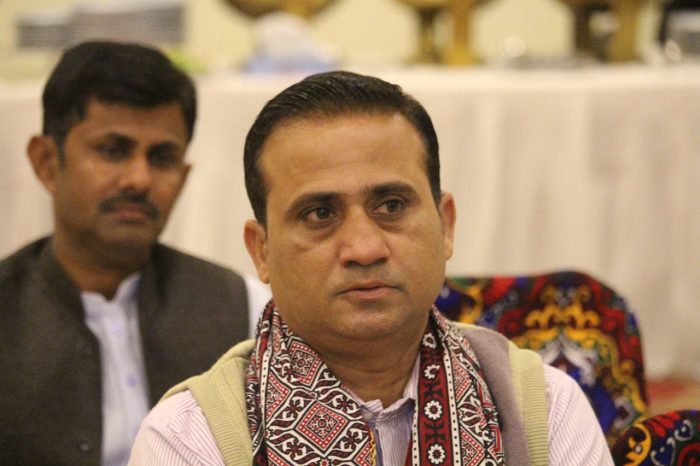
Nazar Mohammad, a grade three teacher, used to be very strict with his students. He was new to the field of academics but he really enjoyed teaching and loved his students. One day at school, his students were being particularly rowdy. Frustrated with the students being unmanageable, he started yelling at his students. That scared them a little and after five long minutes of silence, Nazar stood at the front of the class saying,

The only child interested in learning in this class is this young boy here. He is the only one who says ‘Wow, that’s interesting’.

Nazar was pointing at his student named Sanjay.

Being made an example for the entire class, Sanjay felt very motivated. This was the power of validation. Sanjay did love studying and his teacher acknowledged that.

After a few months though, Nazar noticed that Sanjay had stopped coming to school. After inquiring, he learned that Sanjay had started working at a cobbler’s shop to support his family with their household expenses. Sanjay’s father was also a good acquaintance of Nazar, so he asked him why he would make his son to work at a cobbler’s shop when he would have the capacity to earn a much better livelihood if he would complete his education.

Such simple words were all that was needed to make Sanjay’s father reconsider his decision of making Sanjay work at such a young age. He remembered Nazar’s words,

Trust your child.

Mr. Nazar continued to question and speculate Sanjay’s father about the reasons behind making his son work at this age. He also feared that his questioning may offend the father but it did not stop him from pressing him to change his mind. After a long silence, Sanjay’s father,

I can only send Sanjay to study in the evening if you are willing to teach him at that time.

Nazar replied with a sure ‘yes’.

I will teach him in the evening.

After many years of evening schooling with Nazar, Sanjay completed his primary and secondary education. HE also continued to complete his college and attained a bachelor’s degree from a university too. Both Sanjay and Nazar struggled along the way, but Mr. Nazar did not give up on Sanjay. He consistently motivated and mentored Sanjay until he became a doctor one day.

Sanjay is now a certified practicing doctor in Karachi. Nazar happily shares,

I am proud of Sanjay. It is all just because of his hard work and commitment that he has achieved all of this. Us teachers have to light up the way for our students even at times of difficulties, it is our duty to ensure they do not give up.

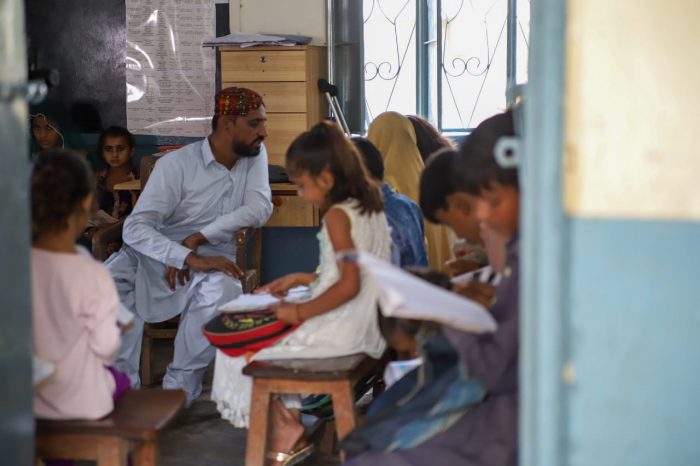
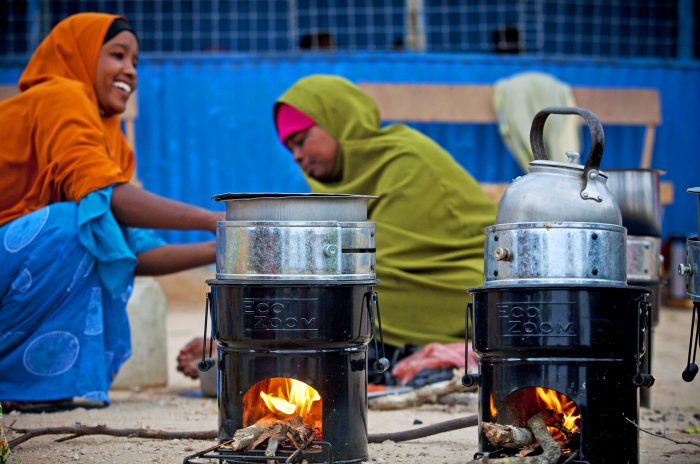
However Nazar was not the part of this project at that time but due to his disability he possesses empathy to provide equal opportunity to those children who are away from education Mr. Nazar is associated with Community World Service Asia for one year in Education project which mainly aims on Early childhood Care and Education its focus, hence, is on catering to overall child development rather than academic readiness or cognitive development alone. However, ensuring quality benchmark parameters in preschools undoubtedly aims at upscaling standards through standardization. Unfortunately, when it comes to local customization and administering a curriculum tailored to suit the specific learning needs of a child, standardization of curriculum might come as a challenge. It, however, does not mean focusing on academics alone but paying equal attention to developing life-skills, offering fun-based exploratory learning activities to the child during his formative years. It defends and promotes the rights of children to education, care and supports activities improving accessibility to high-quality education and care. Nazar was assigned in another class but after receiving training on Early Childhood Care and Education he decided to conduct ECCE class due to its arising challenges and finding it most crowded among other classes with the enrollment of 70-80 students.

I was hesitant to attend any training because of the expected behavior of dealing with disabled people. But the way, the team treated me with respect and gave me equal opportunity to participate in each activity with others. To be seen not as a disable individual to do something, but as a normal person to participate, learn and grow. It motivated me to attend more training and take ECCE class in school because managing a room full of young children can be delightful, but it can also be hard and can drain a lot of your energy. The day-to-day challenges you will face can range from dealing with difficult behaviors to crying and cranky children. Throughout the day, you must balance all of their unique needs to keep your classroom functioning smoothly.
said Nazar.

2210

Good leaders are made, not born. If you have the desire and willpower, you can become an effective leader. Good leaders develop through a never-ending process of self-study, education, training, and experience.

Jago, 1982

With over fifteen years of experience in the development sector, Muhammad Bux Kumbhar’s passion is to advocate for the rights of disadvantaged communities. As an Executive Director of a local organization named, Sukaar Welfare, Muhammad Bux works to achieve women and youth empowerment through community development and advocacy initiatives. For years Muhammad Bux has been engaged in global networking and voluntary activism initiatives with different partners on issues such as child marriages, sexual and reproductive health, nutrition, youth empowerment and gender mainstreaming. He regularly participates in social and digital awareness-building campaigns and writes proposals to implement relevant local projects.

As an active member of the District Engagement Group[1], we engage with different government departments such as Social Welfare, Women Development, Health, Education and the Police to build relationships and influence public authorities and provincial stakeholders on structures of law and policies related to women empowerment,

shared Muhammad Bux.

Finding the topic relevant to his responsibilities, Muhammad Bux registered himself for a four-day training titled, Influencing for Social Change, organized by Community World Service Asia. Impressed with the trainer’s twenty-five year national and global experience, Muhammad Bux could not contain his excitement to participate in the training.

Muhammad Bux shared that the training offered participants practical \ tools that were easily applicable in their daily work.

The training helped us understand the influence processes that can lead to achieving sustainable change. During the training, participants developed awareness-raising campaigns focused on influencing effectively through the use of different tools. We analyzed risks and sensitive features involved in designing influential campaigns,

he said.

The training enhanced the participants’ knowledge and skills on developing effective and persuasive educative campaigns that could lead to social change. Muhammad Bux was able to apply the learnings from the training to his work immediately. He said,

On my return, I modified the language of our nature of work. During our coordination campaigns, we now use new terms like ‘influencing,’ ‘networking’ and ‘liaising with stakeholders.’ I replicated part of the training and transferred the learning amongst the staff of Sukaar Welfare organization. They are already engaged voluntarily with organizational campaigns, so they understand the new term ‘influencing for social change’. I also shared my key learnings from the training to ensure more impact of the advocacy work done and to help our organization influence the communities effectively and resolve our issues with stakeholders.

Sukaar Welfare is now reevaluating and restructuring their advocacy strategies to be able to bring about more effective social change among the communities it works with.


[1] Formed under the ‘Every Voice Counts’ project, implemented by CWSA and supported by CARE International

Sphere recently published a new resource that offers hands-on guidance to practitioners looking to consider environmental issues in their humanitarian programmes. The guide, called “thematic sheet”, is the first in a series that will discuss some of the core issues in humanitarian response and the Sphere Handbook’s relevance to them. 

To understand what a thematic sheet is and how it will be helpful to humanitarian practitioners, Sphere interviewed sustainability expert and Sphere Handbook co-author Amanda George.

Read more

AJK Earthquake leaves thousands homeless

Large areas of the districts Mirpur and Bimber of Pakistan’s Azad, Jamu & Kashmir (AJK) province were severely jolted by a 5.8 magnitude earthquake on September 24, 2019, with the epicenter at only a depth of 10 kms.  The two districts, which house about 876,824 people, suffered large-scale human and economic damages. A reported thirty-seven people lost their lives, and 579 people, including women and children, have been injured. Strong jolts not only damaged shelters and infrastructure but also severely affected the livelihoods of local people[1].

Most recent information received from the office of the Commissioner details that a total of 10,500 families in Mirpur and Bimber, have been affected by the earthquake.  This information has been further verified by the initial assessment that National Disaster Consortium (NDC[2]) members have conducted. The assessment reports a total of nine thousand houses affected; with two thousand houses completely destroyed, and six thousand partially damaged.  These six thousand houses cannot be repaired with minor work as the damages are massive.  The report further claims fifty acres of land as uncultivable due to the destruction, and with boreholes, which are the main source of drinking water, severely contaminated and undrinkable due to violent movements in the earth. During Community World Service Asia’s Emergency program team’s field visit,  a number of health issues were also reported among earthquake-affected communities as many suffered from vomiting after consuming water from the boreholes.

Affected communities from Mirpur and Bimber are in dire need of food and non-food items (NFIs) as many families are currently living in open spaces, under the open sky. Families, with houses, partially destroyed, are also living in the outdoors due to fear of their houses collapsing from aftershocks and rains. The condition of these communities has been worsened due to the aftershocks and the unseasonal monsoon rains that continued uptil the first week of October.

The province of AJK has long been a disputed territory of Pakistan and has therefore been less developed, with a weaker economy and infrastructure. The government has initiated a damage assessment of the earthquake-affected area but the focus has been on infrastructure damages as the government resources are limited and the immediate priority has been rescue operations and to functionalize the local infrastructure.

The villages and small towns most severely hit by the earthquake are among the poorer regions of the district. The majority of the population of these smaller villages and towns depend on low paying daily wage jobs or agriculture as their main livelihood.

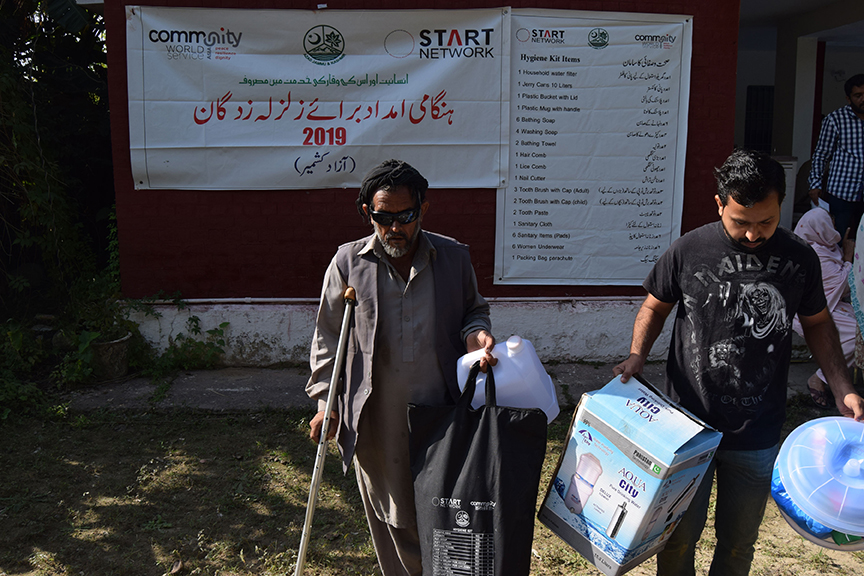
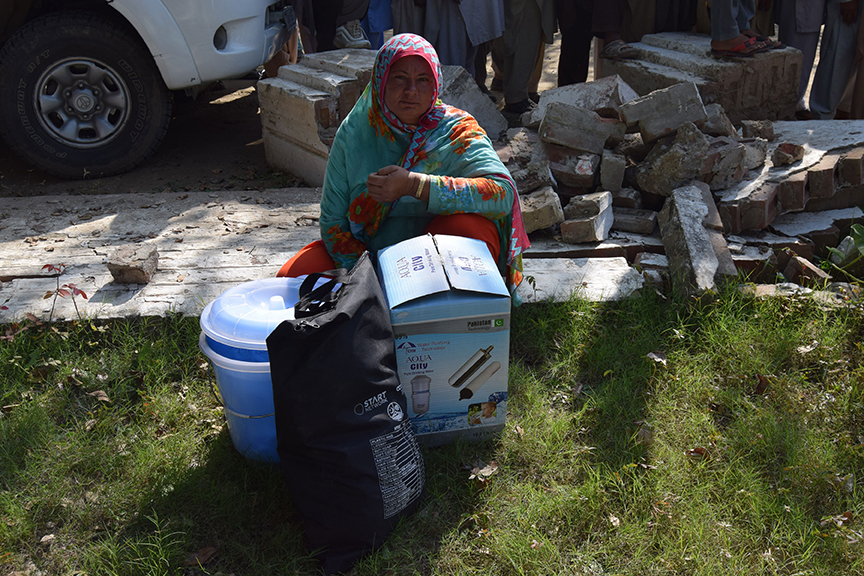
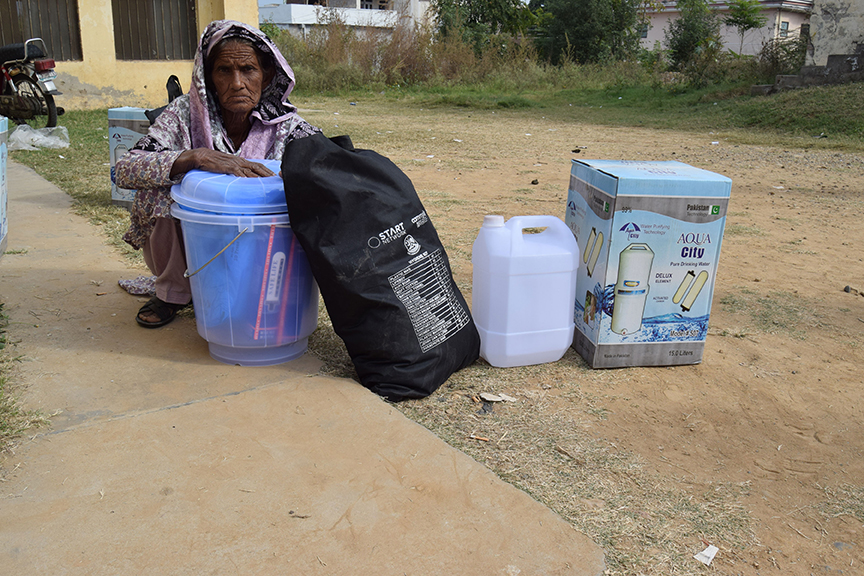
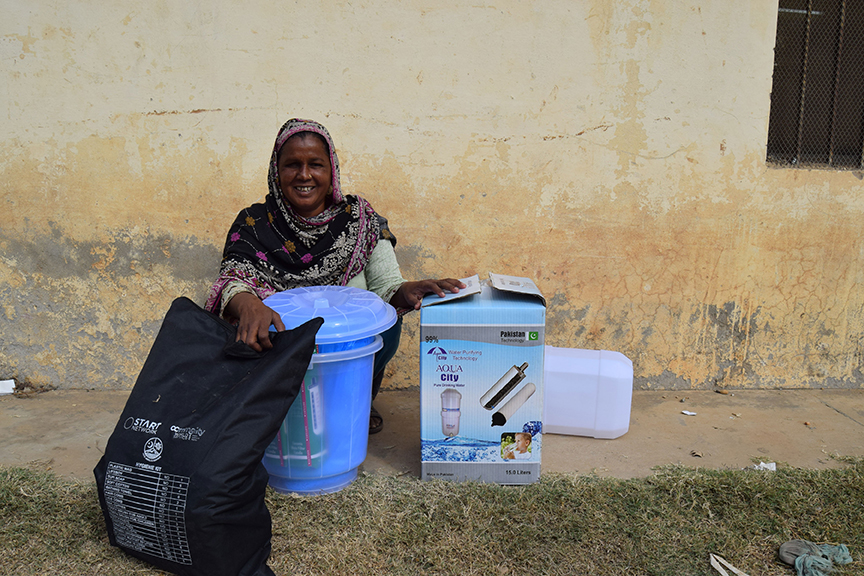
With the support of the START network and ACT Alliance, Community world Service Asia is supporting 1170 families with the provision of shelter tents, winterization tents, hygiene kits, water filtration, and hygiene promotion.

A latest Government-led need assessment reports 12500 houses as fully and partially damaged (being non-livable). A recent AJK geological department report has also notified of all and any kind of construction to be stopped until further notice. According to research conducted by the department, the pressure under the earth has not completely discharged during the earthquake because of which movement beneath the earth’s surface still continues. This is hazardous for reconstruction. With the advent of winter, the temperature has dropped to -4 degrees celcius, with the needs of the affected communities increasing and not being met, the Government of AJK has officially requested Community World Service Asia for supporting them with providing an additional 3500 winterization tents through an official letter [3].

Community World Service Asia is currently conducting a needs assessment to identify the long term needs of these communities. This will be made available and shared shortly.

Affected community-members report:

“The 24th September Earthquake was a horrible experience for my family. That day I was on my bed, sleeping with my youngest son. I felt heavy jolts followed by an earthquake. Our homes were destroyed. There was no source of clean water in the area. Water was contaminated and the area was facing issues of hygiene and poor sanitation. The provision of Hygiene Kits and water filters from Community World Service Asia’s WASH team has been a blessing for us as we have lost almost everything.” Iftikhar Ahmed, Village Afzalpu,r District Mirpur, AJ&K


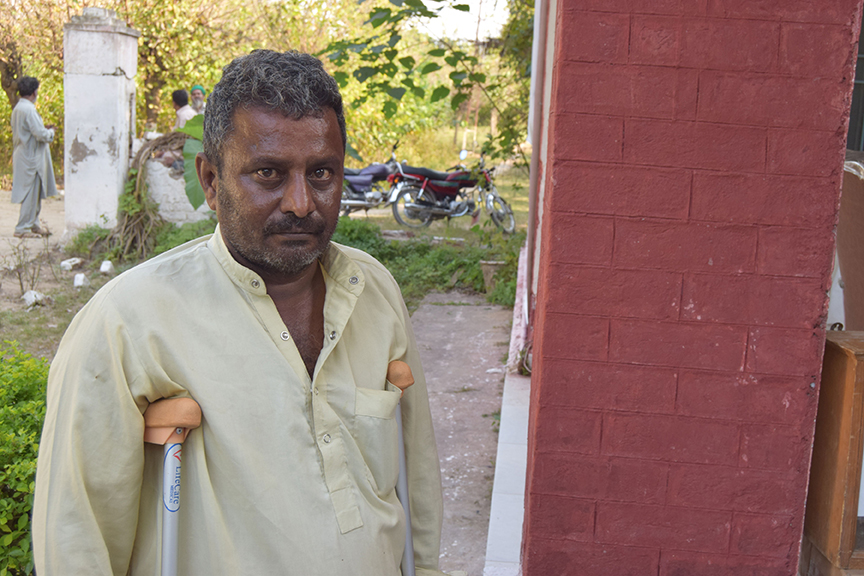
“The earthquake caused a catastrophe in our village, Mughal Pur. I am a disabled man and unable to walk properly. This earthquake completely damaged my house and water-well which we had made in our house. The water in the well is now contaminated and not safe to drink. All our water-storage containers were lost when our house collapsed. The WASH Kit provided by Community World Service Asia has been specially very useful for my family. We have access to clean drinking water and other basic items to use in our everyday life.” Muhammad Latif, Naie Abadi Mughalpura, District Mirpur


“My home was destroyed in the earthquake and my family has been very disturbed. It was really scary to see catastrophe everywhere; houses collapsed, large cracks appeared on roads and life became stagnant. It all happened very suddenly. There was no ray of hope for life. But now there is an activity in which we are receiving assistance from CWSA. These things are beneficial for me and my family. We have received a Hygiene kit which contain relevant things regarding personal and domestic hygiene. My family and I  will use this to access clean and safe water.” Farrah Iftikhar,  a widower from Village Mugalpura, District Mirpur AJ&K


“I am an 85 year-old widow, living alone. My house was completely destroyed in the recent earthquake. Community World Service Asia visited my damaged house and enlisted my name in their project. The aid provided by the relief team will be enough to last me six months. The water filter provided in the aid kit is one of the most valuable items for me as we need clean drinking water to survive and maintain good health.” Saad Noor Bibi, Village Kharak, Mirpur, AJ&K


“The WASH package received through this emergency project has been life-saving for my family and me. I work as a maid in different homes in this area, through this I earn little income. This income is not sufficient enough to purchase all the items we received in the WASH package. We are very grateful to Community World Service Asia and its partners for coming to us at this time of emergency and helping our families to overcome the loss and challenges we suffered.” Nasreen BiBi F/2 Kachi Abadi Mirpur, AJ&K


Contacts:

Shama Mall
Deputy Regional Director
Programs & Organizational Development
Email: hi2shama@cyber.net.pk
Tele: 92-21-34390541-4

Palwashay Arbab
Head of Communications
Email: palwashay.arbab@communityworldservice.asia
Tele: +92 42 3586 5338


[1] Shared by District Commissioner Mirpur

[2] National Disaster Consortium NDC is a consortium funded by DFID members are few national, international and UN agencies.

[3] Letter of request from Government for support

Share your Feedback on this third Edition: Consultation is opened until 4th December 2019!

This third Edition is opened to a wide audience for consultation through various platforms. We welcome any comments and inputs until 4th December 2019. This Edition will then be finalized, designed and published by the end of 2019.

We would also greatly appreciate any contribution in the format of stories or case studies related to the implementation of Quality and Accountability throughout the Project Cycle Management/ Humanitarian Programme Cycle.

Please share your feedback and contributions to both:

Sylvie Robert, Booklet Author, Independent Consultant
Email: sylvierobertconsulting@yahoo.fr

Shama Mall, Booklet Publisher, Community World Service Asia
Email: shaprograms@communityworldservice.asia

Thank you in advance!

Note: A 3-day Training package on Quality and Accountability for Project Cycle Management – composed of 10 training modules – is being tested and finalized to accompany this publication.

Click here to download the Booklet

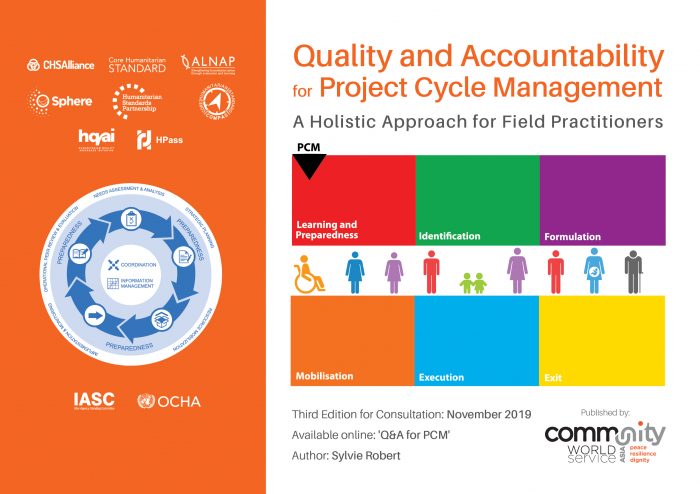
Community World Service Asia, ACT Alliance, OCHA, ICVA, ADRRN, Act Church of Sweden, CHS Alliance, Sphere, and the Q&A Hub are hosting a collaborative event on strengthening accountability to the communities. A revised version of the new and updated booklet on Quality and Accountability for Project Cycle Management (PCM) will be introduced at this event which will be followed by a stimulating panel discussion that will be led by experts on accountability towards affected populations.

Click here download Event Agenda

For a zero hunger world, people around the globe should eat healthy diets, the United Nations (UN) Food and Agriculture Organization (FAO) has said in a booklet that is released ahead of World Food Day on October 16.
The goal of the UN-mandated Sustainable Development Goals of meeting ‘zero hunger’, according to the document, can be met by eating more seasonal fruits and vegetables and reducing the consumption of junk food. Over 820 million people — approximately one in nine people around the world — were hungry, and malnutrition affected one in every three people, the FAO noted.

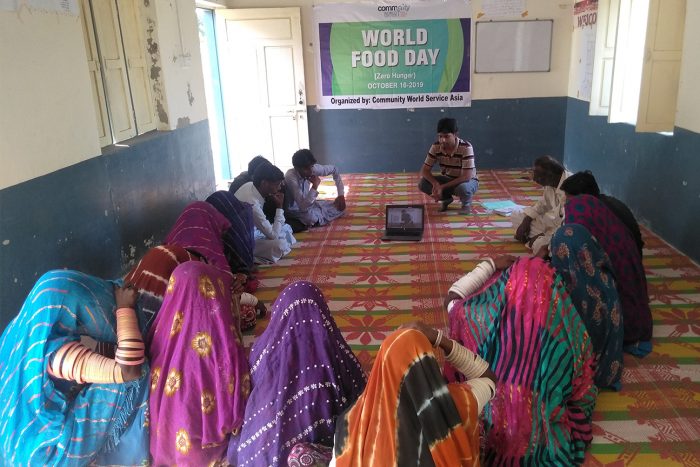
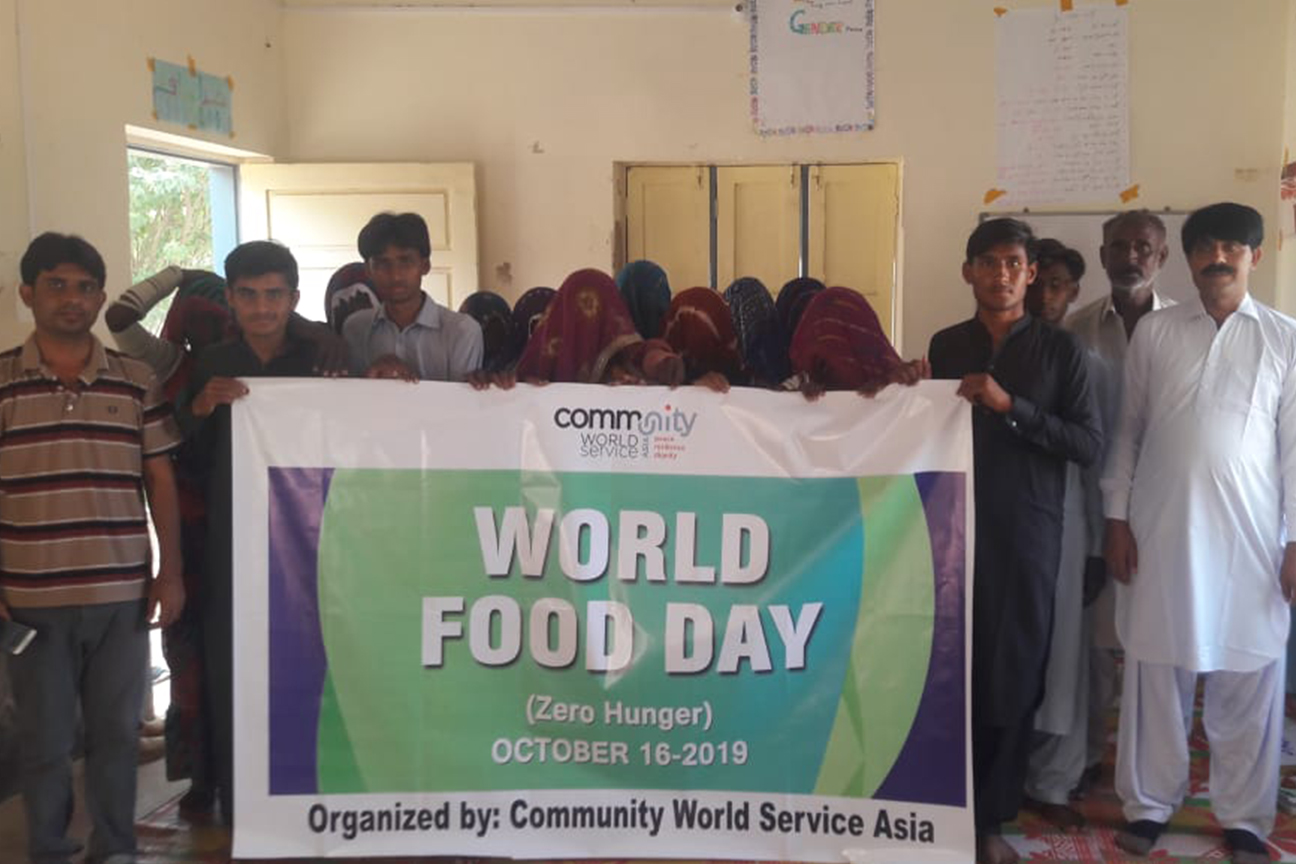
To share the learning, Community World Service Asia organized a session in the village of Padmoo Bheel Union Council Khararo Charan, District Umerkot on October 16. Fifteen men and women from the community participated in the activity. The session focused on the theme which said “Our Actions Are Our Future. Healthy Diets for a #ZeroHunger World”. As a result of globalization, urbanization and income growth, our diets and eating habits have changed. The event generated awareness who suffer from hunger and increased knowledge for food security and nutritious diet intakes for all. Communities were sensitized on ensuring food security in households and how to avoid wasting food at home, marriage ceremonies and other communal gatherings.

Community Voices:

The session was very informative in terms of learning how to avoid food wastage and eat healthy food items for better health. New learning for me was food being our fundamental and basic right.

Janat from Padmoo Bheel village, Umerkot

It is important to make food as per the needs and number of people. Excess food often is wasted which is not good. The session shed light on how food is made excessively in communal gatherings and is wasted in large number. We will in the future make the food according to the need and number of people.

Ranjeet from Padmoo Bheel village, Umerkotet

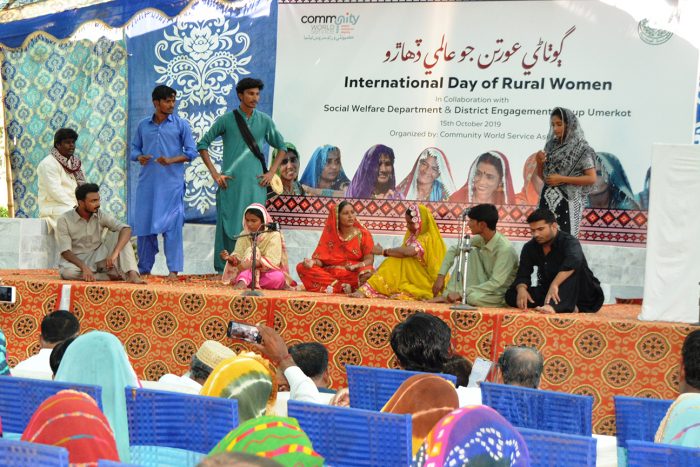
Pribhat theater group performing a play on the role of rural women in climate resilience.

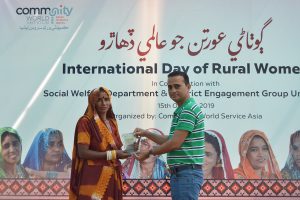
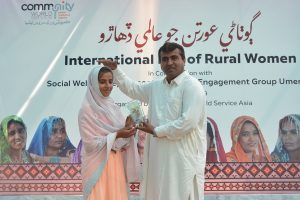
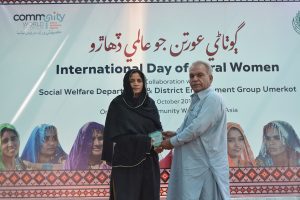
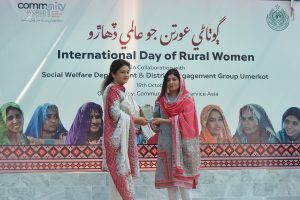
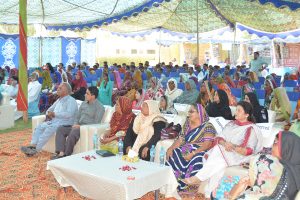
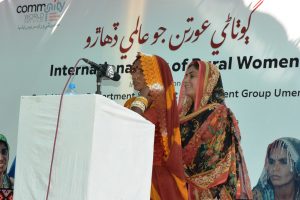
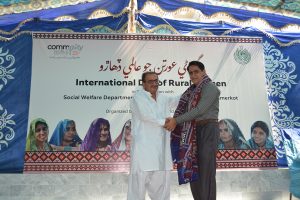
Community World Service Asia, in collaboration with the Social Welfare Department and District Engagement Group[1] (DEG) Umerkot, celebrated the International Day of Rural Women 2019 to pay tribute to the rural women who are playing a vital role in the development of their communities. More than three hundred people attended the event.  Participants of the celebratory event included representatives from the district administration, police force, local government, the Population Welfare Department, Women Development Department, civil society organizations, teachers, artisans and the rural women of the district.

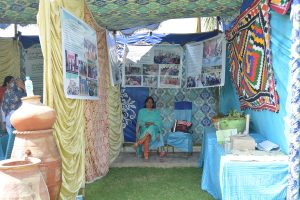
At the event, rural women were awarded appreciation shields for their proactive role in promoting socio-economic and cultural development in their communities. A local theater group, named Pirbhat, performed a play that conveyed messages on the role of rural women in societal development and climate change awareness as part of one of the event. The play was emotional in nature and gave a strong message. As part of the event format, participating human rights defenders, specialists and relevant government representatives gave inspirational speeches and acknowledged the contribution of women in socio-economic development, food security and rural development. Stall was set which displayed handcrafted apparel and home accessories produced by rural artisans.

Contributions and Challenges of Rural Women

The crucial role that women and girls play in ensuring the sustainability of rural households and communities and their overall contribution towards improving rural livelihoods and community wellbeing has lately been increasingly recognized. Women account for a substantial proportion of the agricultural labor force, including informal work, and perform the bulk of unpaid care and domestic work within families and households in rural areas. They make significant contributions to agricultural production, food security and nutrition, land and natural resource management, and building climate resilience.

Structural barriers and discriminatory social norms continue to constrain women’s decision-making power and political participation in rural households and communities. Women and girls in rural areas lack equal access to productive resources and assets, public services such as education and health care, and infrastructure, including water and sanitation, while much of their labor remains invisible and unpaid, even as their workloads become increasingly heavy due to the emigration of men. Globally, with few exceptions, every gender and development indicator for which data are available reveals that rural women fare worse than rural men and urban women and that they disproportionately experience poverty, exclusion and the effects of climate change.

The impacts of climate change, including on access to productive and natural resources, amplify existing gender inequalities in rural areas. Climate change affects women’s and men’s assets and well-being differently in terms of agricultural production, food security, health, water and energy resources, climate-induced migration and conflict, and climate-related natural disasters.

Comments from Speakers

Rashida Saand, renowned women’s rights worker from Umerkot, commented during her speech,

We believe that rural women have unique ideas and indigenous solutions to solve the current challenges facing a society that must be heard by the government and decision-makers. To benefit from the wisdom of women, community organizations must amplify the voices of rural women and call for women’s inclusion in the decision-making process at all levels.

Tarique Waheed Baloch from Women Development Department said that, on the occasion of the International Day of Rural Women,

They shall be encouraged to struggle for their just right of education, social welfare, and their legitimate rights. Village girls should be encouraged to get an education and step ahead in the field. Rural women face, among other problems, under-age marriages, and domestic violence, while they also share in work with men in agriculture and livestock farming besides sewing and embroidery. The government should ensure that technical training programs for rural women in the field of vocational training be started to provide them with opportunities to earn better incomes and live a better life along with educating their children.

Muhammad Bux Kumbhar, DEG member, said the observance day recognizes,

The critical role and contribution of rural women in enhancing agricultural and rural development, improving food security and eradicating rural poverty. As the world faces a critical need to act against climate change, this year’s theme highlights the important role that rural women and girls play in building resilience to face the climate crisis. Rural women represent the backbone of many communities, but they continue to face obstacles that prevent them from realizing their potential. The devastating impacts of climate change add to their hardship. Almost a third of women’s employment worldwide is in agriculture. Women cultivate land, collect food, water, and essential fuels, and sustain entire households, but lack equal access to land, finances, equipment, markets and decision-making power.

The guest of honor, Dr. Rubi Dharmdas from Umerkot, paid thanks and applauded Community World Service Asia, the Social Welfare Department Umerkot and District Engagement Groups for organizing such a great event to pay tribute to rural women. She added,

The contribution of the rural women is not being given due importance. Moreover, the right to basic facilities such as education and health are also overlooked. This is a great tradition initiated by Community World Service Asia to honor rural women by giving them due respect in terms of awards, as it will encourage many rural women to play a vital role in society.


[1] The District Engagement Group (DEG) comprises representatives from district-based CSOs, Steering Committees and Social Welfare Department responsible for networking and influencing relevant stakeholders and government departments on implementation of laws and policies related to women empowerment.

2985

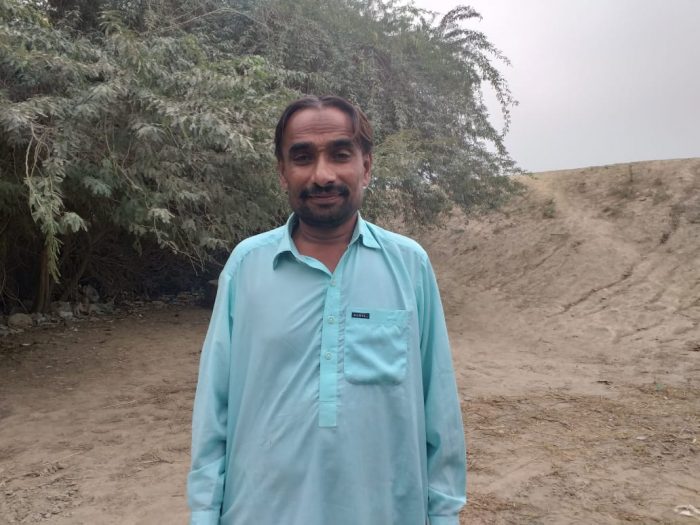
Ali Sher Ranto, the son of a poor farmer, was eager to get an education and have a better life. Despite facing significant economic challenges during his schooling, he pressed on and completed his bachelor’s degree. Now, with new learnings and skills from the trainings organized by Community World Service Asia (CWSA), Ali Sher is helping to make life better for others in his village as well.

Ali Sher lives in the rural village of Ranta, located in Sindh’s Union Council Bijora. The village faces several social and economic challenges, including poor infrastructure, low literacy rate, lack of water, sanitation, and hygiene systems and practices, and limited livelihood opportunities. While a few individuals in Ranta are well educated, due to high unemployment rates and limited resources, many of them are jobless. Despite his degree, Ali Sher was one of them.

Since 2015, Ali Sher has been an active member of the Health Management Committeeⁱ in Ranta. He has been committed to bringing positive change in his village and area. He has actively participated in several events and trainings organized by Community World Service Asia including Community Management Skills, Disaster Risk Management, Leadership and Record Keeping, and Health and Hygiene. The learnings have helped Ali Sher to convey healthcare messages to others in his community as well.

“As a member of the health management committee and a representative of my village, it is my prime responsibility to think about and work to improve social issues within my village and area. I am determined to contribute to the development of my village, so I decided to teach the children on a voluntary basis to promote education in our area. This all happened with the knowledge and awareness that we obtained from meetings, trainings, seminars and workshops organized by Community World Service Asia and other organizations,” shared Ali Sher.

Today Ali Sher voluntarily teaches children at the primary school he himself once attended in his village. He has been doing this for three years now. He teaches classes one to five. In addition, he is supporting the school staff members in forming a school health and hygiene club in the same village. Through the club, he will impart the knowledge he has gained from the health and hygiene sessions he attended under the health project. As a result, Ali Sher’s students are more active, disciplined and healthy.


ⁱ Health Management Committee formed under the Health project to ensure community participation, ownership and support to communities in building awareness.

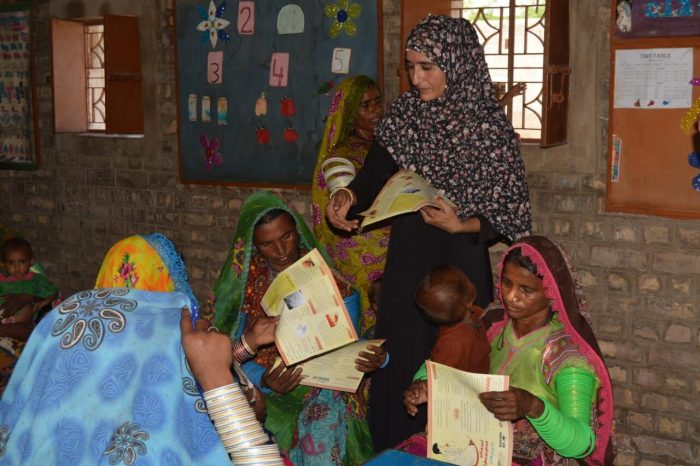
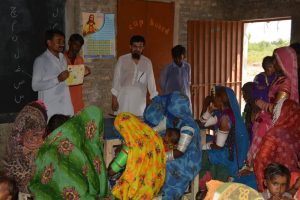
Health sessions were conducted where community members were provided with IEC material for better understanding to build a hygienic living environment.

Community World Service Asia (CWSA) provides basic health services with a focus on Maternal, Neonatal and Child Health Care (MNCH) under its Umerkot Health Project, supported by Act for Peace. The project is implemented in two Taluka Headquarter Hospitals (THQs) in district Umerkot, namely THQ Pithoro and THQ Samaro.

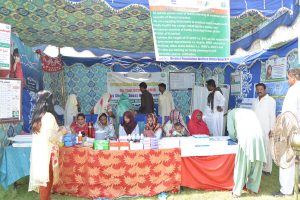
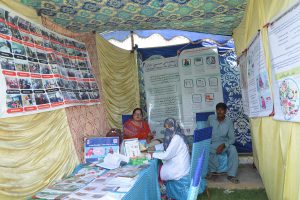
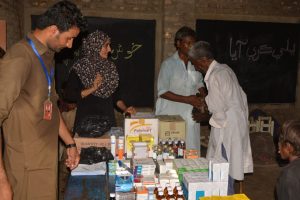
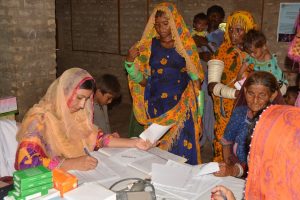
Free medical camps are set up, under the health project, to bring health care and health education to vulnerable populations who have no access to basic health care services or knowledge about diseases. The medical camps aim at providing free medical advice, medicine and referrals for specialized treatment if required. These camps make sure that people receive health care at the right time and see a doctor early enough before a small health problem turns serious.

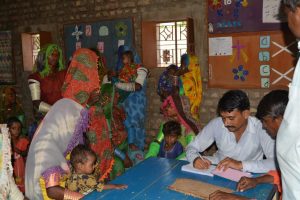
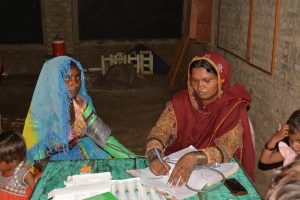
The health team organized a free medical camp on September 24, 2019, in the village of Maryam Nagar, Taluka Pithoro, District Umerkot. This village is nine kilometers away from THQ Pithoro and lacks a regular transport facility in the area. Patients from more than four surrounding villages came to the camp for treatment; in total, 127 patients were treated, including 55 women and 7 men, 29 girls and 36 boys. Five antenatal care (ANC), three postnatal care (PNC), and six family planning patients were diagnosed and provided with medical services. The remaining 113 patients were treated through the outpatient department and provided with free medicine. Major diseases diagnosed and treated during the camp were anemia, scabies, musculoskeletal pain, diarrhea and ear and eye infections.

The Village Health Committee (comprised of both women and men) was involved in organizing the camp and facilitating the patients, while community mobilizers delivered health education sessions to women, men and children on food and nutrition as well as on the causes, symptoms and preventive measures for malaria and dengue fever. The community mobilizers also distributed Information, Education and Communication (IEC) material on related topics.