

In recent years, the world has become increasingly aware of the disastrous impacts of natural hazards and climate change. In an effort to minimize the damages and adverse consequences caused by natural forces, humanity has united together time and again with global frameworks and commitments. The Sendai Framework for Disaster Risk Reduction and Goal 11 of the UN Sustainable Development Goals for 2015-30 are some of the key commitments global communities are working towards.
As signatories to these global commitments, Pakistan is compelled to make advances in its investments and efforts in Disaster Risk Reduction (DRR) and to draw a roadmap for its successful implementation and streamlining into national policies and development goals.
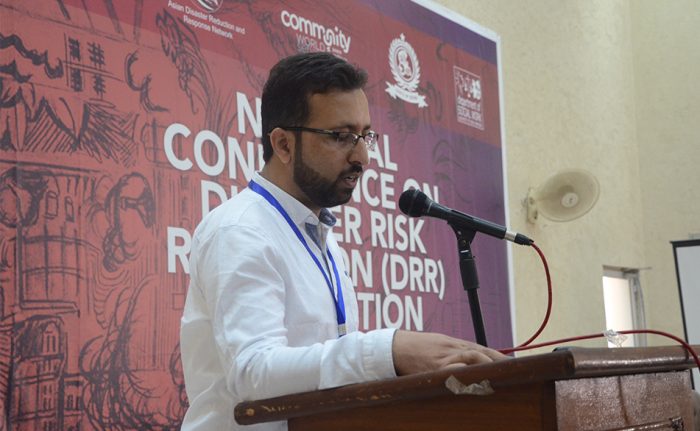
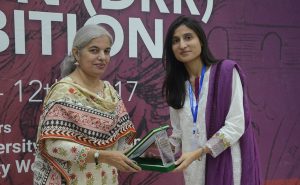
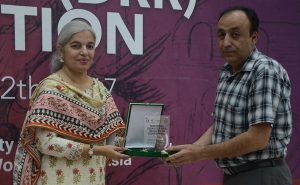
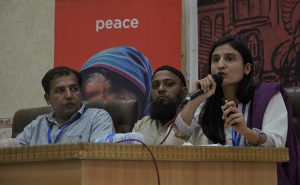
Guided by its strategic priorities and in pursuance of Pakistan’s national DRR agenda, Community World Service Asia conducted a two-day DRR conference and a one-day exhibition in collaboration with the University of Sindh in Jamshoro and Provincial Disaster Management Authority (PDMA) in Sindh, Pakistan in October (2017). This was the first of its kind conference ever to be conducted on DRR in the country.
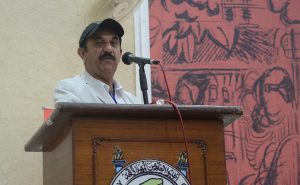
expressed Mohammad Ali Sheikh, Director Operation of PDMA, Sindh, who was guest speaker at the DRR conference in Sindh.This conference is the initial step in building awareness [of DRR] amongst people. The two-day conference and one-day exhibition will help develop participants’ understanding with regards to DRR and the important steps that must be taken for it. The awareness they are receiving can be incorporated in their future plans of working on DRR,
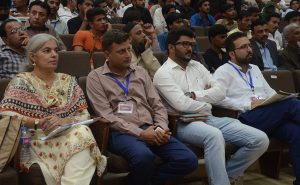
Professor Dr. Fateh Muhammad Burfat, Vice Chancellor, University of Sindh, officially opened the event and welcomed an audience of 383 participants, including 300 men and 83 women, at the national conference which was held at their University campus in Jamshoro. The conference gave a platform to climate specialists, relevant scholars, educationalists, government representatives, civil society members, humanitarian and development practitioners and students to speak on the topic and share ideas and experiences on DRR, its implementation and benefits.
A large number of students, academia members and local NGO representatives attended the conference. Participants at the conference and exhibition varied between experienced DRR and DRM practitioners and those planning to work on DRR in the future. Local and international organizations such as Kacchi Community Development Association, Oxfam, Muslim Aid, Participatory Village Development Program, University of Peshawar, Malteser International, Municipal Committee Bolhari, Tearfund are among the many that participated in this national event.
The broader objective of the conference was for participants to generate awareness and information on DRR and share the good practices and lessons learnt in the application of DRR while working with communities around the world. Through this, Community World Service Asia aimed to encourage networking between those involved in DRR and to avoid the duplication of DRR efforts, particularly in Sindh. This broader objective was further divided into more specific aims that were outlines in the conference agenda:

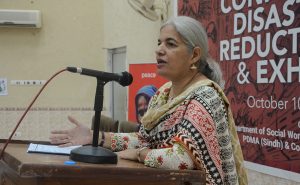
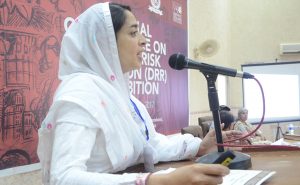
Ghazala Nadeem[1], DRR Expert, gave an introduction to the conference and exhibition and explained its objective to the audience,
In addition, the Director of PDMA Sindh shared the overall functions and role of PDMA Sindh in the field of DRR and Disaster Risk Management (DRM). The Director also oriented participants on PDMA Sindh’s future plans, such as district disaster mapping and the establishment of Rescue 1122 at a district level.CWSA is co-hosting this Conference and one day exhibition in collaboration with University of Sindh and PDMA, sharing knowledge, experience and efforts on the subject to a wider range of stakeholders envisaging opportunities for future collaborations, building on the past investments and avoiding duplication of DRR efforts & resources.
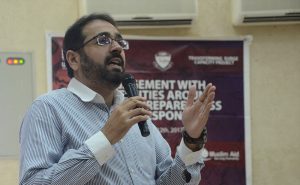
Over twenty guest speakers from various organizations and fields shared their knowledge on specialized aspects of DRR and DRM. Presentations ranged from Urban Search and Rescue Project to Research on Local Capacity Building on DRR.We are also in the stage of planning to establish a Provincial Disaster Management Institute which will aim at disseminating knowledge in relation to DRR.
shared Col. Aijaz, General Manager ConPro Service, at the DRR Conference. He further added that the USAR teams are capable of national and international assistance in sudden onset of disasters. The members of the USAR teams are trained by a pool of internationally trained instructors.The first 24 hours following any disaster are the golden hours for saving lives. For this reason, National Disaster Management Authority, Pakistan initiated the establishment of Urban Search and Rescue (USAR) teams in different parts of the country,
However, there is a need to further advance the teams; refresher courses and joint exercises of the existing teams need to be conducted to update knowledge and skills of the team members.
Abdul Qayoom Bhutto, Director, Pakistan Meteorological Department (PMD), ilustrated PMD’s Early Warning System (EWS) of DRR.
PMD’s EWS of DRR mitigates the potential damages for sustained socio-economic development from various natural hazards including floods, cyclones, landslides, drought, heavy rains and more. We have a combination of technology and associated policies and procedures designed to predict and mitigate the harm of natural and human-induced disasters. To further advance the functions of PMD, continuous coordination among stakeholders at all levels are required.
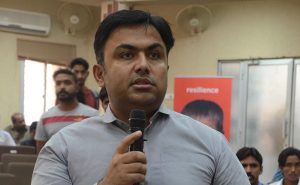
shared Dr. Ibrar, University of Peshawar, during his session on Social Work and the Sendai Framework for Disaster Risk Reduction. On both days of the presentation-based conference, the discussions and question-and-answer sessions facilitated participants’ engagement on Disaster Risk Reduction and Disaster Risk Management (DRM) issues. These discussions were an effective platform to engage the youth, encouraging them to use their enthusiasm and skills in DRR and DRM projects. The participants shared their vision for inspiring and equipping students for DRR and DRM and developing a task force to respond to any future district-level emergency.The Sendai Framework recognizes that while the State has the primary role to reduce disaster risk, responsibilities should be shared with other stakeholders including local governments, the private sector and non-governmental organizations (NGOs). Moreover, social work students have to be knowledgeable of the Sendai framework of action to be able to intervene in disaster related problems,
What did the conference achieve?
The conference helped bridge the gap between DRR professionals working on field and DRR experts researching on DRR-compliant infrastructures. Attendants left the conference with a greater knowledge of disaster resilience and management, which would help strengthen and develop organizational structures on the theme. Some were also able to discuss prospective partnerships and collaborative work. Ideas such as possible collaborative trainings for District Disaster Management Authority staff and university volunteers on Urban Search and Rescue were also highlighted. Moreover, the participants discussed promoting research-oriented DRR initiatives among each other.
Both structural and non-structural DRR initiatives would benefit communities by bringing technical and social research into practice. Participants agreed that it is important to establish effective policy and legal arrangements for mainstreaming DRR into safety regulations, like building codes, and other development laws. Not only would this help protect people from the adverse impact of natural disasters but it would also support the availability of appropriate financial and technical resources for DRR at local and national levels.
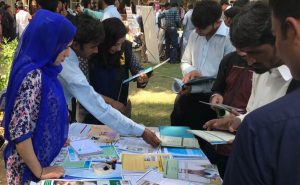
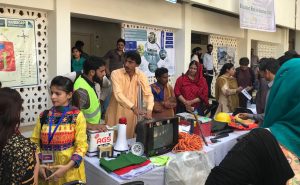
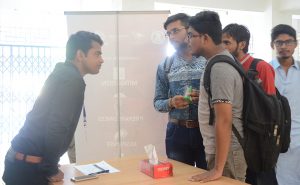
To highlight the good work of local, national and international organization in the area of DRR in Sindh, Community World Service Asia organized a one day Exhibition showcasing best practices and visibility material on the initiatives taken so far. A number of organizations had set up stalls at this exhibition held at the Sindh University and provided live demonstrations of emergency and relief services. This initiative helped in promoting the various DRR models practically and also acted as a bridge connecting researchers, students and NGOs to work in a collaborative way.
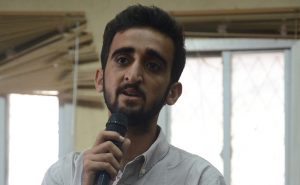
Omar Qayyum, a student of the Social Work Department of the University of shared,
The National DRR Conference and Exhibition was an unprecedented event conducted in University of Sindh. This was a new learning experiencing for all of us, as [DRR] is a very important topic. It is vital for the [social work] department since we will be able to play an active role in promoting DRR through our social work. It further enhanced our knowledge in how to keep ourselves safe from the natural disasters which are continual and often unpredictable.
Rashid Hussain, another student, corroborated,
We now know which organizations to approach for information or aid at times of disasters. The guest speakers shared their valuable contribution in the field of DRR. As a social worker, I will be able to share my learning about preparing oneself in times of emergencies with local communities. I plan to research on future trainings on disaster management so that I can volunteer my services if any emergency situation arises.
The National Conference on DRR was highly appreciated and the various stakeholders of DRR interventions have been encouraged to enhance and increase their work on helping build disaster resilient communities and decrease disaster impacts through informative workshops and engaging discussions conducted during the three day event.
[1] As one of founding member of ‘Resilience Group’; a young dynamic consulting house, Ghazala is providing disaster risk reduction expertise and consultation to various national and international organizations, especially I/NGOs, in the areas of Disaster Emergency Response, Risk Management, Capacity Building, Architecture & Programme Development. Ghazala has been involved in (regional) tsunami research along Makran & Sindh coast with national & international organizations/ experts, results and activities are available http://iotic.ioc-unesco.org/1945makrantsunami
As country focal point in Pakistan and regional partner for Sphere in Asia, Community World Service Asia has assumed a leadership role in the field of Quality & Accountability (Q&A) among aid organizations in Asia since 2005. It has initiated and supported the recognition, understanding and adopting of Q&A principles in development and humanitarian assistance across Asia. We have been committed to mainstreaming Q&A standards, tools and practices throughout our programming. Our goal has been to promote and develop our internal technical capacity, as well as to support our colleagues and partners in the region to incorporate Q&A into their interventions. Community World Service Asia’s strategy continues to ensure shifts in mindsets and practices leading to a growing capacity to self-monitor the levels of Q&A compliance.
To further support humanitarian and development practitioners/organizations in the region and enhance synergy between current scope of our work and emerging needs on Q & A we have now become the focal point of ADRRN’s Q&A Hub in Asia. The Hub has been developed as part of ADRRN’s marketing strategy for 2020, to Increase the effectiveness of humanitarian response of front line national organizations in Asia through enhanced Q&A mechanisms. The main objectives of the Q&A Hub in Asia for the upcoming three years will be to:
Read more on the ADRRN Marketing Strategy 2020 and its Hubs Toolkit here.
Download: ADRRN Hubs Toolkit
Download: ADRRN Strategy 2020 Marketing Toolkit
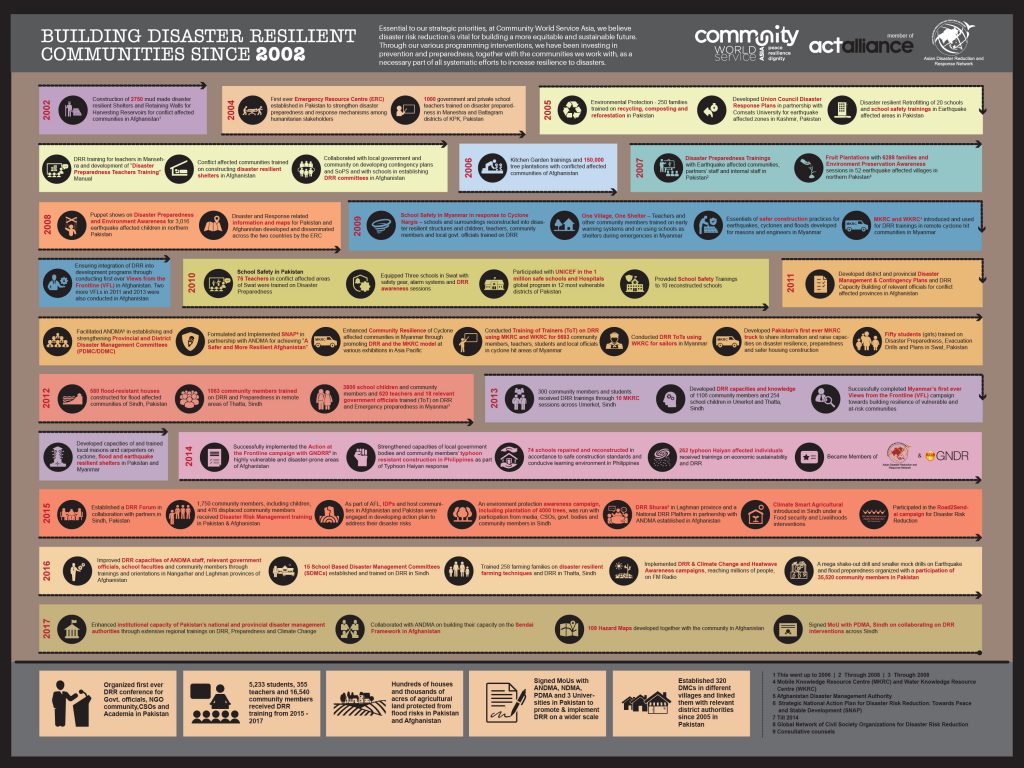
International Day for Disaster Reduction, held annually on 13th October, celebrates the way that people and communities around the world reduce their exposure to disasters and raise awareness about the risks that they face. This includes disaster prevention, mitigation and preparedness (UNISDR). This year at Community World Service Asia we are celebrating and looking back at all the work we have done with the communities we work with on reducing disaster risks and increasing their preparedness to natural hazards.
Essential to our strategic priorities, at Community World Service Asia, we believe disaster risk reduction is vital for building a more equitable and sustainable future. Through our various programming interventions, we have been investing in prevention and preparedness, together with the communities we work with, as a necessary part of all systematic efforts to increase resilience to disasters.
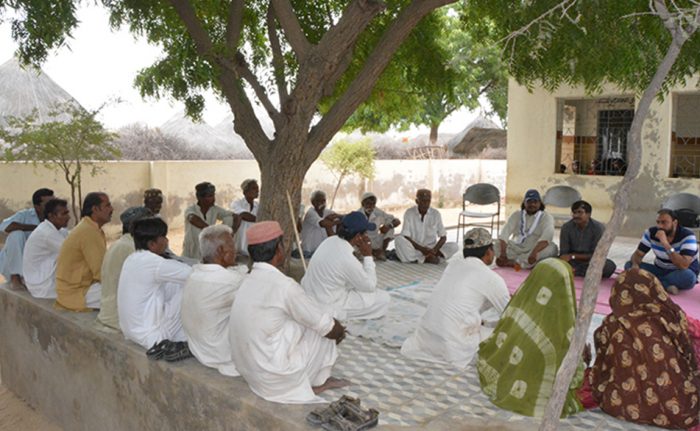
Community World Service Asia has signed a Memorandum of Understanding with the Provincial Disaster Management Authority (PDMA) in Sindh. The core components of the agreement focus on:
Through this agreement, PDMA Sindh and Community World Service Asia will consort together on strengthening disaster risk reduction and response mechanisms in the province and advocating and acting together on climate change adaptation, emergency response, and relevant recovery activities to help Sindh’s disaster affected communities.
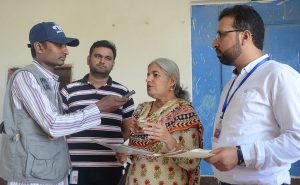
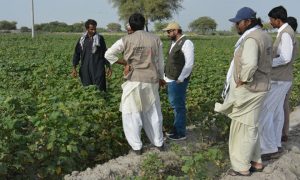
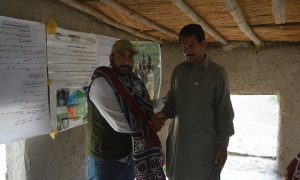
Ajay Kumar, Assistant Director Operations of PDMA Sindh, with his team, conducted a field visit to oversee the projects in Sujawal, Badin, and Tharparkar districts this August. The team first visited a community-level Emergency-Operating Center (EOC) and met with the Disaster Management Committee (DMC) established in Rahim Dino Thaeem, a village in Sujawal. The committee briefed the functions of the DMC and Emergency Operation Center. Ajay Kumar suggested that the EOCs needed to be linked with each other as well as connected with the district EOC through a wireless system. Community World Service Asia assured to work on the suggestion and analyzed how this would further strengthen the role of the EOC in the community.
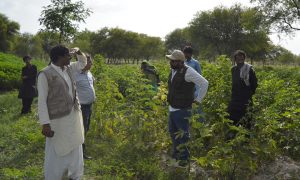
PDMA Sindh team then visited Community World Service Asia’s Food Security and Livelihood project in Abbas Thebo, Badin. There, their team along with our staff, me the farmers, enrolled in the project supported, Farmer Field School (FFS). FFS promotes sustainable agricultural practices. It examines most appropriate methods of irrigation water use, role of Macro and Micro Nutrient trends in plants growth, weed management, land preparation, sowing methodology, demarcation of acres, and determining seed quality.
Abbas Thebo farmers shared that the involvement in FFS has enhanced their working capability in the agricultural fields. Approximately 12,000 fruit and forest trees have been allotted to and planted by the farmers, and kitchen gardening kits were distributed to women-headed households. Farmers participated in different festivals including the Farmers Festival recently held in August and took part in exposure visits to increase their knowledge on the subject.
The team’s next stop was at Baghtani village in Chachro, Tharparkar where they met drought affected families supported by PDMA Sindh in 2015. The Baghtani community still remembered the team members and praised the organization for visiting the village again. They told PDMA Sindh that its’ food assistance, given every seven months during the drought in 2015, helped the villagers survive the peak of the drought season. The food rations received were sufficient in quantity for their families. The community these days is very grateful to the rains they have received as it has brought their rain-deprived homeland some relief.
Upon the end of his visit, Ajay Kumar expressed,
“I commend the efforts of Community World Service Asia’s field team and the opportunity given to me to meet communities that have benefited from the various projects. It was nice to observe the enhanced capacity of communities in disaster risk reduction, early warning, sustainable agricultural farming, and strengthening of community institutions. This will all ultimately help communities to depend less on external support.”
 Nisar Ahmed Memon, a 43 years old headmaster at the Government Boys Main Sindhi Chandia School, in Sujawal, Sindh, has always been passionate about bringing change through education. With this resolve, he joined the field of teaching in 1992 and has since then been engaging children to learn through play and active learning.
The training focused on six disasters; earthquake, fire, flood, heavy rainfall and cyclone. Sessions on measures to take pre, during and post the various disasters on minimizing its destruction and the after effects were conducted. Being the first training of its kind, teachers and students at Nisar Memon’s school showed keen interest and enthusiasm in learning through group and drill activities.Community World Service Asia visited our school in 2015 introducing the DRR component under the Christian Aid supported project. I was instantly interested in the idea as it was a new concept and people in a rural area like Sujawal were not aware of disaster management before. We shared our profile with the team and a Disaster Risk Reduction Training was organized. Two DRR trainings were held for two consecutive years starting in 2016. Fifty students participated in each training. Participants were taught to analyze and build on knowledge to identify and prepare for major disasters and on how to cope afterwards. These skills were particularly important given the large-scale flooding that Sujawal experienced in 2010 damaging many of our houses, crops and savings.
As an outcome of the training, DRR groups were formed at the Main Sindhi Chandia School. With six groups in total, two students from each class were selected to represent as members in the groups. The groups have been divided as Flood Group, Cyclone Group, Fire Group, Earthquake Group, First Aid Group and Planning & Coordination Group and each group has a representation of fifteen to twenty students. A faculty member is assigned to each group to supervise them. These groups then train other students on specific DRR practices so that the knowledge is shared with everyone in school. Every week, these DRR groups brief students of a selected classroom on possible natural hazards and the measures that need to be taken. A drill activity is conducted as a demonstration for the students to clearly understand the measures, use of equipment and their role if any such emergency situation arises. All students get the opportunity to equally participate in the drill activities, enabling each student to apply their knowledge on DRR to real situations.
In school curriculums, the topic of natural disasters is touched upon under the subject of Social Studies but that does not provide students with DRR related knowledge or skills. Nisar Memon has introduced drill activities as part of the teaching curriculum supporting the Social Studies lessons on disasters.We encourage students to share their learning at homes as well which enhances their understanding and strengthens their involvement in the community. In addition, the whole school, including teachers and students, are aware of the six main disasters and the measures to be taken. This is a great achievement for us as an institution because in rural areas this kind of skill development is not generally found.
explained Nisar.After covering the chapters on natural disasters, the teachers then engage students in drill activity of the disaster taught, which allows students to develop a complete understanding of the disaster and of the measures that need to be taken when it occurs,
A DRR Carnival was organized to provide an opportunity to young children to present their DRR work. The main purpose of the event, celebrated on 25th May, 2017, was to engage teachers and students from different schools to hear about their experiences; how they implemented DRR in their schools and how it contributed to making their schools safer.
A total of five hundred guests, including students and teachers from various schools, government officials and other stakeholders, actively participated at the event. DRR themed paintings made by students of GBPS Main Sindhi Chandia, Sujawal were also on display.Our students participated in the event with great enthusiasm. They prepared plays and skits to perform at the carnival which displayed various disasters and the role of men, women and children in tackling these disasters to reduce loss.
The active headmaster, Nisar Memon, also participated in a four-day training on Emergency Preparedness and Contingency Planning which was conducted to train government and other relevant institutions staff on effective DRR methods.
Falak Nawaz from Network Of Disaster Management Practitioners (NDMP), lead facilitator at the training, conducted an effective and productive training which enhanced our knowledge on international strategies for Disaster risk reduction and contingency planning. We were briefed on the difference between contingency planning and disaster risk management planning. In addition, we were oriented on the importance of contingency planning.
Students in rural areas readily welcome whatever new learning opportunities they are offered as it allows them to further enhance their knowledge, intellect and skills.
Students are trained to react accordingly to different disasters and escape routes are identified. The disaster groups are actively involved with students on how to respond to emergencies on a weekly basis. This has enriched the knowledge and developed DRR skills of around 850 students in the GBPS School.We have displayed a school map in the school which shows different exits and placements of various equipment that are to be used in times of various disasters. We have hanged bottles filled with little sand outside some classrooms. In case of no warning, the movement of the bottles will indicate earthquake or strong winds of cyclone. This way the teachers and the students will be able to take immediate measures required for the safety of all. In addition, fire extinguishers are placed in the school premises and their locations displayed on the school map. We want to ensure maximum safety of our students therefore we implement brief revisions of the map and drill activities on a weekly basis as well. We have also installed emergency bells which will ring at the time of the disaster to alert everyone in the premises.
expressed Nisar contentedly.In future, these children will grow up and be in different places. If any disaster occurs, they will be able to protect themselves and the communities around them. This thought motivates me everyday to further work on this cause,
With more of these trainings and DRR activities conducted in school, the interaction between teachers and students has increased, strengthening their relation and building student-teacher trust. Many students at the school were afraid of their teachers at first and were hesitant to express themselves. After participating in the training and drill sessions, students have become more expressive and vocal with the teachers, making the learning environment in school more friendly and productive.
I am happy to announce that our enrollment has increased from 723 to 850 students in just a year. Our students and teachers have shared their learning and experiences at homes and communities. This has raised our standard of learning which has attracted many parents to enroll their children in our school. The families completely trust us with their children.
Recalling the floods in 2010, Nisar shared that most of Sujawal drowned in the floods. By the time the flood warning was announced, many women and children had already drowned in the rising waters as preparedness measures were not in place and there was no awareness on DRR.
As the schools reopened after the flood water receded, families feared to send their children to schools. The interest in education decreased due to the overwhelming fear of the floods. Similarly, they feared of other disasters like earthquakes and cyclones hitting their homes and villages. This DRR initiative has increased the confidence of students as well as their families. They are fully aware on how to react when a warning is announced and at times of emergency situations.
beamed Nisar.Lives are secured and that is a great improvement on its own. We have started a continuous process as these children will grow up and have families one day. They will share their knowledge with their children. This initiative will save lives of generations to come,
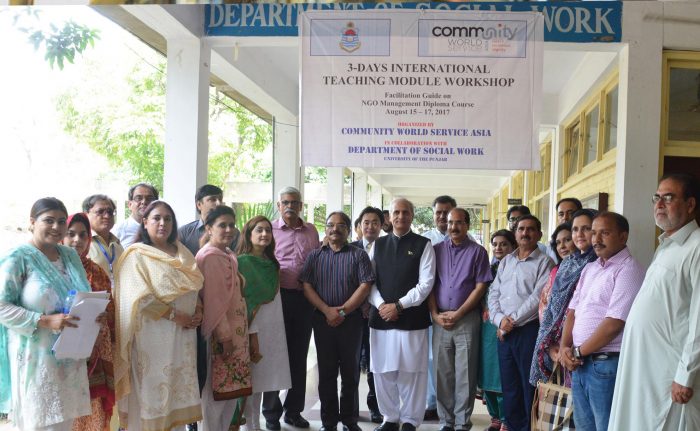
As part of developing the syllabus for the Post-Graduate diploma in NGO Management, faculty from universities and colleges of Punjab, Peshawar and Sindh (Jamshoro) along with representatives from the provincial social welfare department and Community World Service Asia staff came together for a three-day consultative workshop in Lahore this August. The key objective of the workshop was to discuss and agree on the main contents of the teaching guideline for each of the modules taught under the NGO management course and develop clear action plans for the course.
The interactive and discussion filled workshop facilitated by Takeshi Komino, Deputy Director and Disaster Risk Reduction (DRR) Expert, Community World Service Asia, had a participation of twenty academia practitioners, fifteen women and five men. These included University Professors, Assistant Professors, Lecturers and college teachers, from across Pakistan.
To support universities in teaching about humanitarian and development practices (based on field work) and empower them on tools and approaches used by development professionals, Community World Service Asia succeeded in developing partnership with two Universities i.e., University of Peshawar and University of the Punjab. Both of these universities are among the oldest institutions in Pakistan. In both the universities, the Department of Social Work has been assessed to being very similar to the work of the aid and development sector.
Community World Service Asia then initiated the process of supporting both institutions in designing this new post-graduate diploma course through a six step process leading to the launch of the degree. Peshawar University already launched the degree in February this year and received an overwhelming application response from graduate students and some NGO practitioners. While, University of Punjab aims to start offering the course in December this year and University of Sindh plans to initiate it sometime in their 2018 semesters.
This workshop is part of the technical and consultative support that Community World Service Asia is providing to the academia in assuring that the degree fully meets its objective of familiarizing students with the fundamental concepts of NGO management and its project implementations, its role in bringing about social change through explaining the various dimensions in which it works. The next step in this process is to conduct a Training of Trainers on “Creative Facilitation Skills” to further strengthen the capacity of faculty members teaching the various course modules. This is planned to be held in Peshawar University this October.
Academia Insights:
 Sonia Omar, Assistant Professor, Social Work Department, Punjab University
“This course is really a need of the hour as far as the significance of this degree is concerned, considering the situation in Pakistan. We are a developing country; we cannot always rely on the government alone. Therefore, we have to support and encourage NGOs and the university and academia needs to take a step ahead. We must add specific development and aid practice related programs to our departments and courses. These will help future practitioners and those who are already in the field. It will also help those who want to establish NGOs to serve the people of the country.
This three-day workshop really helped in building the right curriculum for the NGO management course. We are expecting that the drafted curriculum will be further refined. We at Punjab University really intend to start the degree within 6 months. I am sure we will be getting a great response from the students.
Community World Service Asia has been very facilitative through our collaboration. When so many think tanks from NGO sector, academia and social welfare departments working together always ends in very positive outcomes.”
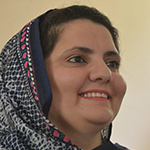 Sumera Farid, Teacher of Introduction to NGOs Module, Social Sciences Department, Peshawar University”
As teachers, this course has been very interactive with a lot of participation from students. For students, this course has been very interesting and new. They have all been very enthusiastic, sometimes critical and very active in discussions. It has been more of a two-way learning process for us. With teaching this course, we really felt like we’re contributing a lot in the learning process of students and youth. The exposure visits and special lectures that we have included as part of the modules acts as developing linkages for these students and helps to set a foundation for future professional careers for students. We organised a visit to the Drug Addiction Centres and lectures from representatives of Social Welfare Departments as part of the first semester. Admissions for fall semester have also been announced for new students for this degree and we are expecting many applications.”
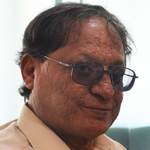 Bashir Khan, Deputy Director, Social Welfare Department (KPK) & Visiting Faculty at Peshawar University.
“I am teaching the students of this Diploma course on social legislation policies in regards to the non-profit sector. Most of the students in the course have social sciences background, and only few who are actually NGO practitioners, so this is a great learning opportunity for them. This is mostly new information for them and many students have joined this course with a hope to be employed in the private social/development sector with knowledge of this additional information. Today, we are here at this workshop to review the course modules and revise and design the course to best fit the understanding level and requirements of students.”
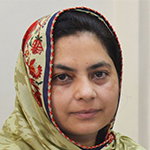 Farhana Noreen, Human Rights Teacher, Social Sciences Department, Peshawar University.
“I am teaching the Human Rights modules to students in this degree. We received more applications from new under-grad students for this diploma course. Therefore, we have started the modules and subjects from the very basic level. The teachers for this course have been given 30% flexibility on teaching methodologies which is great. Students are very enthusiastic to learn as they are eager to join the NGO sector. As part of the course, we organised exposure visits of students to the Ministry of Human Rights as practical learning. This aspect of learning has been very effective and of great interest to students.
As one of the inputs for this workshop, we do feel that some of the modules of the course need reshuffling in terms of where to be taught in the semester timelines for it to be more effective.”
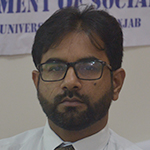 Mohammad Arshad Abbasi, Assistant Professor, Social Work Department, Punjab University
“NGO management and leadership is a new concept in Pakistan. A large number of organizations are working in the NGO sector but very few of them have the expertise skills and are academically qualified to work on social issues and in the humanitarian/development sector. This diploma has been designed to equip our students with the skills, knowledge and expertise on how to work with NGOs, specially on enhancing skills on developing project proposals, fund-raising and on human rights issues and the various laws and policies related to NGOs. I hope that our students will get maximum benefits through this diploma. Furthermore, this diploma program will assist in developing expert and trained human resources that will ultimately play an important role in the NGO sector and in improving the sector. The consultation by Community World Service Asia and their technical and financial assistance has played a key role in developing the curriculum of this degree program. And time to time, training and exposure opportunities provided by them have helped us a lot in refining and finalizing the course contents and to get it approved by the concerned authorities.”
 Waheed Akbar, Lecturer, Social Work Department, University of Sindh in Jamshoro.
“As far as my department and our university is concerned, this is a very helpful course for the future of our students, given that they will get this sort of professional knowledge through all the modules included in this one-year diploma. I think this will be a milestone in our department and as well as for students of social work in this area. During this course and after completion, students will be equipped with specialized knowledge and skills and their capacities will be enhanced. Our university will be creating resources for the development and humanitarian sector of our province. The NGO management diploma is also offered to professionals who are already working in the field, though many of them don’t have the exact NGO academic qualification. Therefore, this will be an added platform and capacity building opportunity in the form of a certified degree for them.
This consultative workshop gave us a chance to share and learn a lot of knowledge from faculties from universities from Peshawar and Punjab. Through this workshop, we aimed to polish and develop the syllabus, we discussed new ideas and possibilities. We also realized that there are some specific and technical areas in the course, for example social entrepreneurship or financial management etc., that we as faculty need to build our own capacity in as well to teach the students. For this we seek opportunities to enhance and build our own competencies to make this degree a sure success.”
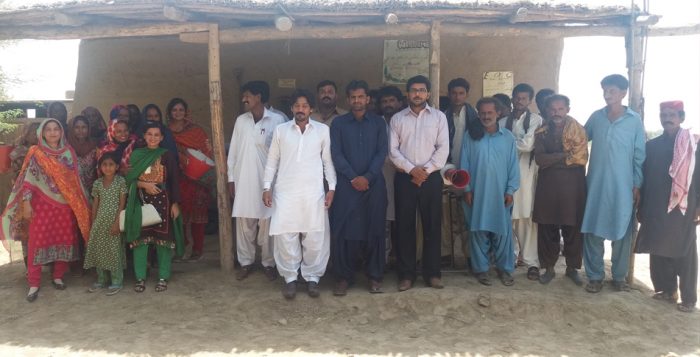
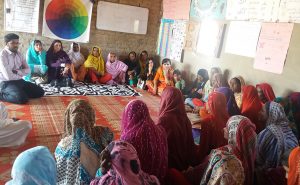
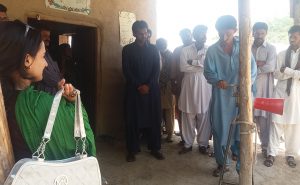
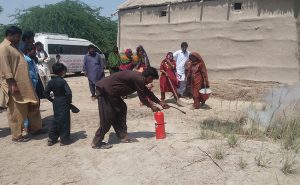
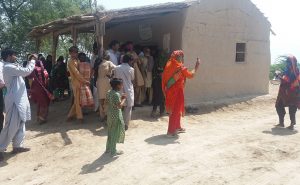
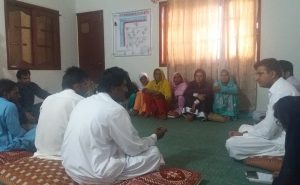
It is unfortunate to realise that many countries in the world are still not investing enough in prevention and preparedness of disasters.. From a development perspective, disaster risk reduction is vital for building a more equitable and sustainable future of vulnerable, at-risk communities. Investing in prevention and preparedness is vital to the systematic efforts of increasing disaster resilience. In this very attempt, Community World Service Asia works towards disaster risk reduction (DRR)as a cross-cutting theme in all its programming to strengthen the resilience of rural communities. Recently, we facilitated an exposure visit of a group of volunteers from Indus Resource Centre (IRC), Dadu to experience some DRR related activities executed in Thatta by our project staff. Eighteen participants visited the Emergency Operation Centres (EOC) set up by us, in three separate villages..
The Indus Resource Center team commenced their visit from Achar Khaskheli Village where a meeting was conducted with the Women Enterprise Group (WEG). The artisans of the WEG shared their experience of receiving a training on Community Based Disaster Risk Management (CBDRM)which was very helpful to them during the 2015 floods. The team was further taken to the Emergency Operating Center in Nooh Waliro Village where Mr. Hanif Nooh Waliro, the Local Support Organization’s President, gave a briefing on the process of the formation of the Community Organization (CO), Village Organization (VO) and the Local Support Organization under the livelihood projects. He added,
“strong efforts are put in the development of the village by the members of these organizations and the people of the village are appreciating the progress made through different activities.”
At Phul Jakhro Village, the team visited the Emergency Operating Centre where Phul Jakhro, LSO President, shared his thoughts about the productive utilization of the equipments used at the centre during emergency situations. The EOC’s shelter was also visited where a questions and answers session was held and the queries of the team were effectively addressed. Phul Jahkhro also briefed the visitors on the information charts they have put on the walls. A fire drill was performed by the Phul Jakhro community where a manual siren call was made and a woman called for help on a mega-phone. The community people reached at the scene with buckets and fire extinguishers, carried rescue efforts and extinguished the fire.
Qurban Ali Mallah, President LSO Union Coucil Gozo shared that they are grateful to Community World Service Asia for hosting such a fruitful exposure visit.
In another occasion, Rashid Chandio, IRC representative, said that,“The interaction with business women from the WEG reflected empowerment and confidence building. The EOC and the installed equipment were new for them at this level therefore they learnt a lot.”
Rukhsana, an IRC volunteer, added that they would replicate such activities in their area to increase women participation.“women participation was laudable. The trainings on DRR have really brought magnificent changes into their lives.”
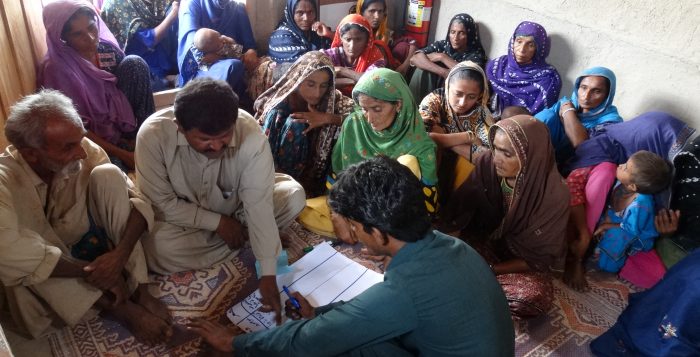
Sheherbano belongs to Haji Talib Bijoro, a small village in Thatta district, Sindh, Pakistan. At just 18 years of age, Sheherbano has already been working as an information secretary in her village, facilitating various NGOs who work with the community there. Passionate about working towards the betterment of her village, she spoke about her participation in the recently held three-day disaster risk reduction (DRR) training.
“In the beginning when Community World Service Asia came to our village, they discussed how they were going to work with us for the betterment of our community and our village. We learnt so many things about fires, storms, floods and earthquakes. They informed us about the different measures we could undertake to keep ourselves safe during floods and fires,” she said.
Talking about the precautionary measures to take during disasters, Sheherbano said that while she and her fellow villagers were previously unaware and uninterested, participation in the training had changed their perspective and they had become interested in learning about preventative measures.
“In case of a flood, as soon as we hear about it on the radio news, we should take the elderly and the children of our village to a safer place. I also learnt that we should keep our valuables with ourselves and in case of an emergency, we should find a place which is above the ground level to keep ourselves safe,” she added.
Sheherbano is eager to spread this knowledge with her family and friends in neighbouring villages as well. She said that weddings or other village ceremonies are good opportunities for her to tell her friends about her learning at the training conducted by Community World Service Asia staff in Haji Talib Bijoro.
When a fellow villager told Sheherbano about a fire that broke out in their village, she shared her knowledge on the actions and precautionary measures one should take as she had learnt during the DRR trainings. She shared the causes behind fires breaking out and spreading fast and how to effectively and immediately contain it with her neighbours and community members.
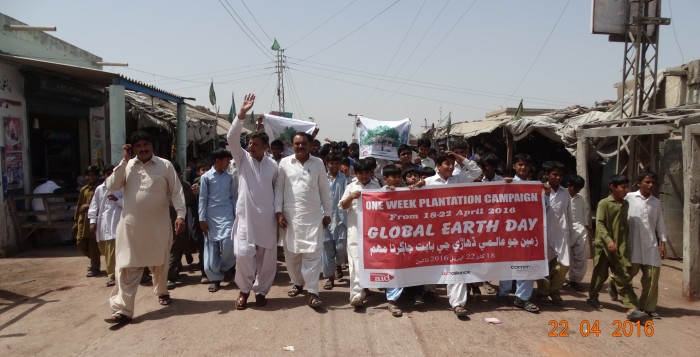
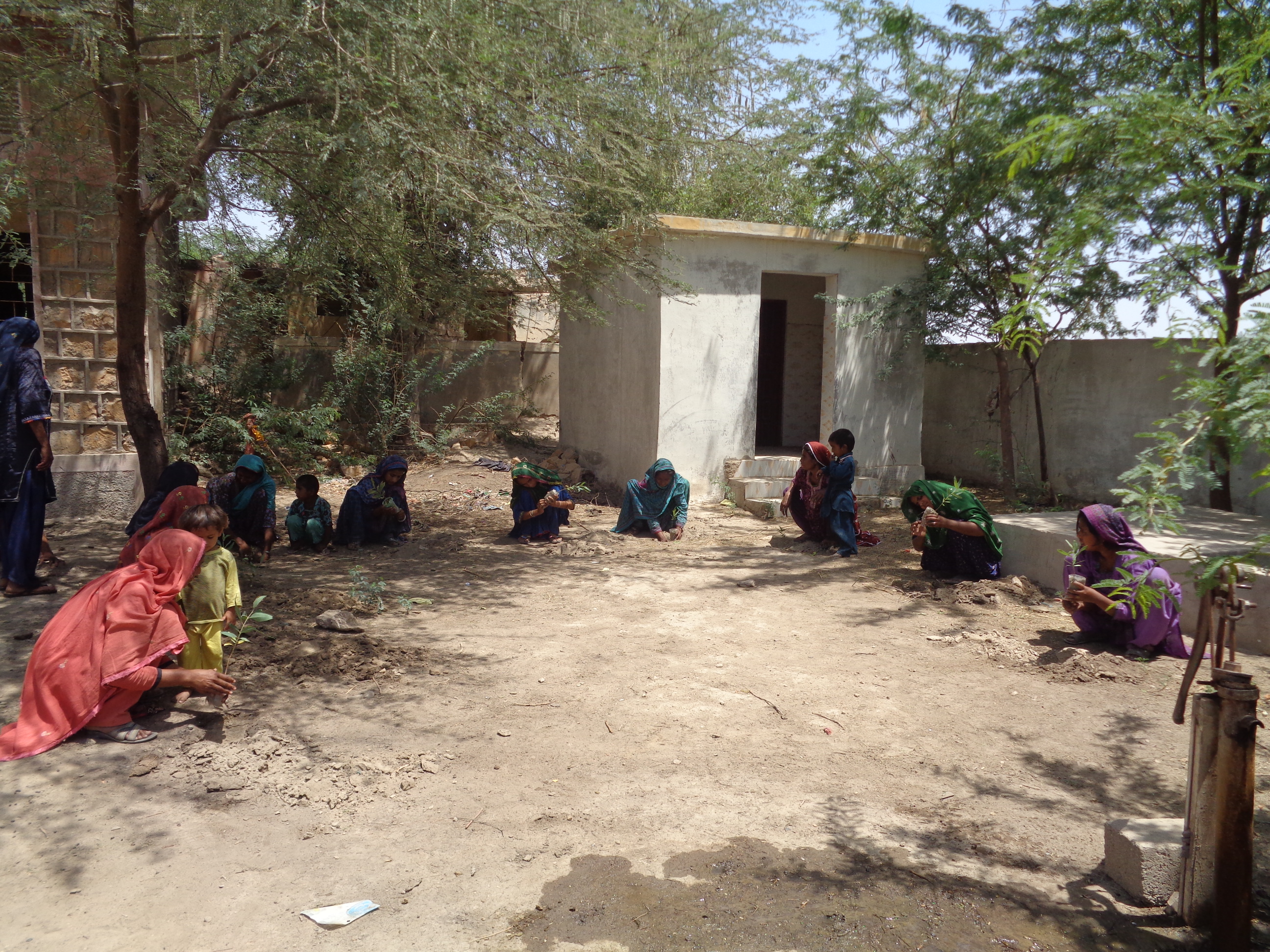
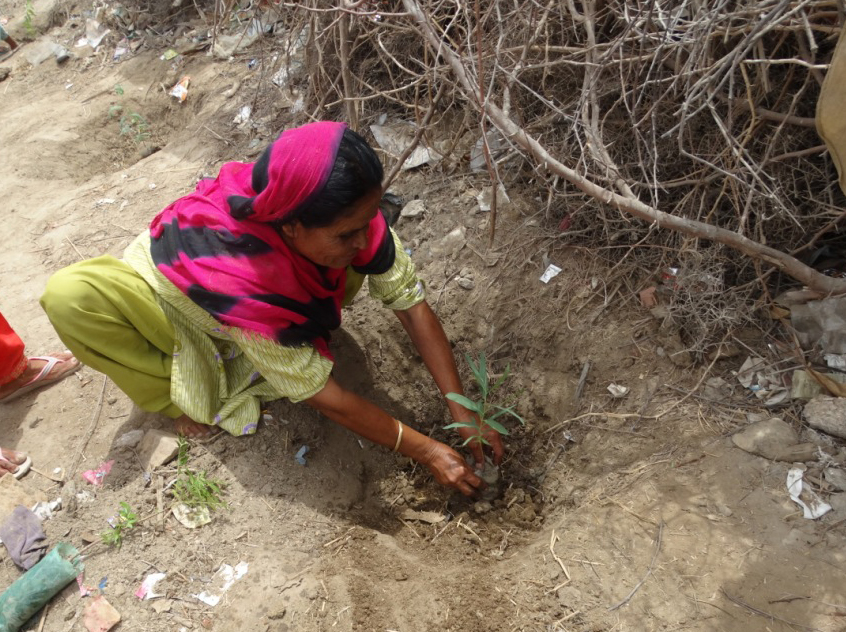
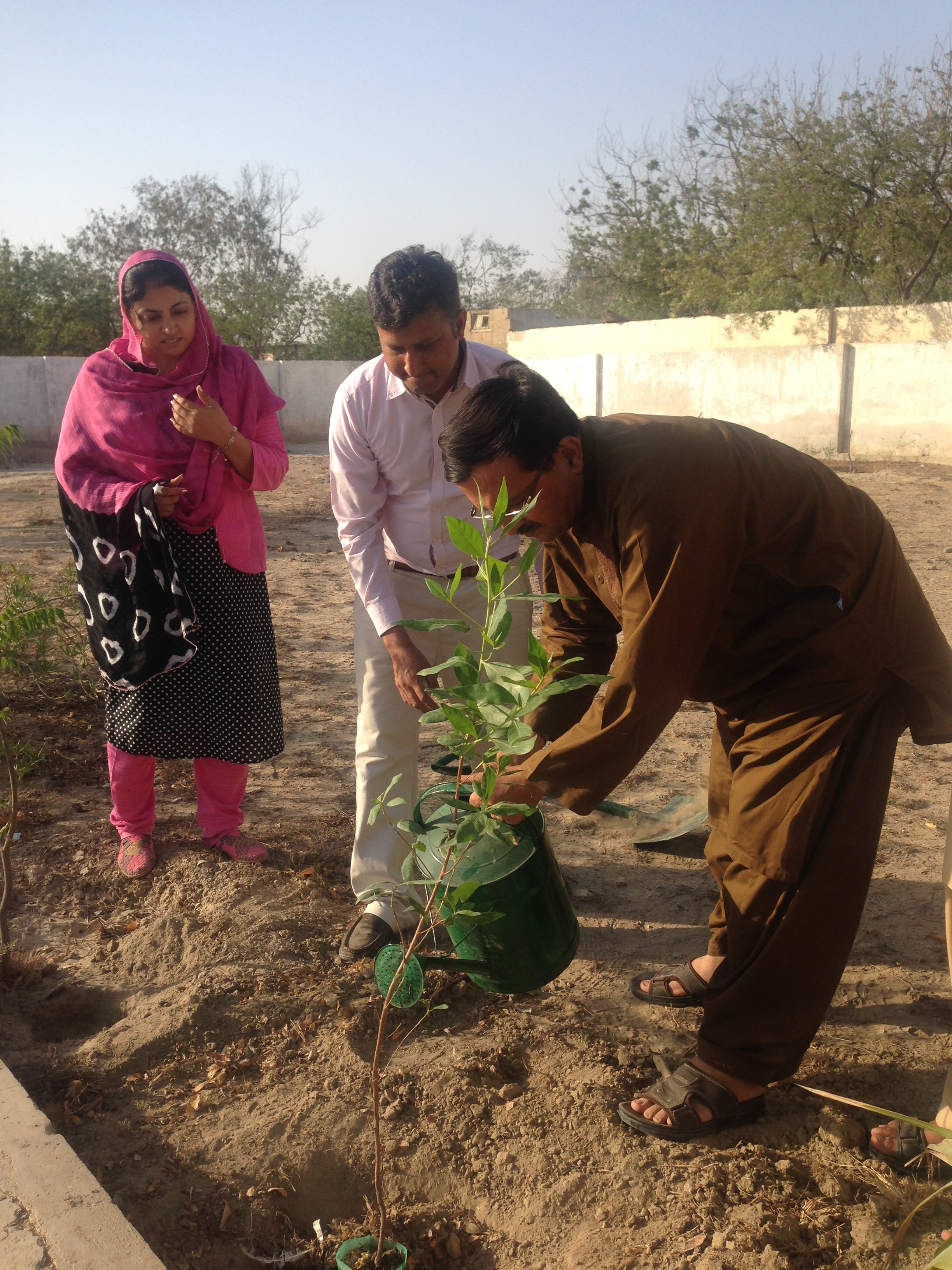
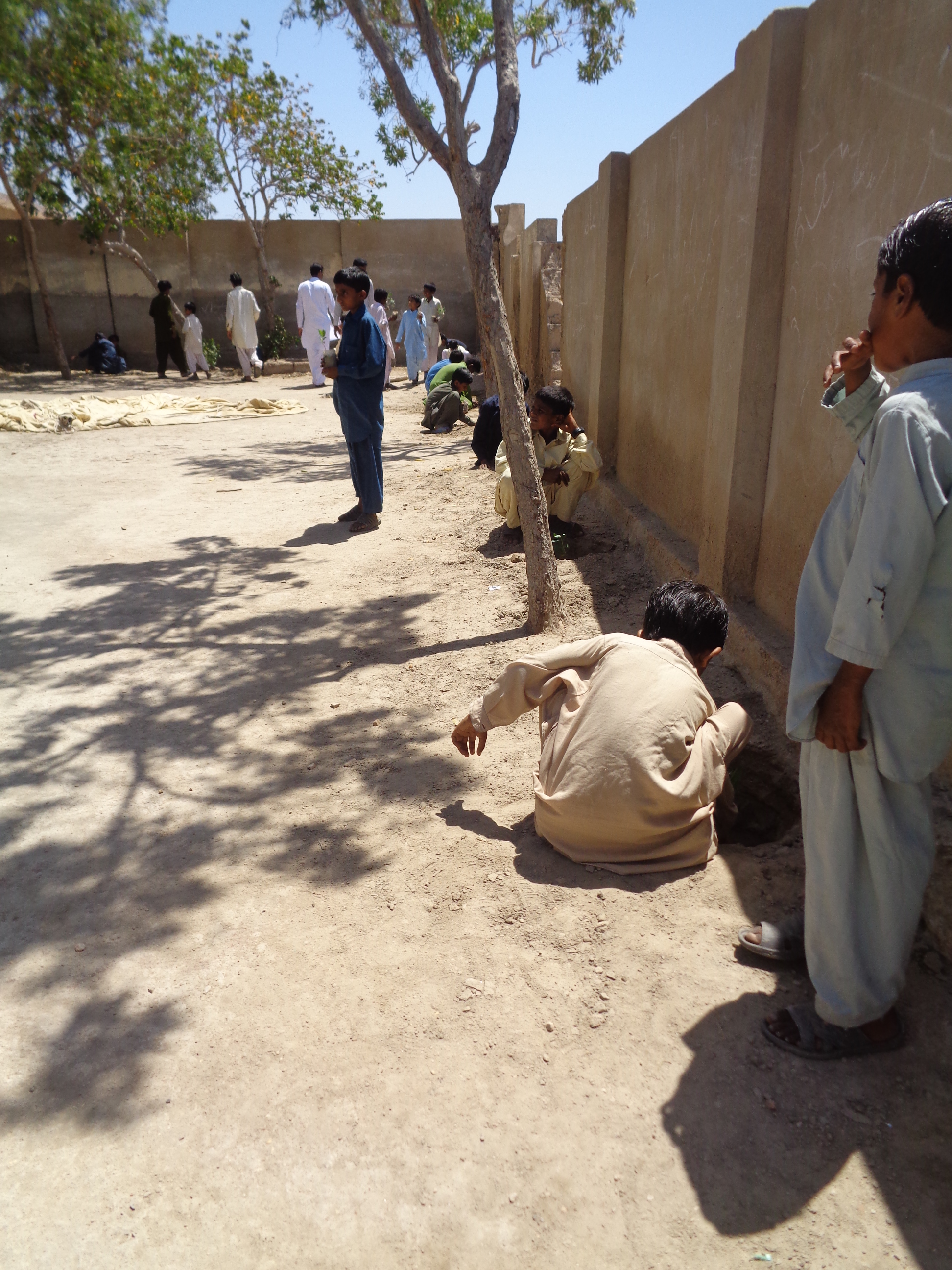
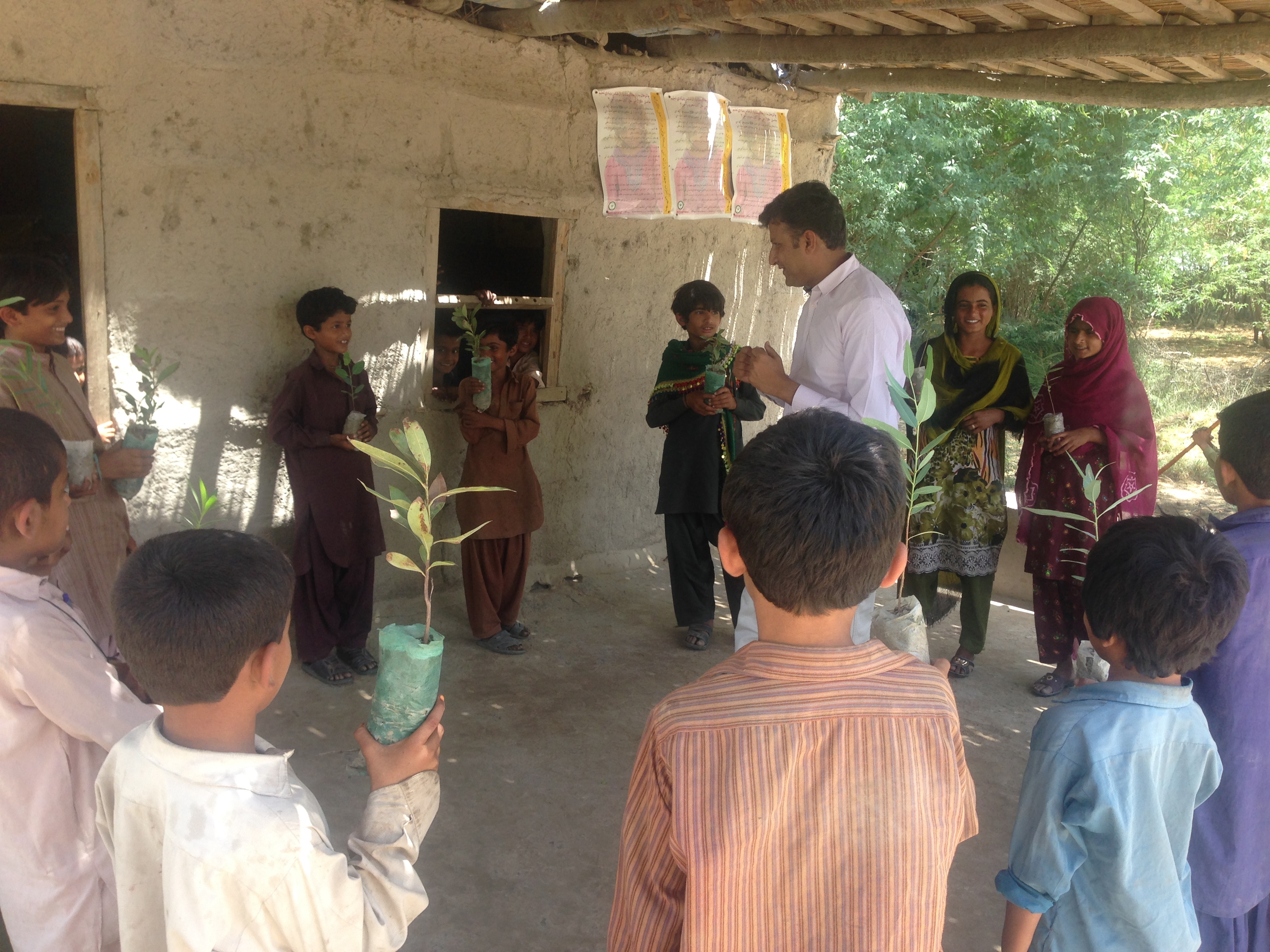
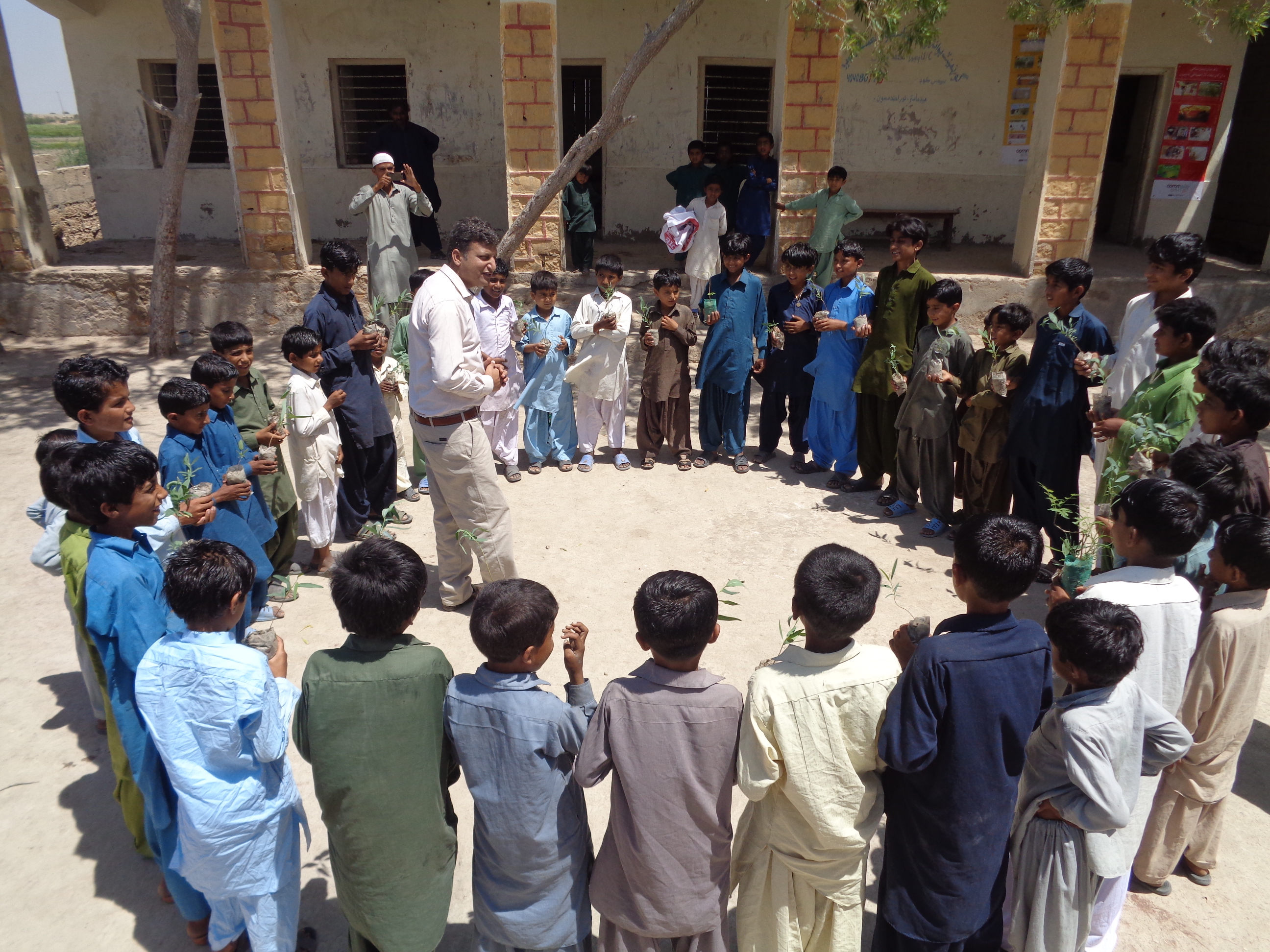

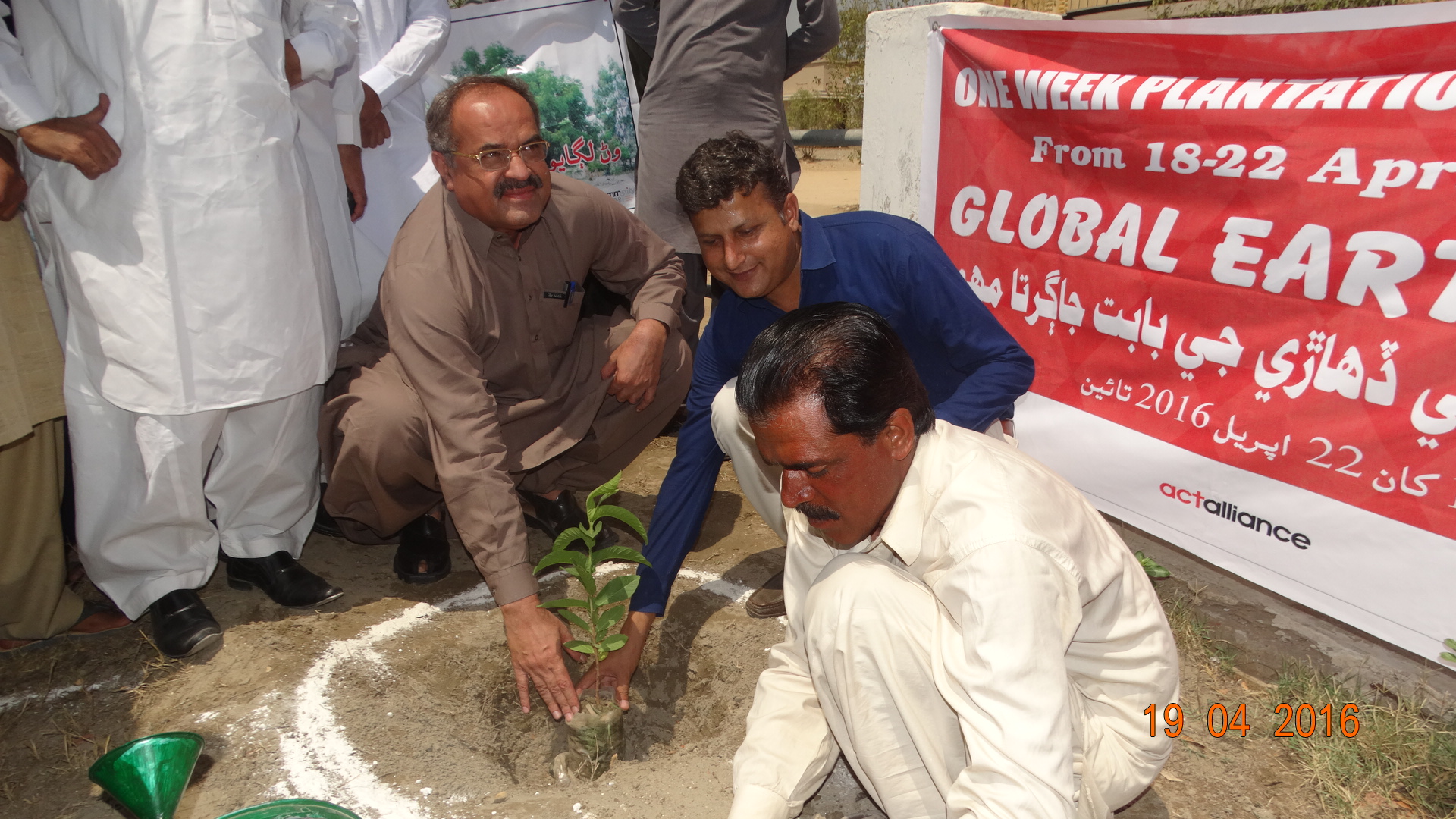
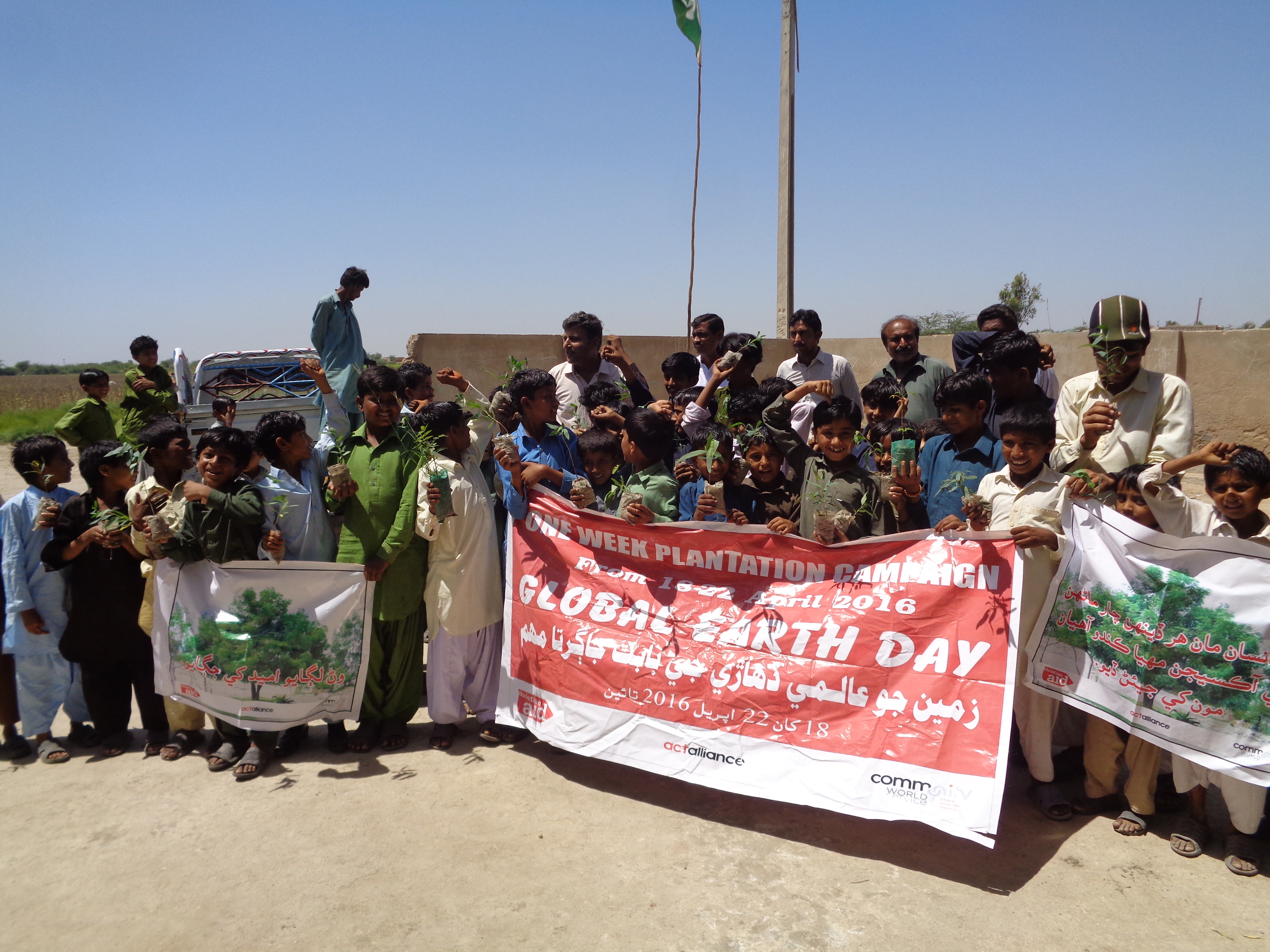
Every year, Global Earth Day is celebrated across the globe to call for action against harmful environmental practices and to help spread awareness about protecting the Earth’s natural environment. To mark the importance of this day and the cause it represents, Community World Service Asia, with support from Christian Aid, pledged to plant 4000 trees in various localities of districts Thatta and Sujawal in Sindh. The team collaborated with Plan International, Action for Humanitarian Development (AHD) and Voice of Youth Group to make this possible.
Titled ‘One Family, One Tree,’ the campaign ran for an entire week (18-22 April) and was inaugurated by chief guest Mr. Abdul Latif Brohi, Assistant Deputy Commissioner , who planted a tree at the DC office in Thatta. Over the five days of the campaign, trees were planted by men, women and children in schools, government offices, roadsides and villages. Youth volunteers and teachers also participated in the activity.
 Prev
Prev