Authors Posts by comms

comms

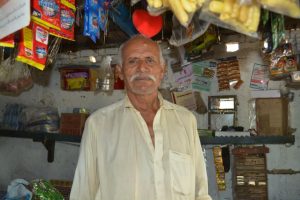
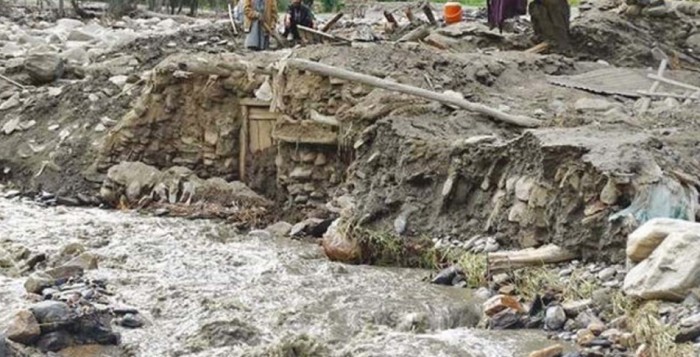
Picture: www.xinhuanet.com

The heavy rains which started from 9th of this month still continued to affect various parts of the country. So far Baluchistan, Khyber Pakhtunkhwa, Punjab, FATA and Azad Jammu and Kashmir have received intense precipitation leading to floods, avalanches and landslides, resulting in severe loss of human life as well as damage to physical and social infrastructure.

As per the update of the National Disaster Management Authority (NDMA) and local government departments, dated March 21, 2016, 122 people have been killed and 124 injured, while 1,620 houses have been completely or partially damaged due to rain and flood-related incidents in AJK, Baluchistan, FATA, KPK and Punjab.

The rains still continue in several areas and the risk of increase in the number of damages and losses is foreseen to be inevitable. Landslides have caused road blockages in different affected areas of KPK and AJK leaving certain areas inaccessible by road.

Azad Jammu and Kashmir: Bagh, Haveli, Poonch, Sudhnoti, Muzaffarabad and Hattian Bala are the worst affected districts of AJ&K. As per the information collected from the Deputy Commissioner (DC) offices of the respective districts, so far 14 people have been killed and 1,370 houses have been damaged, leaving 3,900 families affected.

The concerned government offices of AJ&K have requested for immediate support in the shape of food, tents, winterization support and provision of plastic sheets.

Response by Community World Service Asia:
Community World Service Asia is currently monitoring the situation. Its disaster response team is in close coordination with the government authorities and local partners present in the affected areas, and will propose the response strategy accordingly.

Contacts:
Allan A. Calma
Deputy Director
Disaster Management Program
Email: allan.calma@communityworldservice.asia
Cell: +92 301 5801621

Muhammad Fazal
Associate Director
Emergencies/DRR/Climate Change
Email: fazil.sardar@communitryworldservice.asia
Cell: +92 332 5586134

Alison Sneddon
Head of Communications
Email: alison.sneddon@communityworldservice.asia

Community World Service Asia is pleased to announce the launch of an exciting pilot scheme to strengthen our monitoring process.  Starting with two of our projects which are being implemented in rural Sindh, Pakistan, the Frontline SMS system is being introduced to engage our stakeholders in our monitoring.

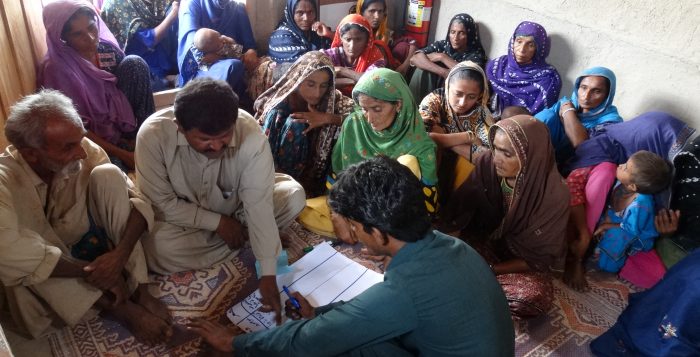
Project participants, including members of local steering committees, community gender activists and lead members of our Women’s Enterprise Groups have been provided with mobile phones and a credit allowance of PKR 100 (approx. US$ 1) a month to report activities directly and instantly to the field team.

The award-winning system assigns numbered codes from 1 to 9 to different activities or incidents.  Steering committee members, for example, can report the absence of a teacher by simply sending a text message with the number 3; gender activists can report that they have held a household meeting by texting the number 4; and the sales and marketing agents of Women’s Enterprise Groups can report that they have received an order by sending the number 7.

Crucially, the system enables people with low levels of literacy to be included and communicate instantly with the team.  Community World Service Asia looks forward to using this innovative application of technology to further empower our project participants by involving them in this important part of monitoring.

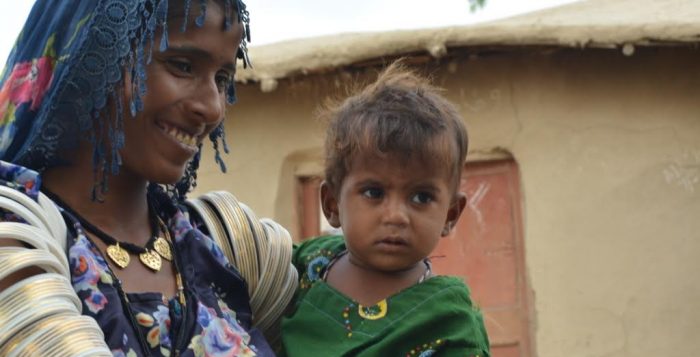
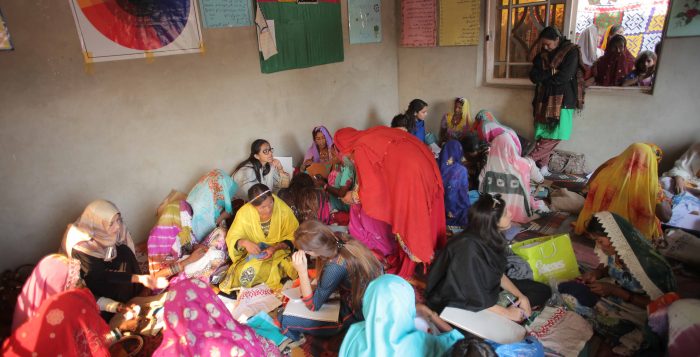
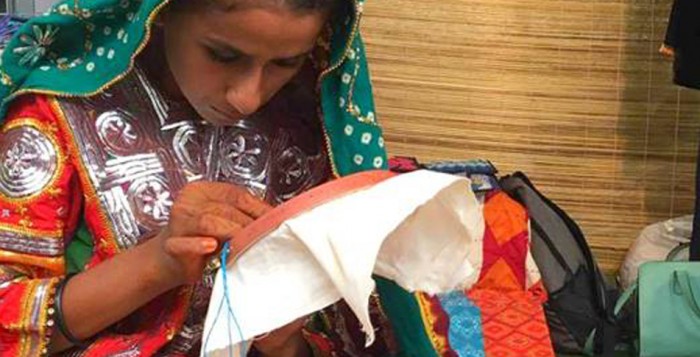
Community World Service Asia, with the support of Christian Aid, is working to empower women in rural Sindh, Pakistan, by supporting them to earn an income through traditional handicrafts skills. Mithal talks to us about her involvement in the project.

Name: Mithal
Age: 37 Years
Village: Phull Jakhro
Occupation: Tailor, House wife, Artisan

Q: How much did you earn before becoming involved in this project?
A: Before, my monthly household income was around 1,000 – 1,500 rupees [approximately US$10 – 15].  I earned by sewing the clothes of villagers.

Q: How has this affected your life?
A: It was not enough income for me as i have a son.  Complete responsibility for him shifted to me after the death of my husband. So it was difficult to manage the household expenses.

Q: Tell us about how you learned these skills.  Do you enjoy doing this kind of work?
A: Before joining the Centre, I was familiar with some of the traditional skills which I had learnt from my mother. Yes, I enjoy doing this work, because for me it is like my ancestors’ custom, and I have to keep it alive by making embroidery which I know on different products.

Q: Why did you want to be a participant in this project?
A: Before this project, in our village, there was not any kind of literacy or vocational centre where I could learn both literacy and more embroidery skills. So the interest to learn more made me able to participate.

Q: What new skills have you learned at the centre?  How do find the teaching style?
A: I learnt more about ralli (traditional quilting) making designs and appliqué work at the centre. The teaching style of our instructor is very motivating.

Q: How much money have you earned through your handicrafts since becoming involved in the project?
A: I have earned 3,000 rupees [approximately US$30] since i have been involved in the project.  Orders were made within my village, and my friend made the order for me.  The order was for four embroidered shirts, and it took me one month.

Q: What was it like for you to fill these orders?
A: It created a hope for me that slowly, but now, it is going to be a source of income generation for me.

Q: What did you do with the money you earned?
A: I gave 1,000 rupees to my mother who is also a widow, and ill.  I gave 1,000 rupees to my elder brother. The rest is spent on food and clothing.
Q: What do your family think about the money you have contributed to the household?
A: I am a widow and stay with my elder brother and mother. My brother has his own family to feed, but he supports me too. He was also ill, so when I gave him the money, he became happy and felt proud of me.  I am very happy to feel that I can also contribute for my household.

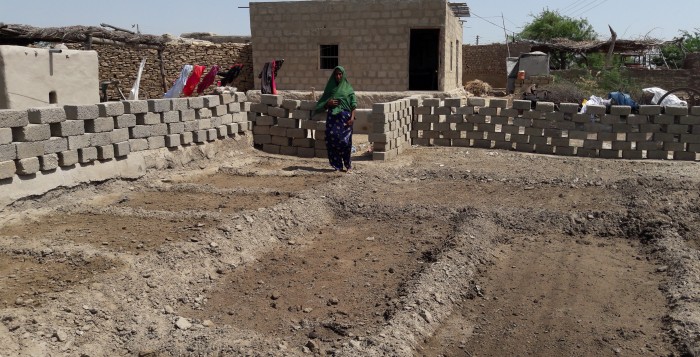
Sindh is known as the “breadbasket of Pakistan”, as the agricultural sector in the province directly supports around three quarters of the country’s population.  However, due to heavy rains, cyclones and sea intrusion, leading to rising water levels, as well as the flat topography of the land, the area is extremely vulnerable to flooding, and has suffered extensively from the effects of flooding, which causes extensive damage to the lives, health, livelihoods and homes of millions of people living around river embankments in low lying areas.

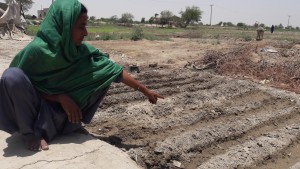
Community World Service Asia has been working to meet the urgent food needs of families displaced by flooding and residing temporarily in underdeveloped areas of Sajawal district.  The floods not only washed away their belongings, but also destroyed standing crops, leaving them food insecure and vulnerable to malnutrition and illness. To address the critical food insecurity faced by these families, Community World Service Asia provided food assistance through the distribution of wheat seeds to enable the affected farmers to sow for the coming cropping season. Each of the 1,470 farming families was provided with 100 kilograms of wheat seed, to cultivate two acres of land. The harvest from this crop would enable the families to meet their food needs until the next harvest.

Monthly food rations were also provided for a period of five months while waiting for the harvest. Rations were distributed to 2,100 families, including 70 kilograms of fortified wheat flour 70, six kilograms of pulses, five liters of oil and ten match boxes. All packages adhere to international standards to ensure that the needs of vulnerable people are respected and met.

Community World Service Asia believes in incorporating sustainability into its relief efforts, and in developing the long-term resilience of the communities with which we work.  This initiative therefore included the training of 1,470 farmers on integrated crop management, a holistic approach to sustainable agriculture based on indigenous knowledge, and the training of 419 community members on disaster risk reduction practices.

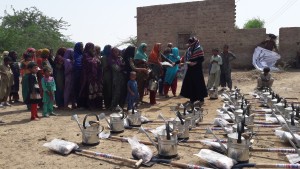
As part of the capacity building on disaster risk reduction, a tree plantation campaign, titled “One Family, One Tree”, has been initiated to protect the community from soil erosion, which exacerbates the risks of flooding.  The campaign supports the government’s efforts to minimize the threats posed by climate change and future environmental hazards, and was welcomed by the community.  With support and facilitation from the district administration and the Social Forestry Department, some 2,200 saplings for Eucalyptus, Bakine and Neem trees were provided at subsidized rates of just PKR 2 (approximately US$ 0.02) per plant.

Community World Service Asia is delighted by the enthusiasm and commitment to the campaign, and will continue to support efforts for a green future for Pakistan.

At least 49 people have been killed and 80 injured as the rains and flash floods wreaked havoc across Baluchistan, Khyber Pakhtunwa, Punjab and FATA Region.

According to the National Disaster Management Authority (NDMA) 75 houses collapsed due to the relentless rains and flash floods.

Province Deaths Injured Houses Destroyed
Baluchistan 18 22 49
FATA 15 25 3
KP 6 15 19
Punjab 10 18 4
Total 49 80 75

The number of casualties and damages is expected to further increase as more information is received from the affected areas. Most of the casualties resulted from roof collapses and lightning.

To date, Baluchistan is the worst affected province with 18 people dead, 22 injured and 49 houses destroyed.

Low lying areas have been inundated due to the continuous rains while several roads have been blocked at different places due to Landslides in the hilly areas making access difficult to the affected areas.

Severe weather hits the country every year (usually monsoon season happens in the mid of the year) with hundreds killed and huge tracts of prime farmland destroyed in recent years. However, such a high precipitation in the month of March with lots of losses is unusual; and is attributed to the impact of El Nino.

During the rainy season last summer, torrential downpours and flooding killed 81 people and affected almost 300,000 people across the country.

Response by Community World Service Asia:
Community World Service Asia is currently monitoring the situation. Its disaster response team is in close coordination with the Government authorities and local partners present in the affected areas and will propose the response strategy accordingly.

Contacts:
Allan A. Calma
Deputy Director
Disaster Management Program
Email: allan.calma@communityworldservice.asia
Cell: +92 301 5801621

Muhammad Fazal
Associate Director
Emergencies/DRR/Climate Change
Email: fazil.sardar@communitryworldservice.asia
Cell: +92 332 5586134

Alison Sneddon
Head of Communications
Email: alison.sneddon@communityworldservice.asia

Haseena, a 28 year-old-artisan woman, belongs to the village of Dadu Panwar near Thatta. She started working after the floods in 2010. Haseena says that prior to joining the center established by Community World Service Asia, she did not know many types of embroidery stitches. She says that it was at the center that she and her fellow artisans learnt how to read and write their names.

“We used to give our thumb prints but now we are able to sign.”

Haseena feels that it was through the continuous efforts of the vocational teaching instructors and designers that opened up various aspects of local craft.

“We went to Karachi for a training. Previously, we didn’t know which products would be made out of our samples but once we went to Karachi and saw the market, we found out what our embroidered samples were being used for. When we went to the market again, we saw bangles, earrings, and bags that had been made out of embroideries similar to ours. If we work more passionately, we will be able do well,”

she says. 
Now that the center has been reestablished, Haseena says all the women in the village are very excited at the prospect of learning new skills and going to Karachi.

“We are very happy and are hopeful to learn further and move forward in life. If we get money from our orders, then we will spend that money in educating our children, running our homes.”

She feels that it should not only be the man’s responsibility to earn money for the house.

“This skill that we are learning will allow us to be independent and not rely on anyone else for financial support,” she adds.

Mehnaz, 35, was born in Dhenda, a village in district Haripur. In the 1980s, her parents moved to Pakistan after the Afghan jihad following which her father was unable to earn a decent livelihood. The few small jobs that he did only helped bring a very small income home. As a result, Mehnaz and her family suffered from poverty and hardship. As per family tradition, Mehnaz was married to a man from her clan but despite making compromises, her marriage fell apart. Back at her parents’ home with her now year-old son, Mehnaz felt that she had added to the existing financial worries of her family. Without a place to turn to for help, she found herself falling into depression. It was during this low that she found out about the Community World Service Asia’s training in the Dhenda area. In just her second month in the dress designing trade, she was getting orders from people; she now earns about PKR 300/ per day.

Mehnaz’s determination to raise her son independently as well as contribute to household expenses led her to successfully establish a tailoring center for women in Dhenda. Currently, she is an instructor at the center with 20 women under her training. Her story is one of resilience to overwhelming circumstances and her passion to work despite tremendous challenges truly inspirational.

Heavy rain lashing for last several days have wreaked havoc in different areas of Baluchistan as houses collapsed and roads washed away causing deaths in many areas. The rain also continued to lash on the provincial capital, Quetta.

Heavy rains with thunderstorm were also reported in Zhob, Loralai, Musa Khel, Harnai, Dukki, Pishin, Khanozai, Kalat, Mastung, Sibi, Bolan, Awaran, Nasirabad, Jaffarabad, Jhal Magsi, Dera Bugti and other areas of Baluchistan province which caused damages to mud houses and roads.

Two children were reportedly washed away in the flash flood and a man was killed while another eight people have sustained injuries due to lightning in the border area of Chaman.

Several roads were washed away due to hill torrents in Chaman, Toba Achakzai, Toba Kakari, Gwadar, Turbat and Khuzdar districts.

Power supply was also suspended in several areas due to heavy raining.

As per Pakistan Metrological Department (PMD), heavy rains are also expected in Khyber Pakhtunkhwa in the next 4 days with High Risk of flash flooding in surrounding areas and very likely to intensify on Friday evening/night. The KP Government has already requested KP Provincial Disaster Management Authority and FATA Disaster Management Authority to be on alert and ready to respond should the situation worsen.

Community World Service Asia is currently monitoring the situation. Its emergency response teams are ready and will start emergency response activities if required.

Contacts:
Allan A. Calma
Deputy Director
Disaster Management Program
Email: allan.calma@communityworldservice.asia
Cell: +92 301 5801621

Muhammad Fazal
Associate Director
Emergencies/DRR/Climate Change
Email: fazil.sardar@communitryworldservice.asia
Cell: +92 332 5586134

Alison Sneddon
Senior Communications Officer
Email: alison.sneddon@communityworldservice.asia

Sources:
www.samaa.tv
www.ndma.gov.pk
www.nation.com.pk

Greetings from Community World Service Asia!

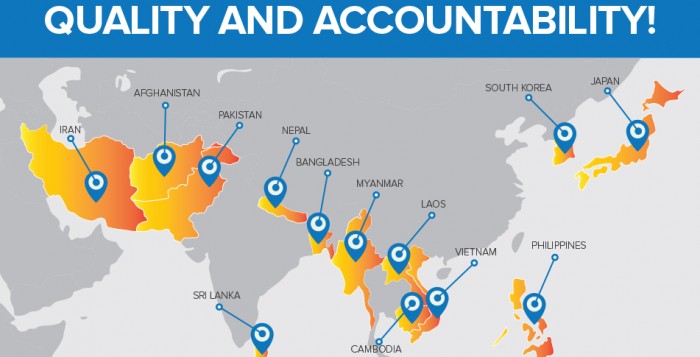
Community World Service Asia is organizing a regional learning event, a 6-day Training of Trainers on Sphere and Companions from 3rd – 9th April 2016 in Bangkok, Thailand.

This event is a unique opportunity for all agencies, as it is focusing on learning as well as practically implementing the Joint Q&A Standards which is being promoted for the first time in the region. This event aims to gather professional humanitarian workers from INGOs, NGOs, UN, donors, universities and government agencies from around the world who are leaders in promoting and implementing approaches for enhanced quality and accountability (Q&A).

The attached brochure provides detailed information. If you wish to nominate any person(s) from your organization for this event, kindly fill the online application form using the following web link: http://goo.gl/forms/xEGER7En7b OR you can also register by completing the enclosed application form. Please ensure to send filled form to qa.support@communityworldservice.asia by 4th March 2016.

If the applicant(s) meets the selection criteria, he/she will be informed via confirmation letter latest by 7th March 2016.

Download Invitation Package and Brochure.

Should you require any further information, please feel free to contact us at our Karachi Office in Pakistan.

Thanking you and assuring you of our best cooperation and services at all times.

Regards,
Ms. Shama Mall
Deputy Director – Development and Capacity Enhancement Program
Community World Service Asia,
Karachi, Pakistan
Tel no: +92 (21) 34390541-4 | Fax: +92 (21) 34390922
Email: qa.support@communityworldservice.asia
Website: www.communityworldservice.asia