
Authors Posts by comms

comms


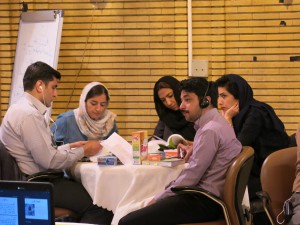
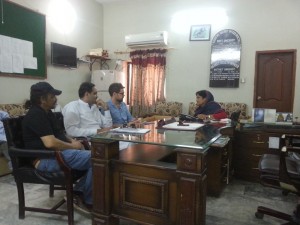
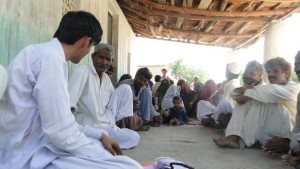
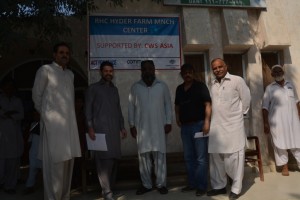
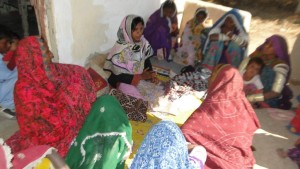
With support from the Danish Center for Culture and Development, Community World Service Asia is bringing together rural artisans from Thatta and Umerkot in Sindh, and design students from Karachi.  Through their collaboration, traditional skills will be combined with marketable designs, enabling these women to connect to the urban market and earn a sustainable income from their craft.  This month, students from the Indus Valley School of Art and Architecture (IVS) and the Textile Institute of Pakistan (TIP) visited Umerkot and Thatta respectively, in order to meet the artisans with whom they will be working, and gain some insight into their way of life and conditions of work.

Ameer khan, 39, migrated from Kalam to Swat in Khyber Pakhtunkhwa, Pakistan, around three years ago where he was living in a rented house of two rooms, a kitchen and bathroom. To support his family of ten including his mother, wife, six daughters, a son and a disabled father-in-law, Ameer khan sold peanuts on a cart in the market during winter. In the warmer months, he used the same cart to sell local cold drinks. Although with a daily wage of PKR 400/, Khan was not making enough to cover all of his household expenses, he was still able to manage somehow.

Khan’s struggles were amplified in the aftermath of an earthquake that hit Swat along with other areas of Northern Pakistan on October 26, 2015. While one room and a boundary wall were completely damaged, the other room was partially broken thus becoming unlivable. Khan was left with no choice but to shift his family to a neighbor’s home for a few days. Due to limited space, however, he had to bring them back to his own house where the only undamaged space, to live in, was the kitchen. To accommodate everyone in a single room, Khan had to sleep under the open sky during freezing winter nights.

“Ameer and his family have suffered a lot due to this earthquake and despite the damage to his house, he has not been included in the government’s earthquake survivor’s compensation list for reconstruction,”

says Jamil Ahmad, Kisan councilor, local government representative of district Swat.

“We tried our best to include him but unfortunately our efforts were futile as the list had been finalized and could not accommodate more people,” he added.

Among the more urgent needs of the communities, winterization support tops the list of most prioritized needs. Having identified the urgency of providing relief to earthquake-affected communities, Community World Service Asia, has thus far, provided support to 504 families through the funding support of UMCOR in the area.

Ameer Khan was also among the selected right holders for the winterization support assistance.

“I am very thankful to Community World Service Asia for helping me in catering to the most urgent needs of my family. With this support, at least we have something to cover ourselves with during this extreme weather”,

he said.


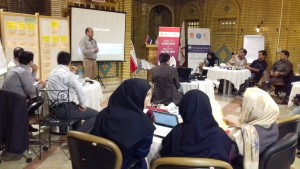
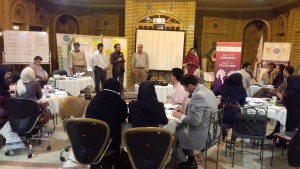
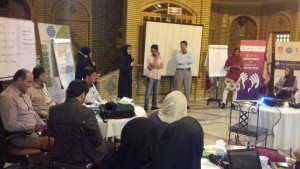
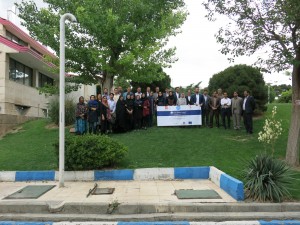
Community World Service Asia organized a three-day training for University of Peshawar from January 26 – 28, 2016 and for University of Punjab on 5- 7 February 2016 on “Introduction to NGOs”. 23 students from the BS Social Work program participated in the event in Peshawar and 28 students from the M. SC Social Work participated in the event in Lahore.

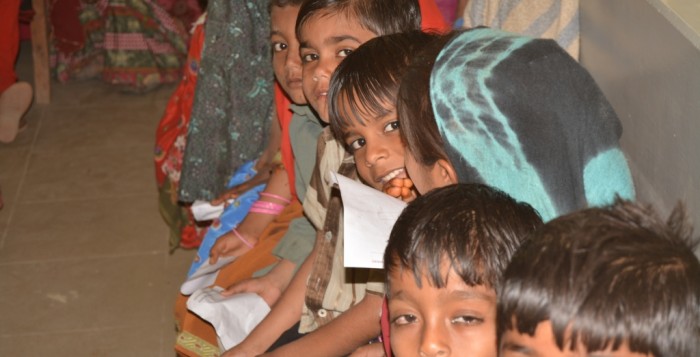
A sister holding her baby brother while waiting to see the doctor at the BHU in Kuzkhana

In response to the 7.5 magnitude earthquake that struck the Hindukish mountain range on October 26th this year, affecting thousands of people in northern Afghanistan and Pakistan, Community World Service Asia set up a mobile health unit in district Shangla.  The Mobile unit started its activities on October 30th and continued operation as a static Basic Health Unit in Kuzkana, Shangla, after two weeks and still operational.

In its thirty two days of activities till December 10th, the Health Unit days catered to 4090 earthquake affected community members in its Outpatient Department (OPD),of which 2271 patients were women and infants, and 1820 men and children.  A total of 1033 laboratory tests were conducted to diagnose illnesses among affected communities in the mobile Laboratory and BHU.


Community World Service Asia conducted a six week residential training course on Proposal Writing in collaboration with Indus Consortium (IC). This course aimed to give participants the knowledge, techniques and tools used for writing winning project proposals, allowing participants to gain analytical and practical skills on project proposal writing. It was conducted at the locations Murree and Islamabad from September to November 2015.

The first part of the Proposal Writing course was held in Murree, and was attended by seventeen participants (13 Men & 4 Women). It entailed a variety of learning methodologies to address different learning styles through various interactive discussions, group work, case studies, quiet reflection and detailed lectures.  The course enhanced the knowledge of the staff members of IC partner organization on the topic of Project proposal writing and its implications on the effectiveness of project. At the start of the training a pre-test was conducted to gauge participants understanding upon the topic.

During the course the participants were divided into sub groups, which remained intact till the end of the training. However, temporary groups were made for completion of the given assignments. This combination of temporary and permanent groups allowed the participants to have more interaction and learn from each other to the maximum. Review of the previous day was an essential component of the training.

A salient feature of the training was that it demanded active participation of all participants, making the learning a two way process. All the participants were lead through proposal writing stages practically and made to play vital role in success of projects.

Essential and regular feature of the training was trainer’s evaluation by the participants. These exercises were aimed to judge the understanding level of participants and their needs, monitoring the sessions, maintaining a regular feedback and to gauge the level of learning taking place. A special effort was made to introduce new methods and tools of evaluation and warm up exercises (ice breakers and energizers) to keep the interest of the participants alive and to familiarize them to the maximum number of methods and tools.
The second part of this course was provision of technical support to all training participants.  In the first part four groups were formed to develop their proposals. In the second part they were provided with an opportunity to seek technical support from Resource Person Mr. Waqar Haider Awan. All groups finalized their proposals with the technical on-line consultation
A lessons learned event was conducted in Islamabad in 4th November 2015 to share their Proposal Writing experiences. Participants shared that gathering correct information for the proposals was a great challenge; however they relied upon data / information provided by the state department/s and authentic sources.  Developing LFA was another challenge which they overcome through online consultation and group coordination. The biggest lesson learned was working in groups as a team. The participants were able to identify five proposals which if submitted could land them further projects upon approval.


Mir Hussain, a twelve year old resident of village Sher Muhammad Hallo in Thatta distirct encountered a foot injury while working in the agricultural fields. He accidently injured himself with his crop cutting spade while at work.  Mir Hussain’s injured foot bled heavily and the pain he was suffering was excruciating.

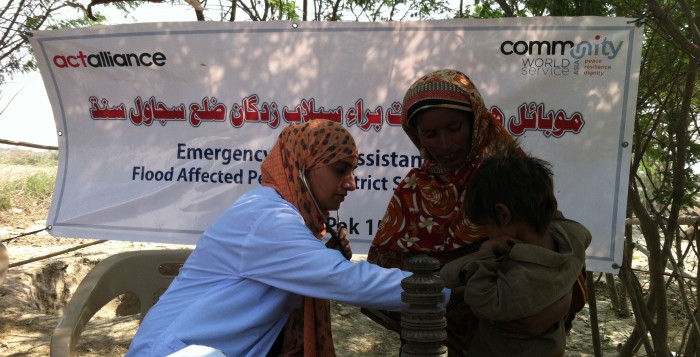
“I could not see my son in pain and bleeding that much. I was very worried as my husband was at work at the time and there is no hospital near our village”, expressed the worried mother of Mir Hussain. The mother was soon told about a Mobile health team that was present in the area, upon advice from fellow villagers and members of the Village Health committee, she immediately took her son to the Community World Service Asia Mobile Health team where Dr. Mujahid Ali Shah examined  Mir Hussain’s injury. Dr. Mujahid attended to his wounds immediately, first cleaning the wound and then stopping the bleeding by pressing it with a gauze bandage. When the bleeding ceased, the injury was properly dressed and Mir Hussain was given an antibiotic and pain killer for further relief. Mir Hussain’s mother was instantly relieved of her worry and expressed gratitude to the doctor and the mobile health team.

Belonging to an underprivileged family, Mir Hussain shares a home with his eight siblings and parents. His father is a fisherman who goes fishing to the nearby lake on a daily basis.  In the summer of 2015, their house and village was severely affected by the floods that hit parts of Sindh.  “All the residents of our village were moved to safer areas when the flood was approaching. We were moved to embankments as well. No one has assisted the flood affected villages with medical aid since the floods hit us. Community World Service Asia is the only organization that came to our medical assistance. It will take us two to three months more to further settle back into our normal lives”, narrated Mir Hussain’s mother.

The Health unit established by Community World Service Asia in Thatta, has so far conducted 5,745 medical consultations. Two hundred and seventy Ante-Post Natal consultations have been delivered, while 148 hygiene sessions have been conducted. Two village health committees consisting of twenty four members have also been formed under the current project.

After completing training, participants receive an emergency kit, including a radio, a torch, a safe documents bag and a battery cell

This month, Community World Service Asia has conducted disaster risk reduction sessions for 150 men and women from six Community Organizations in the hazard-prone area of Thatta, Sindh province.  Community Based Disaster Risk Management trainings are conducted through our innovative Mobile Knowledge Resource Center, which engages community members in disaster preparedness skills.  These trainings are bringing vital knowledge to vulnerable communities, and empowering them to build their resilience:

“It was great and fruitful training for us because we never received any training about DRR by presenting simulation models, we never knew about our village’s vulnerabilities, historical hazards, evacuation and emergency equipment.”

  • Gul Hassan, member of Rahim Dino Thaheem Community Organization

“The early warning system is a very informative method to mitigate any future disaster.  It will help us with updates of natural disaster.  The phone number provided to us it will help us to remain in contact with government body and NGO. We never know before where we get updates.”

  • Yar Muhammad, member of Haji Talib Bijoro Community Organization

“I would like to thanks Community World Service Asia for coming here and conducted training especially for women, because we are neglected at any walk of life.  I learnt how to take safety measure in a fire disaster; I know about the reason of fire and how to keep away unused grass from kitchen surroundings.”

  • Ms Meemi Member, member of Basar Charan Community Organization

Picture: http://earthquaketrack.com

Strong tremors of earthquake were felt in different parts of Pakistan and India at 12:50 pm (PKT). According to US Geological Survey (USGS) the magnitude of earthquake was found to be 7.2 at Richter Scale centered 28km deep in earth and 109km west of Murghob area in Tajikistan.

The earthquake mainly hit the northern parts of Pakistan including Islamabad, Sawat, Shangla, Abbotabad, Chitral, Charsada, Lower Dir, Upper Dir, Peshawar, Malakand, Gilgit and Chilas. It is also reported that earthquake tremors were recorded in capital city of New Delhi and Indian occupied Kashmir.

This is the second strongest quake after the the 7.5 magnitude earthquake that struck the bordering countries of Pakistan and Afghanistan on October 26 – centred in the Hindu Kush. The Hindu Kush mountain range stretches across 800km between central Afghanistan and northern Pakistan. The October 26th earthquake have so far left more than 300 people dead and over 2,000 injured.

There have been no reports of any losses to life or property in any of the affected countries so far.

Contacts:
Allan A. Calma
Deputy Director
Disaster Management Program
Email: allan.calma@communityworldservice.asia
Mobile: +92 301 5801621

Muhammad Fazal
Associate Director
Emergencies/DRR/Climate Change
Email: fazil.sardar@communityworldservice.asia
Cell: +92 332 5586134

Nejabat Khan Safi
Associate Director
Disaster Management Program
Email: nejabat.safi@communitryworldservice.asia
Mobile: +93 799 326 628

Palwashay Arbab
Head of Communications
Email: palwashay.arbab@communityworldservice.asia
Ph: +92 42 3586 5338

Sources:
www.dawn.tv
www.tribune.com.pk

The earthquake 26 October, 7.5 magnitude earthquake affected sixteen provinces in Afghanistan and two provinces along with the FATA region in Pakistan. It left a total of 395 people dead, 2,269 injured and 116,639 houses damaged in both the countries. Infrastructural damage was most extensive near the epicentre of the quake in both the countries. Access to the affected provinces is most difficult due to the volatile security situation in Afghanistan and the rugged terrain in both the quake hit countries.

The decreasing temperatures in the affected zones of both the countries is another hurdle in accessibility to the areas. With no appropriate shelter, the earthquake hit communities are forced to face the harsh winter in compromising conditions, struggling to meet their basic survival requirements.

Pakistan: As per the latest information released by the National Disaster Management Authority (NDMA), so far 280 people have died, 1,745 have been injured and a total of 98,094 houses have been damaged across the country. Out of the total houses damaged, 92 percent were located in Khyber Pakhtunkhwa Province. Damages to infrastructure such as roads, bridges and communication networks, in the affected areas are also significant.

Protection against the near freezing temperatures is the priority need of the affected communities. In this regard, winterization support is a highly recommended form of assistance by the district government. This is followed by health services which also a critical need of the quake hit communities who are exposed to the dropping temperatures without adequate winter supplies.

Afghanistan: A total of 115 people have died, 524 people have been injured and 18,545 houses have been damaged in Afghanistan. A recorded 6,929 houses out of the total damaged have been completely destroyed. A reported 130,093 people have been affected across the country as per the latest report, however the damage assessment is still ongoing which may result in a further increase in number of damages.

More than 50,000 people have been affected in Badakhshan province where property damage was most widespread. Access remains the major challenge in providing assistance to the earthquake affected people in Afghanistan. The primary needs of the affected communities in the country have been identified as basic household supplies, blankets, tents, hygiene kits and shelter for those families whose houses have been completely destroyed.

Quality and Accountability Related Issues

Afghanistan: Community World Service Asia has conducted a Rapid Accountability Need Assessment (RANA) with local and international organizations working on the earthquake response in Afghanistan.  Listed below are the accountability related issues that have surfaced in the assessment;

  • Organizations have less capacity to handle complaints as they do not have proper Complaint Response Mechanisms (CRM) in place or trained staff to deal with the concerns of the communities
  • Due to current developing security situation, some international organizations are unable to reach far flung and remote affected communities

Pakistan: Community World Service Asia organized an Accountability Learning and Working Group (ALWG) meeting on Nov 19, 2015 to discuss the challenges and issues faced by humanitarian actors in responding to the recent Earthquake in Pakistan.  Ten national and International organizations including UN agencies participated in the event. Listed below are the identified accountability related issues;

  • Access to the severely affected areas is still a major issue
  • 50 percent of the affected community is still waiting for compensation
  • The Government is disbursing compensation amounts through cheques however most of the earthquake affected communities do not have bank accounts to cash their cheques
  • No proper emergency evacuation system has yet been placed for children in earthquake affected areas. The schools in these areas are still not functional either.
  • Some of the organizations have provided shelters to the communities but the quality of the shelters does not take in account resilience to changing and extreme weather.
  • Some community members have started reconstructing their homes but they are not following the earthquake resilient structure guidelines.
  • Lack of coordinated assessment is still a major challenge.

Response by Community World Service Asia: Community World Service Asia’s Emergency Health Response team has provided health services through Mobile Health Units in District Shangla for 12 days where the team treated 1,853 patients, of which 975 were male patients and 878 were female. A total of 136 lab tests have also been carried out at the MHU. Since November 16th, the team has started operating as a static Basic Health Unit at UC Kuzkana in the Shangla district, where the team has assisted more than 600 patients, and carried more than a hundred lab tests so far. Community World Service Asia has also distributed one month food packages to 371 families and distributed 812 winterization kits to affected families till date. In the coming days more distributions of winterization kits will also take place.

Please follow our live photo update from the earthquake affected areas on our Facebook page at: https://www.facebook.com/communityworldserviceasia/ .

Contacts:
Allan A. Calma
Deputy Director
Disaster Management Program
Email: allan.calma@communityworldservice.asia
Cell: +92 301 5801621

Muhammad Fazal
Associate Director
Emergencies/DRR/Climate Change
Email: fazil.sardar@communitryworldservice.asia
Cell: +92 332 5586134

Nejabat Khan Safi
Associate Director
Disaster Management Program
Email: nejabat.safi@communitryworldservice.asia
Mobile: +93 799 326 628

Palwashay Arbab
Head of Communications
Email: palwashay.arbab@communityworldservice.asia
Ph: +92 42 3586 5338

Sources:
http://www.ndma.gov.pk/new/
http://www.pmd.gov.pk/
http://www.Reliefweb.int
OCHA Afghanistan
IOM Afghanistan