
Authors Posts by comms

comms

The first ever Training of Trainers on the Sphere standards was conducted in the city of Iran this May. Funded by the Norwegian Refugee Council (NRC) and planned in collaboration with the Iranian Red Crescent Society (IRCS), the training was thoughtfully designed and facilitated by Community World Service Asia considering the Iranian context. To promote effective humanitarian response in Iran, ICRI has conducted a series of Sphere trainings in Iran during recent years in coordination with NRC. Following the three day basic Sphere trainings, the key stakeholders involved recognized the need of creating a larger pool of Sphere trainers in the country to join existing three member sphere trainers’ team.

Community World Service Asia has been providing humanitarian support to programs assisting refugees in Iran since June 2015. However, this has been the organization’s first experience in its quality and accountability interventions in the country as they provided technical support to conduct this first-ever Sphere ToT. Participants at the training belonged to various sectors of the humanitarian community present in Iran. These included Red Crescent staff, government officials, UN representatives and national aid workers. This event proved essential in providing a joint platform for key stakeholders of the humanitarian community to collaborate on understanding the Sphere handbook and its application.

Discussions are underway to support the selected ToT graduates to become expert Sphere trainers. As an immediate outcome of the ToT, one of the participants introduced the Sphere Standards in his recent lecture at the Iranian Red Crescent’s research institute. The respective agencies are looking forward to having a joint strategy in building the national capacity in Iran through the use of the Sphere Minimum Standards.

Students and teachers participated actively in a walk/rally, in district Sujawal, organized by Community World Service to mark the importance of Global Earth Day.

Every year, Global Earth Day is celebrated across the globe to call for action against harmful environmental practices and to help spread awareness about protecting the Earth’s natural environment. To mark the importance of this day and the cause it represents, Community World Service Asia, with support from Christian Aid, pledged to plant 4000 trees in various localities of districts Thatta and Sujawal in Sindh. The team collaborated with Plan International, Action for Humanitarian Development (AHD) and Voice of Youth Group to make this possible.

Titled ‘One Family, One Tree,’ the campaign ran for an entire week  (18-22 April) and was inaugurated by chief guest Mr. Abdul Latif Brohi, Assistant Deputy Commissioner , who planted a tree at the DC office in Thatta. Over the five days of the campaign, trees were planted by men, women and children in schools, government offices, roadsides and villages. Youth volunteers and teachers also participated in the activity.

Children waiting for their turn to be examined by the doctor

The government in Sindh is considered as the main provider of preventive care throughout the province and a major provider of curative services in most of its rural areas. Health services in the public sector are provided through a tiered referral system covering a  range from primary, to secondary and tertiary medical facilities. Primary care facilities include basic health units (BHUs), rural health centers (RHCs), government rural dispensaries (GRDs), mother and child health (MCH) centers and TB centers.

Unfortunately, most of these facilities lack the provision of a broader range of preventive and curative health services. The Taluka (Administrative division) and seventeen district headquarter hospitals in rural Sindh are responsible for providing medical care to the people of these areas. However, many are unable to benefit from these health care institutions due to the lack of technical assistance and the poor infrastructure.

The public health system in Sindh is unable to cope with the mounting health challenges that people are facing in the province. The province’s  district of Umerkot faces the highest national statistics on human and material health care shortages.

Community World Service Asia has been working in the health sector in Pakistan for the past thirty years. Through this experience, the organization has learnt that project interventions must work towards strengthening the existing government structures regardless of its weaknesses. This approach results in a more  sustainable impact instead of working in isolation or parallelly to the system.

Based on a recent rapid assessment carried out by Community World Service Asia, development of  three RHCs in villages Nabi ser, Dhoror Naro and Hyder Farm were proposed and approved. These RHCs aim to benefit a combined population of around 98,341.

To ensure long-term sustainability, the project’s plan is to work in close coordination with the government health department thus aiming to bridge the gaps in services such as provision of human and material resources. This includes working closely with female medical officers and para-medical staff, provision of essential medical supplies/equipment, necessary maintenance and repair of existing medical facilities as most of them have been damaged due to the floods that hit the province  in years 2010 and 2013. Through this project, preventive and curative services will be developed, as well as  the capacity of the government health staff will be enhanced.

In Umerkot, three RHUs in Hyderfarm Taluka Umerkot, Nabisar Taluka Kunri and town committee Dhoronaro have already become operational providing curative and preventive health services to the communities. At the initial stage, the infrastructure of the dilapidated RHCs was worked upon and these units were provided essential equipment required to cater to the health needs of the community. In the health facilities located at Hyderfarm and Nabisar, an outdoor patient departments (OPDs) providing free consultations and essential medicines to patients has also been set up. Additionally, labour rooms have been made operational at all the three health facilities. Medical services are provided by health staff including female medical officers, lady health visitors (LHVs), medical technicians and social mobilizers at these facilities.

These health services are focusing on the reproductive health of women of child-bearing age. Disease Early Warning System (DEWS) and Health Information System (HIS) have also been established at both the health facilities. Information from these centres is regularly shared with the district government and Community World Service Asia’s head offices.

  • 44,341 community members have received preventive and curative healthcare
  • 16,802 patients are provided with general out-patient department (OPD) care
  • 2,184 pregnant women received Antenatal check-ups
  • 560 postnatal check-ups conducted
  • 501 community members practising child spacing
  • 21 Deliveries facilitated
  • 34 delivery kits provided for safer deliveries made at home
  • Labour and Consultations rooms repaired 3 hospitals
  • Six health committees formed (3 for men and 3 for women)
  • District health advocacy forum established
  • Established DEWS and HIS in two health facilities
  • 24,294 individuals participated in health education sessions
  • 4,379 women and children assessed for malnutrition
  • 16,802 patients received free of cost essential medications
  • Proper referral system setup for complicated cases

    For the second consecutive year, an extreme heat wave has hit South Asia. To prevent the loss of lives, we have been working towards spreading awareness via social media and radio. Our health centers running in various parts of Sindh have been equipped to provide immediate care to those suffering from heat-related illnesses. In this video message, we would like to appeal to our partners and donors to support us further as we continue to save lives of the vulnerable.

    Thank you to the support of all our international partners who have helped launch the response to this life threatening natural calamity! Y Care International The United Methodist Church Church of Scotland CWS Start Network UMCOR – United Methodist Committee On Relief

    A result of global warming, an extreme heat wave has hit India and Pakistan for the second consecutive year. In India, more than 100 people have lost their lives due to severe heat with temperatures soaring as high as 40°C and above. The worst affected areas include western Uttar Pradesh, Delhi, eastern Rajasthan and some parts of Madhya Pradesh.

    While last year, the heat wave struck Karachi and other parts of Sindh in June, this year it has hit the province even earlier. A heat wave alert for Karachi had already been issued by the Meteorological Department for three days starting from today (Friday).

    Doctors have just confirmed the first death from heatstroke near Manghopir Mazaar, as reported by Geo TV.

    In this time of need, we have issued an appeal to our partners and are still receiving pledges to provide life saving services to communities in Sindh province.

    Our social media campaign will be starting from today and is aimed at creating awareness regarding heatstroke and necessary precautions that must be taken during the heat wave.

    Other than spreading awareness, we will also be setting up health centers to provide immediate care to those suffering from heat-related illnesses.

    Sources: Reuters, GEO Tv

    Picture: bloem.getitonline.co.za

    In June 2015, a terrible and unexpected heat wave claimed the lives of more than 2,000 people in Karachi and interior Sindh. As the death toll went up, many others were brought to major hospitals in the port city of Karachi for treatment. The majority of these patients had been affected by heat-related illnesses such as dehydration and heat stroke. In the South Asian region, India also suffered unbearably hot temperatures. According to TIME magazine, an extreme heat wave in India has already resulted in casualties across the country for the second consecutive year, with temperatures rising above 40°C in some areas.

    This year, Community World Service Asia has initiated a support program for awareness aimed at spreading information about heatstroke. This will be carried out through social media, radio, and IEC (Information, Education and Communications) materials. By educating at-risk communities about the causes, symptoms, and preventive measures of heat/sunstroke, we can aim to reduce the mortality and morbidity rate among people affected by the heat wave in Sindh.

    Other than spreading awareness, we will also be setting up first-aid health centers in six districts of Sindh to provide immediate care to affected communities. This will include medicines and ambulance service for critical patients.

    We would like to thank our communities, donors and the government for their continued cooperation in this regard.

    Contacts:

    Muhammad Fazal
    Associate Director
    Emergencies/DRR/Climate Change
    Email: fazil.sardar@communitryworldservice.asia
    Cell: +92 332 5586134

    Alison Sneddon
    Head of Communications
    Email: alison.sneddon@communityworldservice.asia

    Community World Service Asia, with the support of the ACT Alliance, has been working to respond to the needs of families affected by severe flooding in 2015.  District Sujawal, in the Sindh province of Pakistan, has been faced with many serious health risks in the aftermath of the flooding.  Access to health facilities and services is a major issue for the community, as the nearest government health facility is at least five kilometers away.  With high levels of poverty, unreliable income sources and the losses faced by families as a result of the floods, the cost of transport and treatment can be an insurmountable obstacle.

    Stagnant water and poor shelter conditions result in widespread incidences of malaria, diarrhea, fever, scabies and other skin diseases.  Families who have been displaced by the flooding, as well as young children and the elderly, are especially vulnerable to these illnesses.

    Community World Service Asia has been working directly with communities in the Union Councils of Bello and Bijora in District Sujawal for many years, and has developed strong relationships in these areas.  In order to meet the urgent health needs of these communities, a seven-month project was initiated in August 2015.  Mobile health units enabled vulnerable groups such as women, children, the elderly and persons with disabilities to access health care in their own villages, and have consultations with doctors.  A total of 12,793 patients were examined by doctors in this seven-month period, which enabled health issues to be properly identified and addressed.  Essential medicines were also provided to patients, which eased the financial burden of health needs and ensured that patients were able to receive the treatment they needed.

    In such situations of uncertainty and insecurity, pregnant women in particular are faced with specific risks and challenges.  A Lady Health Visitor and a doctor were also available to provide vital ante- and post-natal care services to 388 women.

    As well as responding to current health needs, 362 awareness-raising sessions on health and hygiene were delivered to 8,378 community members in order to prevent the outbreak of illness through improved knowledge and practices.

    Community World Service Asia is committed to the accountability of all its interventions, and works to ensure that our projects are implemented in a way that is inclusive and participatory.  A key method for engaging and empowering the communities we work with is to form village committees, who play a vital role in liaising between the communities and the project teams, identifying relevant issues and mobilizing the community.  In seven months 24 village health committees were formed in Union Councils.  We are also committed to ensuring that the voices of all affected people are heard, so half of these committees are women’s committees, and are dedicated to highlighting and addressing the needs of women in the area.

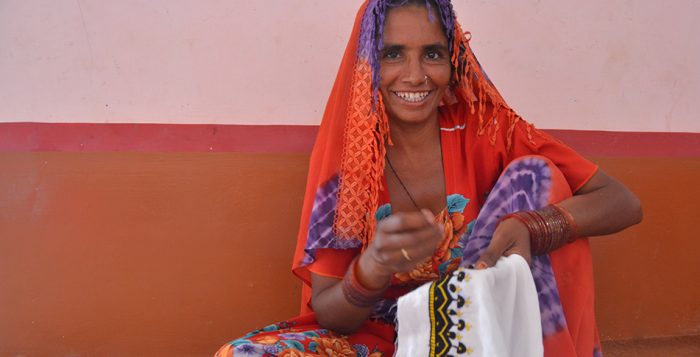
    Community World Service Asia is working to enhance the livelihoods opportunities of rural artisan women by linking them with students from design institutes in Karachi.  The artisans and students are collaborating to produce innovative designs which combine traditional handicraft skills with the demands and trends of the modern urban market.  The initiative, supported by the Danish Center for Culture and Development, aims to connect these rural artisans to an urban customer base in order to develop a profitable and sustainable source of income.  The project also provides students with an exciting opportunity to share their skills and knowledge, and learn about the cultural and artistic heritage and value of these handicraft traditions.  This month, we spoke with Zehra Ilyas, a fourth year design student at the prestigious Indus Valley School of Art and Architecture, to hear about her experience of the project so far.

    Q: Why do you think there is a need for such a program that connects women in rural communities with young women like yourself studying design in urban centers?

    A: We, as design intervention students, are taught how to sustain crafts that exist in our country and how to help their revival in a way that the livelihoods of the people who are working in rural areas can be improved. We are also benefitting from them in that these types of embroidery are not available all over the world.

    Q: What do you feel that you are gaining from your involvement in the project?

    A: They [the artisans] are producing a different type of embroidery that no other part of the world can produce. It’s a great thing to have that sort of craft revival in your own country so that you can get linked to your roots and you can do something different from what is already being produced. More specifically, I would like to point out that in a time when there is so much mass production, if there are hand-embroidered products, that of course creates an impact.

    Q: As a designer, what have you learnt from the artisans?

    A: It was a very humbling experience.  We think that we know everything, but when we meet them, we know that there is so much more to learn, not just because of the embroidery that they are doing, but the fact that they are very experienced with their embroidery. We feel like we know it and that we can just draw it, but there’s more to it. The way they are so patient with it, they are so good with their work and are extremely disciplined with it.

    Q: What were the main challenges that you faced while visiting the artisans in their rural village?

    A: Language was the biggest barrier. Secondly, there were time constraints as one or two hours are not enough with each artisan. That was one problem but they were so hospitable and nice. There were no other issues as such besides language and time.

    Q: What do you think is the importance of empowering women – especially in a country like Pakistan where we are still struggling to provide basic rights to women?

    A: Pakistan, being a third world country and the education level being so low, making women independent should be one of the biggest aims of the country. When we look at how women are oppressed it’s very important to make them independent. Teaching them how to be independent, I believe, that is a very big step. It gives them confidence to deal with people and situations. If I give them an order and ask them to produce something in a given time frame, it develops them in a different way.

    Q: What other projects or brands have impacted your interested in a project that encourages collaboration between rural and urban communities?

    A: Well, FnkAsia [a brand which sells women’s clothing and accessories] collaborates with a group in Chitral. It’s a good brand and the products are expensive. The thing is that the products are being sold and the artisans are being paid. That is the basic aim.

    Q: What did you learn from them?

    A: Patience. I am not a very patient person and even though there was a language barrier, the artisans were so calm and relaxed with us.


    Community World Service Asia is working to empower young women in rural Sindh through improved earning opportunities, literacy skills, and enhanced awareness of gender equality.  Kaveeta is eighteen years old and lives in Walhar village in Umerkot, where the project is being implemented in partnership with Y Care International and UK Aid.

    She is engaged in the project as an artisan and an instructor at the Adult Literacy Center.  Currently, her entire household subsists on around Rs. 6,000 (approximately US$57) a month. “Lack of income means doing everything the hard way,” she explains. “We are struggling to get food.”  For Kaveeta and her family, meeting the basic needs of nutrition, health and education is a constant challenge.

    When Community World Service Asia initiated the project in her village, a local steering committee was formed and the members met with the community to tell them about the project and encourage them to participate.  Kaveeta was already experienced in appliqué work, and wanted the opportunity to polish her skills.  At the Vocational Training Center, she has learned about working in a group to improve the quality, as well as about different color combinations, finishing and packing products, pricing, and how to negotiate with suppliers.

    Due to Kaveeta’s skills, she was selected to produce handicrafts to be displayed and sold at the Daachi Foundation Exhibition in Lahore in November 2015.

    “That was a great experience,” she shares. “Our trainer told us that we have to prepare quilts for the exhibition and we had just fifteen days to complete this order.  At first I was nervous and thought, ‘How can this order be completed in just two weeks?’ But when I started to work in the group, we completed the order on time and realized the importance of group work. That was the first time we prepared quilts with modern designs, that’s why I was very excited.”

    Kaveeta received payment from Community World Service for her contributions to the exhibition.  As she continues to earn an income, she hopes to one day open her own center where she will teach others what she has learned through her participation in the project.

    “Teaching adults is special for me,” she says. Kaveeta’s affinity for teaching motivated her to volunteer as an instructor at the Adult Literacy Center, where she helps her fellow artisans to develop literacy skills. “I enjoy this work because I want to teach all the women of my village.  They are interested in learning.  It is a big achievement that artisans learned to write their names.”

    Through her participation, Kaveeta is building not only her handicraft skills, but her confidence as well.  She has high hopes for her future and for the future of the women in her village.  Community World Service Asia looks forward to continuing to work with her and to realize those hopes.

    Picture: (Reuters: Fayaz Aziz)

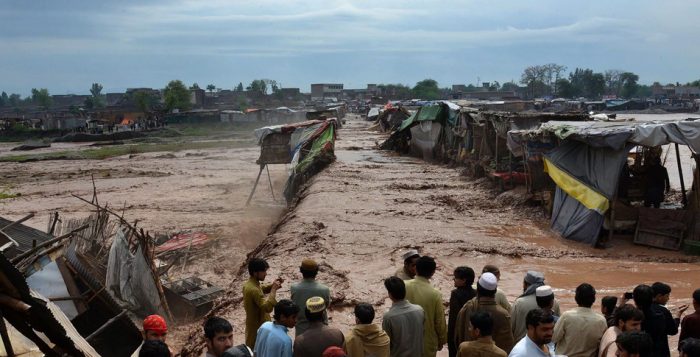
    Since Saturday 2 April, torrential rains and flooding have led to collapsing roofs and land sliding incidents, causing extensive devastation in Khyber Pakhtunkhwa (KP), Gilgit-Baltistan (GB) and Azad Jammu & Kashmir (AJK), with the death toll escalating to 71.

    Among the deceased, 45 people are from KP, 14 from GB and 12 from AJK, while the extent of damages are expected to increase as detailed information will be received from the affected areas.  Landslides are blocking main highways and link roads in Hazara and Malakand divisions in KP, and in AJK, while swelling rivers and streams are damaging infrastructure and livelihoods, as floods wash away homes and shops.

    Forecasters have predicted that unstable weather will continue over the next 24 hours, especially in Malakand and Hazara divisions. This flooding follows severe rain and flood-related damage which killed 122 people, injured 124 and destroyed or damaged 1,620 houses across Pakistan and AJK last month.

    The Chief Minister of Gilgit Baltistan has already declared a state of emergency in the province.

    Response by Community World Service Asia: Food, tents and winterization to support the affected families in AJK were proposed by the district government in AJK during last month’s flooding.  The same support is also expected to be required support in KPK and GB.  Community World Service Asia is currently monitoring the situation. Its disaster response team is in close coordination with the Government authorities and local partners present in the affected areas and will propose the response strategy accordingly.

    Contacts:
    Allan A. Calma
    Deputy Director
    Disaster Management Program
    Email: allan.calma@communityworldservice.asia
    Cell: +92 301 5801621

    Muhammad Fazal
    Associate Director
    Emergencies/DRR/Climate Change
    Email: fazil.sardar@communitryworldservice.asia
    Cell: +92 332 5586134

    Alison Sneddon
    Acting Head of Communications
    Email: alison.sneddon@communityworldservice.asia
    Cell: +44 7575 284828