
Authors Posts by comms

comms

In just a short time, social media has become a ubiquitous mainstay in the lives of people. Popular platforms have rapidly grown to hundreds of millions of users, and the adoption of social media platforms has no end in sight. This social media “revolution” has changed the traditional monologue into a two-way dialogue with individuals, communities and other stakeholders.

Social Media for Humanitarian Aid and Development

Despite the rapid growth of social media, many organizations, especially non-profits are not equipped with enough capacity to manage a successful social media campaign. Recognizing these challenges, Community World Service Asia conducted a workshop on Social Media and Advocacy titled “Social Media Mastery for Development Organizations” which was designed to introduce participants to the multi-dimensional world of social media, its various tools and available platforms, and how to develop an effective social media strategy. The focus of the workshop was on strategy, planning, and content development and at the end, group projects were conducted which incorporated all the key features of the training.

The trainer, Saad Hamid is a digital innovation and design consultant who is currently serving as the CEO of DEMO which helps individuals, organizations and communities solve problems through design and digital interventions. Saad has extensive experience in the digital, design and innovation landscape and has worked with IDEO, UNICEF, UNHCR, UKaid, Invest2Innovate, TED, Google, WEF, Upwork, Mobilink and World Bank. Saad is also an Acumen fellow.

The “Social Media Mastery for Development Organizations” workshop aimed to familiarize participants on how best social media tools can be leveraged for outreach pf project and engagement for advocacy.  The participants were introduced to a range of websites and social media initiatives taken by individuals, small non-profits, and large charities. This session was interspersed with a comprehensive session on how to develop a social media strategy. The components covered were; basics of branding, how to build brand awareness, how to personalize outreach on social media, adding events to social causes and embracing social media to build relationships. After this, a series of best practices for using social media were discussed.

The participant base was varied, with some having a lot of experience working on social media while others had no exposure at all. It was challenging to manage expectations of such a diverse group with varying skill sets. However, mixed groups proved to be good for group exercises. Participants learned not only from the trainer but from other participants’ knowledge and experiences too.  Based on the highly positive feedback received from this training, Community World Service Asia has planned a second, advanced level Social Media and Advocacy Training in May 2017.

Project management competencies are now an integral part of many public and private sector jobs. However, good project management skills are rare and there is a growing realization and need for effective planning and management of projects. Developing the capacity to plan and design sound projects is crucial to the implementation of effective policy-driven programs.

Project design is an early phase of the project where a project’s key features, structure, criteria for success, and major deliverables are all planned out. The aim is to develop one or more designs which can be used to achieve the desired project goals. Stakeholders can then choose the best design to use for the actual execution of the project.

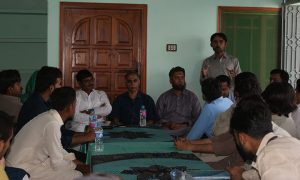
As part of Community World Service Asia’s response to the demands for more support on awareness raising and capacity building for aid and development workers, a four-day training on Project Design was conducted from November 8th to 11th, 2016 in Islamabad. Waqar Haider Awan was the lead trainer for these sessions. His field experience in development, capacity building and policy development sector provided him with a clear understanding of the current issues in designing successful projects for livelihood, youth development, human rights, civic participation, good governance and child/women’s rights. Moreover, Rizwan Qazi, co-facilitated the training, being a Community World Service Asia representative.

This four day course provided participants with a solid foundation on Project design. It aimed to assist organizations in designing high quality projects as per international requirements and to implement, monitor and evaluate them according to international standards as well.

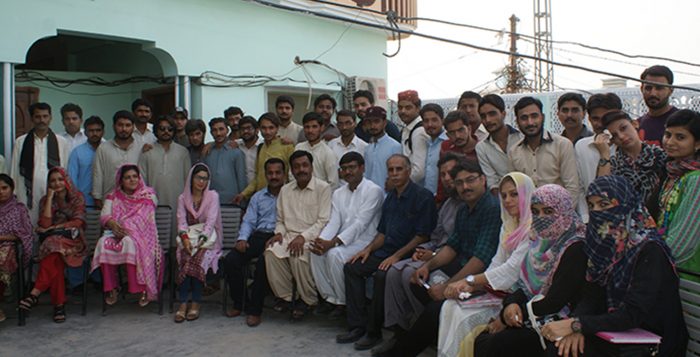
Twenty three participants from range of local NGOs, CSOs, government bodies and cultural institutions took part in this training. Many of them planned to utilize the knowledge and experience gained through the training towards identifying the needs and supporting minorities in Pakistan. The tools gained during the training will be practiced in project development and proposal writing activities of the community.

Participants were very enthusiastic about the training and the topics discussed; the interactive nature of the training, the opportunities given to link theoretical concepts with their existing experience, showing examples and collecting examples from participants, group and individual works actively engaged the group in the training. The training was successful in generating interest of the participants in applying their knowledge for the community’s benefit at large. Thus, one of the most important results of the training being an increased motivation and enthusiasm for community development projects and recognizing the importance of Project Cycle Management in proposal writing activities and its implementation thereby.

Gul Hameem Khan, a participant from CHEF International appreciated Community World Service Asia’s efforts in bridging the gaps in their skill sets and catering to the ever-evolving needs of the development sector through organizing trainings on specific topics like these. Rabia Sabri, the chief guest and Membership & Partnership Coordinator of the Pakistan Humanitarian Forum (PHF), highlighted the importance of writing a good proposal for the sustainable growth of an organization. She praised the content covered during the workshop and hoped that this training would be beneficial to the organizations in widening their donor base.
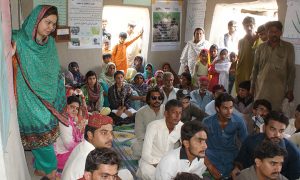
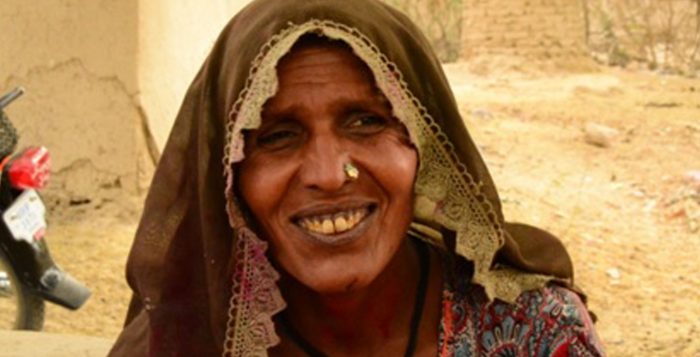
Mithal, Village Organization member, sharing her story with the participants.

Women living in rural communities play a critical role in contributing to rural economies of both developed and developing countries. The International Day of Rural Women highlights, both, the contribution that women make in rural areas, and the many challenges that they face. According to FAO’s The State of Food and Agriculture 2010-11, in most parts of the developing world women participate in crop production and livestock care, provide food, water and fuel for their families, and engage in off-farm activities to increase their families’ livelihoods. Needless to say they are also responsible for caring for their children, the elderly and the sick in their families.

On October 15th 2016, Community World Service Asia celebrated International Rural Women’s Day in collaboration with the Local Support Organizations and the Village Organizations in village Dodo Esani Jhakro, Union Council Bijora, Sindh, Pakistan. The Local Support Organization and Village Organization invited Muhammad Umar, chairman of the Union Council, as the chief Guest at the celebratory event.

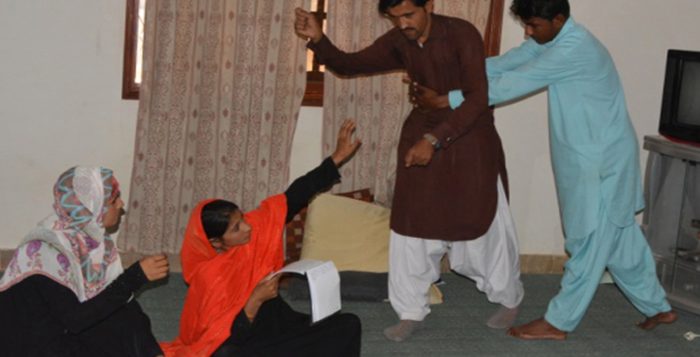
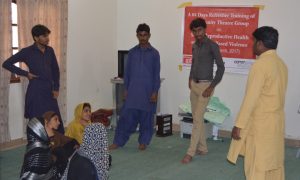
A theater performance focusing on sexual reproductive health and gender based violence was the opening show of the event. Through the play, the women of the village conveyed a strong message highlighting the challenges faced by women in rural societies and everyday lives.

Razia, wife of Suleman, a member of the Village Organization, shared her success story in a narrative story form on stage, at the event with the participants. She recounted how the women of her village were not aware of the high demand of their handicrafts in the urban market earlier and sold them at cost price. The vocational training center set up in their areas changed the lives of many women in the village, including her own she shared, by enhancing their skills and building linkages with the rural and urban markets. She confidently added that she now has great knowledge of product development and she is earning well through the orders she is receiving for her handcrafted goods.

Mithal, another member of the Village Organization, also shared her story about how women in their village were bound and dependent on male family members as the men in their village did not allow the intervention of women in their decisions or matters.

“The initiation of the livelihood and skills development projects implemented by Community World Service Asia has empowered many women in my village, especially myself. I confidently take part in the decision-making matters and suggestions given by me are seriously considered by the men in my family and village now. Being a woman is a terribly difficult task here, since it mainly involves dealing with men.”

Hussain Bux, president of the Ranta village organization, defined the affirmative role of women and agreed on the fact that the respect of women in societies like theirs has increased due to the awareness building and trainings on gender based violence.

The chief guest, Muhammad Umar, appreciated the positive role all the stakeholders played in organizing an event like this one. He said,

“These efforts will bring a productive and positive change in the society, focusing primarily on women. It will boost their confidence and encourage many women to step out to improve their standards of living and support their families.”

This celebratory, yet informative event was attended by a total of 54 people from five villages namely Phul Jhakro, Ranta, Wasayo Mallah, Dodo Esani Jhakro and Nooh Walro. There were many women participants from many villages as well who actively participated at the event.

Group Picture

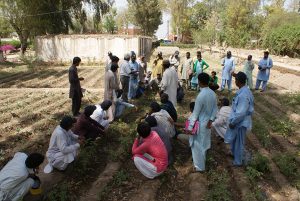
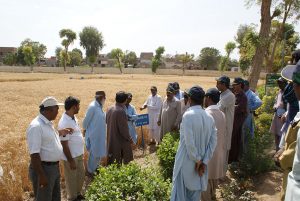
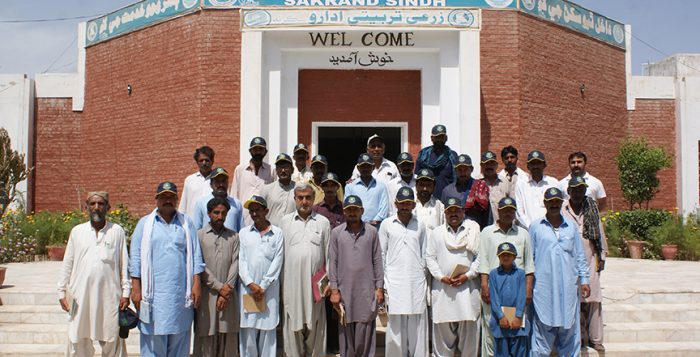
Low productivity in agriculture is a pressing challenge in the developing world. To improve food security and increase agricultural incomes in Pakistan and neighbouring developing countries, farmers need to start adopting and using new farming techniques and tools. As part of one of our humanitarian programs, Community World Service Asia organized an exposure visit to the Sindh Agricultural University, for participating farming families of Union Council Pangrio and Khairpur Gambo of Tehsil Tando Bago, Badin district in Sindh. A total of 171 participants from 17 targeted villages along with project staff participated in this four day exposure visit in November.

Dr. Ismail Kumbhar, Director at the University and Training Coordinator and Professor of Agricultural Education Extension, saw this as a great opportunity for farmers from remote areas to be familiarized with farming innovations and modern agricultural research work. He believed that this initiative will give these farmers an opportunity to meet experts who could enhance their knowledge regarding agriculture and livestock management. Dr. Ismail also highlighted the issues faced in Sindh in the field of agriculture, such as shortage of irrigation water, irrational use of agrochemical, lack of extension services, high input rates and low prices of farm produce in Sindh, especially in District Badin. “To ensure the food security of the future generations it is vital to be self-sufficient in agriculture productivity through sustainable agriculture practices rather than waiting for tangible support from government or other institutions,” said the Professor.

He further added, “Being away from extension services and innovations, our farmers are laggard and believe in unconventional practices due to which they are becoming weaker by the day. There is a need to educate the generations and equip them with new and improved scientific farming practices.”

The farmers visited the General Laboratory and Beverage Unit of the University’s Food Technology Department where they were briefed on the importance of nutrition, use of iron for blood formation, zinc for hair falling, natural and artificial methods used in food preservation, pickle making, and natural preservations methods. The farmers found the beverage production unit very interesting as methods of improving shelf life of bakery and milk products were also explained. The visitors were also acquainted with the processes of water purification in reverse osmosis plant, mixing of sugar, adding carbon dioxide and color in a chilling unit.

Seeds samples of sixty different crops were examined by the team at the Agronomy Museum. Pictorial views of traditional and mechanized agricultural practices, models of agricultural implements and village aping were displayed at the museum.

Dr. Imtiaz Nizamani, Assistant Professor at the University, introduced the visiting participants to the students working in the Integrated Pest Management laboratory and explained how to make culture media for rearing purpose and artificial rearing of biological control agents. The participants had an opportunity to see egg parasites, trichogramma and green lacewing insects, and their use in biological pest management and how to control their infestation.
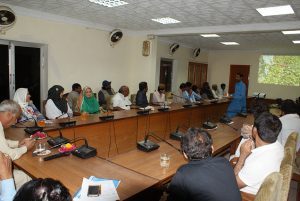
The various diseases that attack farm animals and the preventive measures taken to protect them were explained to the farmers at the department of Poultry Management, Animal Husbandry and Veterinary Sciences. Participants expressed a keen interest and inquired about the different common diseases and their remedies and techniques to improve lactation of their animals. They were introduced to the role of insects in integrated pest management and pollination at the Insect Museum. Various life stages of insects and pests and the dangers of chemical pesticides was also shared with them during their visit.

The information rick visit expanded the knowledge of the farmers in Badin on areas of livestock management and dairy technologies. The participants were given valuable advice on progressive farming, housing of farming animals, feeding and cleanliness of sheds which they will use and implement in their daily work and will pass on to many future generations.

Saadiqua, representing the apparel brand Taali, in a group photo with rural women artisans after coordination meeting.

People often do not mind paying more for handcrafted products as each product is unique and a piece of art skillfully manufactured by individuals. Every product has an individuality and a story behind its making. However, these stories are often unheard and untold as there is a huge gap between the producers of these handicrafts and the consumers who truly appreciate and value these products. To bridge this existing gap, it is vital to build rural and urban linkages so that both communities could benefit from the heritage that still lives in the midst of a culturally rich province that is Sindh.

To achieve this, seven meetings were conducted with various well known Pakistani fashion designers to link them with 670 rural artisans belonging to districts Umerkot & Thatta of Sindh. The Textile Institute of Pakistan (TIP) and the Indus Valley School of Art & Architecture (IVS) facilitated these meetings from the designers’ end. The designers included Rizwan Baig, Saadique from Taali, Sana Khan Niazi from Paimona, Warda Saleem, Shahroz from Vibgyor Fashions, Masood from Afroze Collections and Samiya from SWANK- all prominent names in the national fashion industry.

These meetings were conducted at TIP city office, IVS campus and Country Inn hotel in Karachi city. The designers appreciated the high skill levels of these experienced artisans and were truly impressed with the quality of work they displayed. Rizwan Baig, Wardha Saleem, and Shahroz gave an open invitation to the artisans to visit their workshops to explore bulk production and learn new ways of finishing products.

Other designers, Saadiqua, Masood, and Samiya expressed their interest in purchasing some of the finished products from the artisans’ brand Taanka and planned to market it within their existing customer networks. The designers joined Taanka’s facebook page and hoped to visit the KIOSKs set up in the urban malls for the launch of their product volumes in 2017. On the other hand, Rizwan Baig, Wardha Saleem, Sana Khan and Shahroz showed their enthusiasm towards working with the artisans by giving them their own design samples for prototype production.Rizwan Baig also offered two day workshops in both Umerkot and Thatta before the artisans could start working on their designs. Similarly, Wardha Saleem & Shahroz committed to providing raw materials such as fabric and anchor for the production of their handcrafted samples.

The framework and format of the project was much commended by the visiting designers as it ensured the most important factors of product production such as quality assurance, timely provision of products and effective use of raw material. This is all ensured through the Quality Assurance Supervisors and Sales & Marketing Agents assigned at village levels whose capacity is constantly built throughout the project. The designers also acknowledged the confidence and improved communication skills of the rural artisans who could now converse confidently in Urdu with them.

All these meetings are clubbed in the buyer index developed under project and more meetings will be set up by relevant project staff as a follow-up of agreed plans with them. The artisans are expected to deliver as per the demand of the designers and will successfully build and sustain effective and smooth working relationships with these key players of the national fashion market.

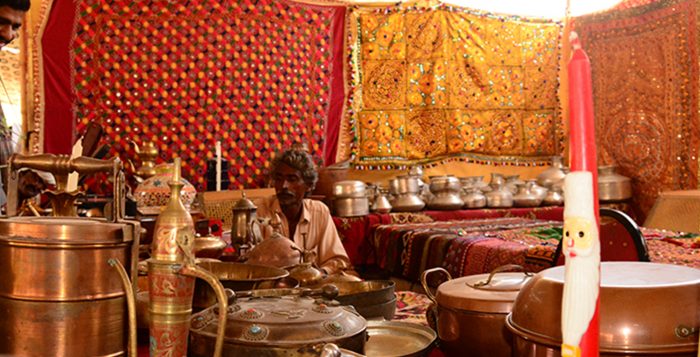
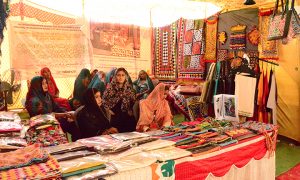
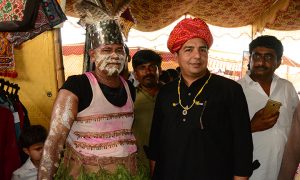
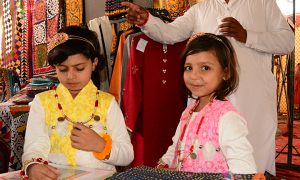
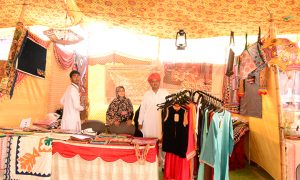
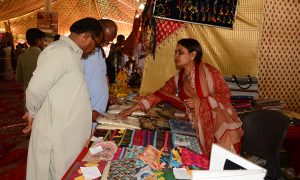
Community World Service Asia organized a Crafts Festival to promote the handicrafts produced by rural women artisans of Sindh and to introduce Taanka, a brand launched to retail handcrafted products of women artisans from Sindh to national and international urban buyers.  The festival was celebrated on November 26-17, 2016 at Dolmen Mall, Clifton in Karachi. It was attended by a large number of people who appreciated and praised the exquisite range of products made by the artisans of Thatta and Umerkot.

Mithal, a 45-year-old widow and mother to a 13 years old son, lives in Phul Jhakro village located in Thatta district, Sindh. Her son and her live with her mother and brother, who is often unwell and unable to bring home a regular income. The family is therefore faced with severe financial crises throughout the year. As a means of income, Mithal worked in the agricultural fields picking chilies and cotton and grazed crops.  The floods that hit southern Pakistan in 2010 destroyed those lands and its crops, shrinking the earnings of the family even further, forcing them to live in sub-standard conditions.

Responding to the floods, Community World Service Asia initiated relief and recovery projects in Phul Jhakro village and conducted Disaster Risk Reduction(DRR) Trainings in 2011.

“Many villagers attended the DRR training and I was one of the participants as well. The trainings were very helpful as various exercises were conducted in order to minimize the devastating effects a disaster leaves behind. These trainings have made us more aware and prepared for any kind of disaster including fire, floods and earthquakes,”

added Mithal.

Mithal proudly added that after the informative and life-saving DRR interventions, many of her fellow villagers started to become more open-minded and started welcoming new ideas and learnings.

“We established a school in our village in order to promote education amongst our children. The teacher belonged from our village as well. Disaster Risk Reduction Trainings are given in schools as well which has built an additional knowledge and has made our children more aware in relation to disaster management.”

Observing the keen interest and rapid learning of the people of Phul Jhakro, soon after, a vocational training center, conducting Adult literacy classes for women for the first three months, was established.  Earlier, Mithal gave thumb impressions as her identification as she was unable to read or write. At the Adult Literacy Trainings, she learnt to read, write, and calculate basic mathematics. She could also sign her name now. Mithal was appointed as the monitor of her class which gave her even more confidence and motivation.
“This training enhanced my educational skills giving me the confidence to speak to other people and negotiate while taking handicraft orders.”

Mithal said that many women in her village were unable to read and write as most did not go to school for basic education but now things have changed.

“The center conducted a three month Vocational training which focused on enhancing our stitching and designing skills. We were taught about family colors and how to use light and dark colors together to form vibrant designs which are both appealing and beautiful. A variety of new techniques were also taught, including appliqué work and cushion embroidery. Different stitches were practiced including Kacho Stitch, Lazy Dazy Stitch, Moti Stitch and Pakko Stitch. I enjoyed working on the cushion designs as it was new to me and I found the work to be very elegant.”

Establishing and promoting the indigenous and national handicraft industry has benefits for all. Not only does it provide additional employment locally but also raises the living standards of both rural and urban populations. As part of the livelihoods and Women empowerment projects supported by Community World Service Asia and its partners, exposure visits were conducted where rural artisans met with urban buyers of Bhit Shah and Karachi. Mithal was among those who were an active part of these visits.

“The exposure visits to Bhit Shah and Karachi further developed my understanding and broadened my knowledge about the handicrafts market. In Bhit Shah, I experienced the work of block printing on Ajraks which was completely new to me. Initially we did embroidery on the neck lines of shirts only. The exposure visit to Karachi enhanced our perception and we learnt to do embroidery on shirt borders, waist coats, bags, cushion covers and other open pieces of cloth. We now know how to keep samples of our work for future use and display for buyers.”

Mithal also attended the training conducted at the campus of Textile Institute of Pakistan in Karachi, where she learnt how to make high fashion shirts, jeans and different designs of Kurtis.

The same artisans were then given an order of products to produce for a Fashion Show that would launch their handicrafts brand to the fashion and textile market in Lahore. Working on the production of those products was a completely different experience according to Mithal.

“We made laces with various designs of embroidery, Muko and Zari work. We were not aware of what the final product, using our designs and embellishments, would look like. On my way to Lahore for the Fashion Show, I kept wondering what our pieces will be used for and how it will look, what kind of response our work would get. When we got to the venue of the event in Lahore (the Pakistan Fashion Design Council), we saw the finished products for the first time; those included sarees, shirts, kurtis, lehngas (long skirts), long coats, waistcoats, trousers, bags and scarves. We were amazed to see the complete products and how the laces and embroidery pieces were used to make such a beautiful collection. We did this I thought to myself in disbelief!”
 Mithal had never in her life gotten the chance to showcase her work and talent at such a high profile event which made her even more nervous regarding peoples’ expectation and response to her work. Mithal excitedly expressed,

“It was a wonderful feeling to see our work on the ramp. The zari, muko and embroidery work on the laces was immensely appreciated by the designers and guests at the event.”

As Mithal shared, the women of their area have always been entirely dependent on the men in their family to go out of their homes.

“This concept has changed and I now travel independently on my own. I have travelled to Karachi and Lahore. My first airplane trip to Lahore was one of the best experiences of my life. I was extremely excited to travel so far from home to promote my work further. My brother has been very supportive throughout my journey. Many villagers discouraged him not to allow me to travel on my own and promote my work. But my brother always encouraged me to move forward with my talent as I was working for a positive cause and change, for the betterment of our lives.”
Mithal now receives many orders as the demand for her designing and embroidery has increased. She has received orders of various products including rillis, laces, shirts and jewelry.

“My land was destroyed due to the flood of 2010. After receiving two orders of PKR 11,000, I utilized that money on replenishing the land and bought seeds to grow crops on the land again. My brother was very happy with this progress and we now grow wheat on our land which has increased our source of income further.”

Mithal also now conducts DRR trainings on her own in her village to expand and strengthen women’s knowledge, empowering them in decision-making processes at times of calamity.

“The villagers address me as an officer as I have travelled to Lahore and Karachi to progress my hard-work. Even my son calls me a professional officer and proudly walks in the streets of our village.”

Most women in the village are more encouraged now as they see Mithal’s courageous change by stepping out in the world to play a better role in the socio-economic development in her respective community.

“From the Desert to the Ramp”, a short documentary developed by Community World Service Asia and PLUM Media Tank, showcasing the transformative journey of rural artisan women becoming the hands and heart of an urban fashion brand, was screened at an event titled “The Craft Journey”at the Indus Valley School of Art & Architecture (IVS) in Karachi last week.

The event celebrated the successful collaboration between Community World Service Asia (CWSA), the Danish Centre for Culture and Development (CKU), the Department of Textile Design at IVS, and the Women Enterprise Groups representing artisans from Umerkot and Thatta Districts of Sindh. It was this consistent year-long collaboration that made the journey of these artisans posible and conclusive.

Students and Faculty members of IVS, representatives from Community World Service Asia, Centre for Culture and Development (CKU), the artisans of Umerkot and Thatta participated in this event. They all witnessed the exquisite products that were produced through the mix of impeccable craftsmanship and design aesthetics of the merger between artisans and students.  Prominent fashion designers and popular fashion and home brands representatives such as Khaadi, Habitt, Tarzz, Nida Azwer Atelier, Mahwish Hassan and Saniya Maskatiya, attended the event.

The primary objective of this collaborative project was to empower marginalized women artisans towards taking an active role in decision making and represent themselves with the indigenous craft tradition of their region. The project also aimed at establishing sustainable linkages between the artisan community and the urban markets to maintain a continuous chain of demand and supply meeting current market trends, while upholding the handicraft identity. It also aimed at empowering the rural artisans to take control of their own business, thereby creating a strong, mutually beneficial professional relationship.

During the span of 12 months, various collaborative design workshops in selected villages of Umerkot and at the IVS campus in Karachi were conducted. They covered extensive data collection of artisans and various embroideries practiced in the region, initial sampling, designing of a cohesive project range, procurement of raw material, execution and finishing of the first collection of over 800 apparel products.

In a span of 40 days, 679 women artisans created masterpieces of art and skill combined for distinguished Pakistani designers within demanding deadlines. They worked tirelessly to produce 1700 products that are true specimen of tradition-meets-modernity. To introduce these handcrafted masterpieces to the fashion industry and clientele, a brand Taanka  at the reputable fashion platform of Pakistan Fashion Design Counsel (PFDC) in Lahore was launched, followed by a Craft Festivals, to further promote the brand and the Sindhi folk culture and handicrafts, was held at Dolmen Mall in Karachi.

A very significant step towards providing an entrepreneurial platform to the artisans has been establishing the link with well known designers and fashion brands through meetings and exposure visits. These experienced designers have been evaluating the skill and potential of the groups of artisans and planning possibilities of future long term collaborations with them. These meetings were arranged at Indus Valley School of Arts & Architecture through their Textile department where meetings between artisans representing WEGs in Umerkot met with Rizwan Beyg, Wardha Saleem (popular and very high-end fashion designers) and the crafts brand Tali, to have one to one sessions.

This collaboration has concluded with a new beginning for the artisans to emerge as successful entrepreneurs and showcase their brilliant skill under the brand TAANKA (Visit Taanka’s social media page to see the products produced and available for sale and order @ https://www.facebook.com/TaankArt/ )

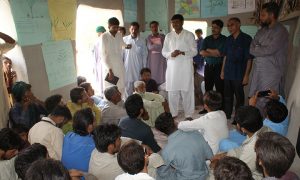
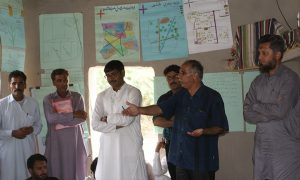
The success of rural development depends upon the willingness and active participation of the local people in the development process. To ensure this, NGOs carry out extensive social mobilization activities to raise awareness and create demand amongst the local people for particular sensitive issues that exist within the community. Social Mobilization is a cornerstone for participatory approach in rural development and poverty alleviation programs, it aims to create a sense of ownership amongst the people by involving them directly in the decision making process.

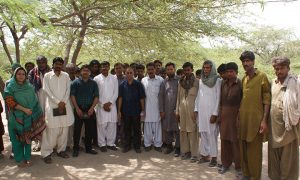
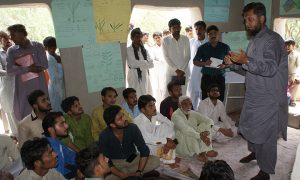
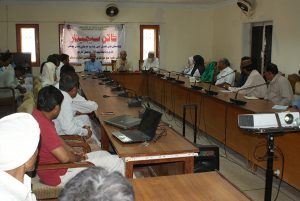
A third of its kind training, on Social Mobilization, was thus, conducted by Community World Service Asia under its Quality and Accountability program at Peshawar University this November. The workshop was targeted at training community mobilizers, social organizers and staff members representing small NGOs, in order to impart specific knowledge about community mobilization, participatory development, and various relevant and complementary elements. Twenty-three participants, including 8 women, representing eight organizations took part in the training.

The four-day event was managed by Lubna Hussain, Community World Service Asia staff, with Moazzam Ali, consultant trainer, as the lead facilitator. Mr. Rashid Iqbal who works for FLOWERS, a National Peshawar based NGO shared that this workshop was “very comprehensive”.

Brainstorming, individual exercises, lectures, role plays, group work and interactive discussions were a vital part of this training. All these activities were used as tools to enhance the intellectual capacity of the participants towards utilizing the different tools of Social Mobilization in various contexts and situations.  Mr. Ibrahim Jan from Civil Society Human and Institutional Development Programme said, “We are working in community from years but did not have much command on basic needs of field as required so I am really impressed with this training which has developed a good foundation for us to start with.”

The training also aimed on giving Social Mobilizers the right instruments to increase the level of awareness among poor and socially excluded communities through particular social mobilization and community development programs to improve the quality of services.

Participants Voices

  • “This training was knowledgeable and a good learning opportunity for me. It has improved my learning process. I thank Community World Service Asia for this opportunity I hope I will be attending more trainings like these.”

    Abdul Aziz, Community World Service Asia.

  • “Overall the training was exquisite. I will share with my team whatever i have learnt here, I got a subtle chance of networking as well. I was practicing social mobilization but did not know the right terminologies. Now I will implement the learnings for the betterment of my organization and me”.

    Shamir Asif, Community Advancement Society (CAS)

  • “This was a good, informative & excellent training. I learnt so many topics which are new for me. The facilitator methodology was also easy to understand. The workshop & training sessions on different topics were very informative. I look forward to participating in other trainings and workshops as well.”

    Mr. Saif Ullah, Peshawar University

  • “Community World Service Asia is a leading capacity building organization in this area. The training on “Social Mobilization” was really informative. It fulfilled the needs of field workers who interact with the communities regularly, and showed us how to identify their needs and facilitate them in solving their problems. This training will facilitate us in our journey from welfare to development.”

    Mr. Syed Inam Ul Haq, Mercy Hands (MH)

  • “This Training was very interesting and informative. I would like to attend future workshops with them, this training give me professional experience.”

    Ms. Farheen Zahra CHIP (Civil Society Human and Institutional Development Program

  • “The methodology of training was very effective. I would like to attend more workshops in future, as I learned a lot in this training and enjoyed it.”

    Ms. Kausar Parveen (CHIP)

  • “Trainings like these should be conducted in the future as well, because such sessions really help organization such as ours in improving our staff capacity.”

    Mr. Sabz Ali (Flowers)

A silent revolution is underway deep inside Sindh province; one that is turning the fortunes of local artisans around. World renowned for their aesthetic mastery, Sindhi women artisans are now seeing their intricately crafted products showcased at one of the top fashion platforms in the country.

“From the Desert to the Ramp” is a short documentary developed by Community World Service Asia and PLUM Media Tank  with support from the Danish Centre of Culture and Development showcasing the transformative journey of rural artisan women becoming the hands and heart of an urban fashion brand.