
Authors Posts by comms

comms

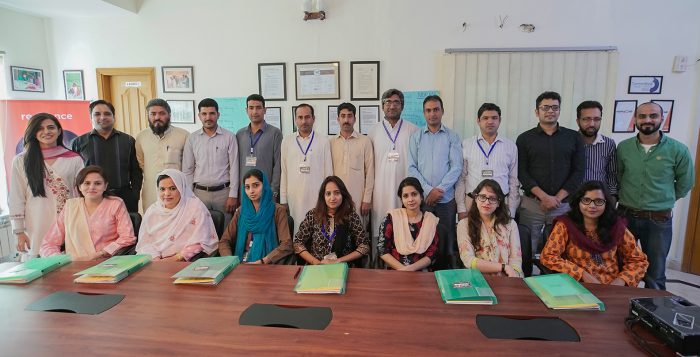
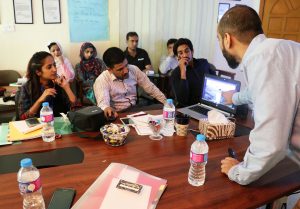
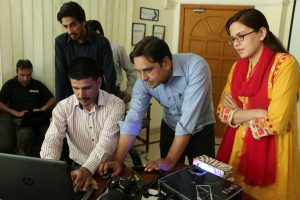
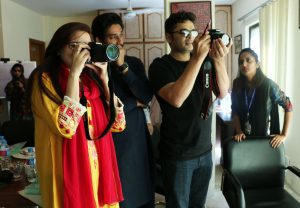
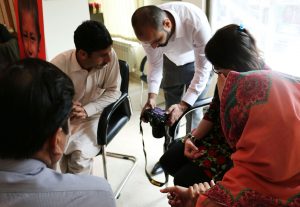
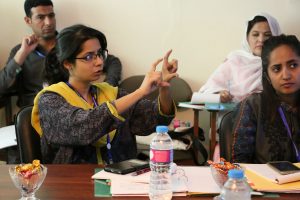
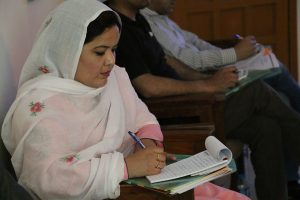
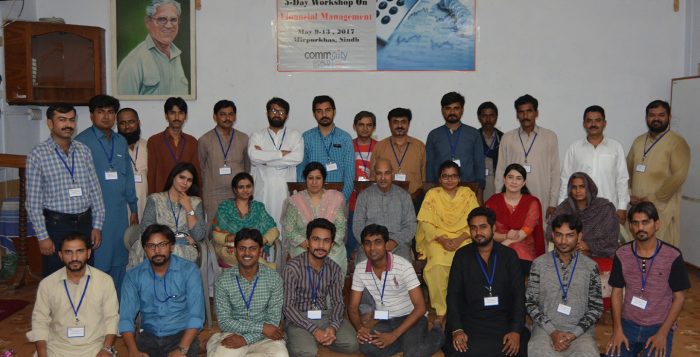
Under the Capacity Institutionalization Project, Community World Service Asia conducted a four-day workshop on Organizational Development during the third week of this February in Mirpurkhas, Sindh. Twenty-eight participants, including twenty-one men and seven women, belonging to fourteen local and community based organizations participated at this capacity building event.

The workshop aimed at further developing the capacity of the executive management of small NGOs and CBOs in Sindh, on the core concepts of organizational development. A specific focus was laid on developing an understanding of clear roles and responsibilities between an organization’s board and management, decentralized organizational and decision making structures. The workshop encouraged the participants to contemplate on their organizational values and equipped them with the latest tools to help assess their organizations’ structure and culture, and make the necessary modifications as per needs and requirements. On the last day of the event, action plans for each organization were developed by all the participants, to evaluate their learning and how it is being incorporated practically. A technical assistance will be provided to interested organizations on the basis of their action plans to further strengthen their systems and practices.

Quotes & Comments by Participants

  • Simon Goel: During this 3-Day Workshop, I learnt a lot about development, under-development and why organizations deteriorate due to lack of growth and policies’ enforcement.

  • Chander: I enjoyed this training. There was a lot to learn regarding organizational development. I tend to further my knowledge and strengthen the weaknesses of my organization so that it can execute different projects more effectively for the betterment of the nation.

  • Aneer Adil: I had a good time, learning new features for a strong organizational structure and sharing my experience with other at the same time. All participants were easy going. Methodologies used during the workshop were effective. Sir Sohail is one of the best facilitator. I wish all the best to everyone.

  • Humera: Before coming to this workshop, I was not aware about organizational development and its importance. But with the help of different discussions, presentations and group work, my knowledge has increased and I will definitely apply some of these tools in order to make our OD structure more effective.

  • Dur M. Brohi: I have attended many trainings and workshops but this training is different from others. Here we gained more knowledge, on how can we make our own organization and how can we improve the image of the organization.

  • Jabbar Bhatti: This training gave many new thoughts, new terminologies and new things about organization to develop and to make our organization efficient. I learnt 10 rules of social entrepreneurship and key learnings for developing organization. Overall the training was very helpful for me personally which will ultimately be a contributing factor to my organization.

  • Sarfraz Ali: The workshop was very informative. A variety of methodologies made the workshop more interesting. This workshop was advantageous for me as I came to know about different tools and techniques, which I have never heard about. I am quite confident that I will apply my learnings in my current organization to refine policies, procedures and practices.


  • Ahsan Goel: There are so many things which I got to know about Organizational Development. As a HR assistant it will be very useful for me and my organization. For this 4-Day workshop, I would like to say thanks to Community World Service Asia, especially Sir Suhail for training us so clearly and effectively.

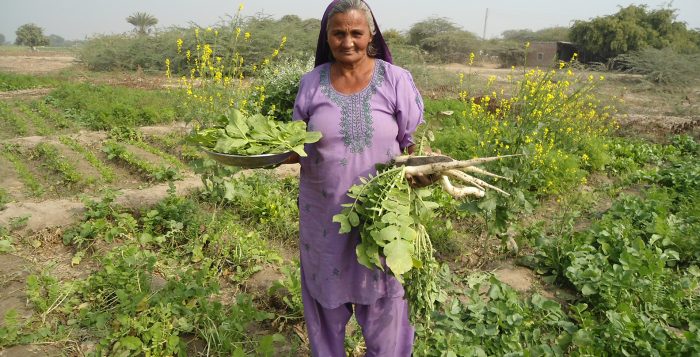
Aqlan, a thirty-two year old mother of five school going children financially supports her family, including her husband and brother-in-law. Her main source of income is earned through agricultural fieldwork and livestock management.

“Badin district is situated at the tail end of canal irrigation system. Therefore, the agriculture fields are faced by severe water scarcity. The land has low productivity due to unfertile soil and lack of water. We have to depend on livestock rearing to supplement family earning,”

an exhausted Aqlan explains.

Nominated as a kitchen gardening training participant of a disaster response project in Badin, Aqsa received vegetable seeds for home-growing at her home yard in her village, Mohammad Abbas Thebo.

“Puran Nadi, a natural flow of River Indus, not only irrigates thousands of acres of land but also provides drinking water to the surrounding communities. Sadly, the disposal of chemical waste in the river has not only made the water undrinkable but unusable for irrigation as well. The contaminated water is gradually devouring the fertile soil land as well. After receiving the kitchen gardening training and vegetable seeds, I decided to prepare a patch of land for sowing the seeds to produce fresh vegetables, with the support of my family.”

As a result, Aqlan’s family grew garden-fresh vegetables on a daily basis, improving the quality and quantity of their food consumption.

“Kitchen gardening enhanced my family’s food diversification as it helps me to grow different kinds of vegetables seasonally. Our expense on purchasing vegetables from market has decreased exceptionally. I have also generated revenue of PKR5000 by selling the surplus in the nearby market.”

Aqsa revealed that she also bought a male goat from her savings which will benefit her family in the long run.

“We are planning to sell the goat on the festive of Eid for a good price of PKR25000. I am so pleased that I have been given a chance to do something meaningful in my life for my family’s support and care.”

“I was engaged to marry at the age of twelve with a boy from another village. My wedding was planned as soon as I turn seventeen. To our luck, Community World Service Asia visited our village and conducted gender awareness sessions, which my family attended. After the sessions, my father realized I was too young to bear the responsibility of marriage. He wanted me to study further and take my handicraft work to the urban markets. My in-laws insisted for the wedding to be held according to agreement but my father refused. I was very happy to see my father’s stance and his strong support for me.”

Kaveeta joined the skills center established by Community World Service Asia in her home village of Mandhal Otaaq in Umerkot, and took part in the literacy and skill development trainings. Sixteen years of age, Kaveeta lives with her parents and seven siblings. Her father is a teacher in a village school and earns PKR40,000 per month. Her brother studies and teaches as well, earning PKR10,000 per month. Kaveeta herself is a student of eighth grade at the Government Girls High School in Umerkot. Prior to the skills training, she used to do embroidery and simple stitching at home as a hobby through which she would earn between PKR600 to PKR700.

“I work on the orders I get at the center. I have received five orders from Karachi including two dupattas, two shirts and one sleeves work. I earned PKR4000 from those orders. From the money I earnt, I have bought new clothes and school books for my young sisters. I also bought a cow that gave birth to two calves and is expecting a third.”

“My father has been very supportive throughout. It is important that girls have access to work and education to transform communities on basis of equality. I want to work more and become my father’s support. I am happy now as I have the freedom to work.”

Girls’ education and promoting gender equality is part of a broader, holistic effort by Community World Service Asia. Paveeta Dessar is a 16 years old artisan from Mandhal Otaaq Village in Umerkot. “My father’s name is Desar. He is a tailor in Umerkot. We are seven sisters and one brother. My father is the only bread earner for our family. He approximately earns PKR6000 a month. The challenges we face due to low income is lack of healthcare, limited resources and scarce education opportunities.

When we face health related problem, my father seeks financial help from my grandmother or uncle. If they too are unable to lend us money, we then borrow from neighbors. My mother earns very little through stitching clothes for residual villagers here. Since our family’s income is very limited, I had to quit school while I was in class six at the Government Girls High School in Umerkot.”

“I joined the skills center when it was established in our village. The trainings on skill development and literacy were very informative as some of the artisans did not even know how to write their names. I learnt stitching and embroidery skills at the center. I have worked on rillis and different products including blouses, dupattas and shirts. The quality and finishing of my products has improved exceptionally and my rilli work was most appreciated by the buyers. I use to do simple stitching at home, but the trainings have enhanced my skills in thread work and designing which has brought an exciting diversity in the products I make. Working with seasonal, wedding and family colors was new to me.”

Through the skill building classes, Paveeta has been able to earn PKR1500 per week by producing colorful handmade rillis through a local order she received. “Since the launch and our involvement in the brand Taanka, our products have become visible in the urban markets. As my handicraft sales have improved, I have started studying at the school again. My father and I both contribute to the educational expenses of all my siblings. I want to earn more to be able to bear all my educational expenses so that I can ease my father’s economic burden.”

Community World Service Asia, continued to promote Q&A in Pakistan during 2016. Where possible, the activities related to the Sphere Project were implemented in coordination with other Q&A initiatives such as CHS and Sphere Companions. The activities are planned to reach wider audiences at various levels in order to ensure that Q&A is high on the agenda during emergency and non-emergency periods.

Click here to download

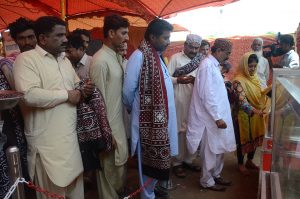
Deputy Director, National Programme for Improvement of Watercourses (NPIW) visiting stall of Arche Nova.

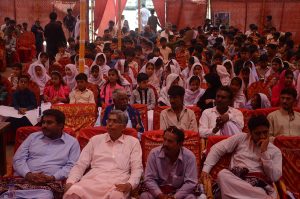
Community World Service Asia organized a two days farmer festival in two union councils of Khairpur Gambo and Pangrio of in district Badin of Sindh under its “Promoting Sustainable Agriculture practices” project for vulnerable and marginalized farmers. The festival which aimed at highlighting local agriculture based issues with line departments and sharing project learnings with other stakeholders, was held at two venues; one at Babar Kaloion village and the other at Kamil Khosoon village, in January this year. Around six hundred people attended the festival. Representatives from from Community Based organizations (CBOs), farmer Field School Members and community women, trained in kitchen gardening and nutrition, participated took part in the festival.

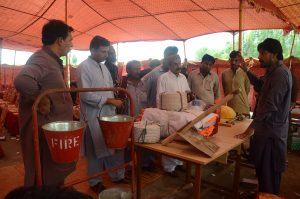
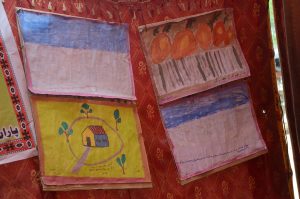
Organizations working in the area, including Arche Nova, Plan International, National Rural Support Program (NRSP), SEEWA Pak, Participatory Village Development Programme (PVDP), President’s Primary Healthcare Initiative (PPHI) and Local Support Organization Meharn, had held stalls at the festival as well. The stalls displayed local handicrafts and pictorial presentations reflecting project activities. Models on Key Hole Kitchen Gardening and Biological Pests Control were also on display. Local women held stalls selling the fresh vegetables grown in their kitchen gardens. Community members shared their experiences and learnings in sustainable agriculture while working under the project with visitors at the festival.

Government and Line department officials including Assistant Director Social Welfare Badin, Agriculture Officers’ from Agriculture Extension department of Badin and Deputy Director Water Management Hyderabad appreciated the efforts of the farmers and their hard work in the fields.  Local government officials, including Vice Chairman UC Khairpur, Vice Chairman UC Saman Sarkar, Ex-Taluka Nazim Tando Bagho and progressive farmers from local nearby villages also attended the festival.

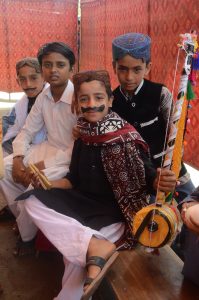
An interactive theater play was performed by Perbhat, a local theater group, focusing on “Promoting Sustainable Agriculture Practices to Improve Food Security and Livelihoods local farmers”. Mir Kaloi, a local poet and radio presenter, played a folk song and a group of rural women,Prem Nagar, sang a song on social development as the fun-filled festival.

The festival provided a platform for local farmers and government officials to interact directly with each other. The farmers communicated their problems and challenges faced during agricultural activities while people representatives of the line department recommended possible mitigation measures to them. The Agriculture, Irrigation and Social Development departments shared informative details about their departments and the subsidies they are providing to small-scale farmers.

Remote and rural areas affected by recurrent natural disasters often suffer the most when it comes to their recovery, rehabilitation and development. The 7.5 magnitude earthquake epicentered in the Hindu Kush range in winter of 2015 severely shook Pakistan’s mountainous northern belt, killing nearly three hundred people. In its aftermath, more than 14,000 houses were severely damaged or completely destroyed; community infrastructure was unusable and livelihoods were diminished.  Almost a year later, the poor socio-economic life of the inhabitants remained largely unchanged.

High altitude villages perched on the steep mountain slopes of district Shangla in northern Pakistan were severely damaged by the earthquake. One of the hardest hit areas was Village Tanshit; mainly comprised of steep, rocky terrain dotted with 221 traditional, rural homestead compounds. Multiple families reside in each compound. After the earthquake, the community’s most basic infrastructure and facilities, which had been built with great effort and years of savings, were lost. The village’s sole water supply scheme became one of the earthquake’s most significant casualties.

For the next nine months after the earthquake, the local women had to make a forty five minute climb on foot to a mountain stream and return with as much water as they could carry everyday. Families living in mountain village compounds have strong traditional, social and cultural codes for the protection of women, even for those undertaking daily domestic responsibilities.  This usually means that the women stay very close to their homes.  However, to access water, the women of Tanshit had to travel a long distance carrying water on their heads through wild and rocky mountain treks.  As the water carried by a single person was insufficient for the entire family’s needs, sometimes the children were tasked with carrying water from the streams on their way back from school. This was dangerous and had to be done in daylight. In warmer months, these communities became very vulnerable to waterborne diseases as hygiene could not be maintained while carrying and storing this stream water.

“Safe drinking water and adequate sanitation are crucial for poverty reduction, crucial for sustainable development and crucial for achieving any and every one of the Millennium Development Goals,” Ban Ki-moon, UN Secretary General

The human right to water and to sanitation constitutes the right of every individual, without discrimination, to sufficient, safe, acceptable, accessible and affordable water and sanitation for personal use. To ensure this right, in 2016 Community World Service Asia, in partnership with Norwegian Church Aid and ECHO, assessed the village Tanshit’s water system and was selected as one of the twenty communities under its’ integrated WASH, Shelter and Cash-for-Work programme.  Technical assistance, construction materials and paid labor opportunities were provided to help villagers to restore their water system, reconstruct latrines and bathing facilities, and repair their homes.  A village WASH Committees was formed to articulate the basic communal needs according to the project’s objectives and scope.

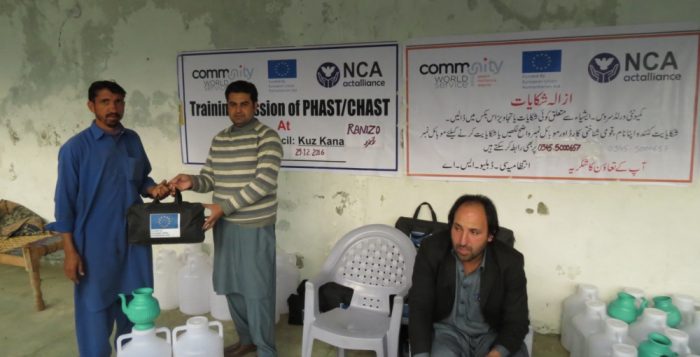
The project team arranged hygiene sessions with the village women’s group and sensitized them on hygienic practices through Child Hygiene and Sanitation Training (CHAST) and Participatory Hygiene and Sanitation Transformation (PHAST) approaches. A pre-KAP (Knowledge, Attitudes, Practices) survey was also conducted to gauge the pre-existing or baseline hygienic practices of the families and to help demonstrate subsequent gains.

To ensure ownership, each village’s drinking water supply scheme was selected on the recommendation of village committees. After a technical feasibility assessment conducted by members of Community World Service Asia’s engineering team, Tanshit’s water supply scheme was rehabilitated, with additional resources, successfully. The water source was reconstructed, protected and pipelines were installed throughout the village.  The community contributed additional labor and materials as well to this reconstruction.

Today, Tanshit’s drinking water supply scheme supplies clean, safe and ample water to 221 households as per Sphere standards. The risk of waterborne diseases has been decreased. The social protection of women has been ensured and their cultural sensitivities are preserved. Around 1,200 individuals are undertaking more hygienic practices that will significantly contribute to maintaining healthier families. The project team also mobilized the local community towards the maintenance and upkeep of their water system through a local community savings plan.  They have also begun a small, intra-village savings and lending activity to commonly support their lowest income groups. This will enable every community member to maintain their compound’s connections to the scheme.

photo credit: ROUF BHAT/AFP/Getty Images

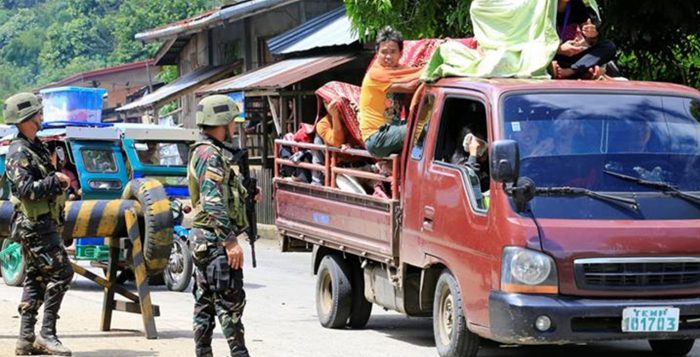
At least fourteen people have reportedly died in an avalanche in Chitral’s Sher Shal area in Pakistan this Sunday. According to the Chitral Scouts Commandant, Col Nizamuddin Shah, bodies of fourteen people, including women and children, have been recovered from the debris so far. He added that twenty-five houses have been buried under the snow and five have been totally destroyed.

The same region has been hit by heavy snowfall, reaching as deep as four feet in some areas.

A Frontier Constabulary soldier has also died and six others have been injured when a Chitral scout post was directly hit by a second avalanche in Chitral’s Pishotan area near the Pak-Afghan border. The injured soldiers were rescued early morning, announced ISPR.

“There is no way to rush the injured persons to the Chitral hospital [either] because all roads in the valley have been blocked due to heavy snowfall, while evacuation operations were also delayed by the weather” Chitral Deputy Commissioner Shahab Hameed Yousafzai shared.

The National Disaster Management Authority (NDMA) has activated the National Emergency Operations Centre to coordinate rescue and relief efforts in the avalanche-hit area.

Community World Service Asia is in contact with Provincial Disaster Management Authority (PDMA) and local partners in the area and will devise its response strategy, should there be any need of emergency response.

Contacts:

Karen Janjua
Senior Advisor
Regional Programs and Resource Mobilization
Email: karen.janjua@communitryworldservice.asia
Cell: +92 51 5496532

Palwashay Arbab
Head of Communications
Email: palwashay.arbab@communityworldservice.asia
Cell: +92 42 3586 5338

Sources: www.dawn.com

The Training of Trainers (ToT) on the Core Humanitarian Standard (CHS) was conducted in Bangkok, Thailand, from the 28th of November to 1st of December, 2016 by Community World Service Asia.

A total of 24 trainers including 17 men and 8 women from 11 countries and 15 different organizations actively participated in the training.

 The ToT was lead by Trainer Uma Narayanan (independent consultant), and co-facilitated by Rizwan Iqbal representing Community World Service Asia. Guest speakers, Jeremy Wellard, Regional Representative Asia, International Council of Voluntary Agencies (ICVA), and Anoop Sukumaran, Regional Representative of Act Alliance both introduced the role and focus areas of their respective networks to the participants during the opening session of the four day ToT.

“Civil society space in Asia is greatly reduced these days. And so again we need to come back to these same opinions of being able to absolutely justify the work that we do, to ensure that we can communicate about it in the right terms, to ensure that the level of work that we do is understood to be in the best interests of the people, for the people, and with people at the centre. And that is the core of the CHS, the core of the way people talk about their work these days, 

stated Jeremy while also highlighting  the adherence to CHS as key to achieving getting closer to “people at the centre”,in a global process such as the UN’s World Humanitarian Summit.

In his keynote speech at the opening session, Anoop Sukumaran, Regional Representative, Asia and the Pacific, ACT Alliance, rightly questioned,

“Why are we talking about accountability? Why are we talking about setting standards? Why is it important to ACT? It comes down to the basic aspect of what gives us credibility, what gives us legitimacy to say we are providing humanitarian response and what is the basis on which we are doing that. And the question basically is, Accountability to whom? It’s not just the accountability of the money you get but most importantly the people you serve, and you are not serving them from the outside, you have to be part and parcel of understanding that the services that you provide that you are with the community. It is not an act of charity you are doing; it is the right of people to have support and help. And that is one of the elements of you being accountable to the people you serve.”

On the first day of the training, definitions of humanitarian principles of humanity, impartiality, independence and neutrality, their importance, and how they can be applied, with the help of dilemmas faced in the application of the principles were explicated. Participants identified best practice strategies for applying the principles, along with key element of relevant and appropriate response based on real needs. Each day was opened with a session planned and led by pairs of participants, where they reviewed and reflected on the previous day’s learning, by involving all participants in exciting Q&A sessions or exercises.

Followed by the participant led review on the second day, a “Workshop within a workshop” approach was taken by the facilitators to discuss the stakeholders of the international relief system in greater depth and detail.

A participant led session was also conducted on Commitment 5 of the Core Humanitarian Standard on Quality and Accountability, where the participants were divided up into groups of six, where topics like Complaint Response Mechanism

were explicated by Subhashi Roy from Lutheran World Relief India, Youmeng Chiv Danish Church Aid Cambodia, Uma Narayanan, and Rizwan Iqbal were held, in which the teams strategized different approaches for joint CRM. At day end, participants anonymously shared challenges and offered solutions on coordination and collaboration among the various stakeholders involved in humanitarian action.

Uma Narayanan led a session on different learning styles of trainers through the KIDA model on Day 3: a Japanese theory that provides one or a combination of tendencies in individuals, such as being activists, reflectors, theorists or pragmatists.

The focus of the third day was on building the skill of participants as trainers, rather than the technicalities of CHS. Participants learnt new methods of how to assess their learning style and motivation methods for different audiences by defining their own learning tendencies through an interactive session. Quick relay rounds were conducted by three teams of eight; they participated in a fun competition, where they listed different creative methodologies of training; such as power walk, fish bowl, storytelling, and world cafe. They also learnt about teamwork, and its importance, where participants came up with innovative ideas to get tasks done collectively in the most efficient and effective manner.

The last day focused entirely on eight different sessions of 40 minutes, planned and prepared by participants on eight selected, different CHS commitments. At the end of each four minutes session, which was guided by Uma and Rizwan, a conclusive and constructive discussion on what could have been done better, and what was executed perfectly was also shared. This was a healthy strategy to receive both positive and negative feedback on the methodology from each other, and helped in contributing diverse views by people from different backgrounds and cultures. Zainab Qaiser, representing the Provincial Disaster Management Authority (PDMA), KPK in Pakistan,

shared a case study on how inappropriate service provision can lead to sexual exploitation of women. She recommended proper planning, setting of an effective security mechanism and implementation of a thought out exit strategy to ensure the execution of Commitment 3 of the CHS .

The training particularly helped in highlighting the importance of Quality and Accountability in humanitarian and development work.

All member organizations of ACT are bound to follow the ACT Quality and Accountability Framework (QAF), which underpins certain international mandatory standards, CHS being one of them. ACT member organizations, including Community World Service Asia, hold positions in the CHS board to ensure widespread compliance of this Q&A standard. It is therefore, a proud achievement to highlight that four ACT member organizations, Danish Church Aid, Lutheran World Relief, Norwegian Church Aid and Lutheran World Federation, have taken a leap in ensuring their commitment to the CHS as they participated in this four day ToT.

The ToT came to an end with a closing ceremony, where each participant was awarded a certificate of participation, along with some souvenirs. Everyone shared their key learning’s that they took from the ToT over the past few days, and also highlighted their new-found motivation to inspire and lead in their respective organizations and countries to expand the impact of and influence of CHS.