

Facilitated by Karen Janjua and Lia van Broekhoven
When: June 25, 2020
What time: 2:00 PM Pakistan Standard Time
Where: ZOOM – Link to be shared
Language: English
How long: 90 minutes
Format: Presentation & Discussion
Who is it for: Humanitarian and development practitioners who wish to learn more about the impact of counter-terror regulations and policies on their operating environment; including, their capacities to respond to COVID-19?
Speakers: Karen Janjua, Community World Service Asia (CWSA); Lia van Broekhoven, Human Security Collective (HSC)
Purpose:
As a non-profit organization (NPO), explore the impacts of Terror Finance regulations at national and international levels:
- Is your NGO unable to register with ease?
- Is your NGO perceived as being “at risk” of being used as a conduit for terrorism financing?
- Are your day-to-day operations hampered?
- Are your bank transfers delayed or blocked?
This webinar will help explore:
- The drivers behind some of the issues you might be facing, which stem from the counter-terrorism and the architecture which countries have constructed countering the financing of terrorism (CFT)
- The Financial Action Task Force (FATF) and its standards on anti-money-laundering (AML) and countering the financing of terrorism (CFT)
- The impact of the FATF standards on NPOs, including the unintended consequences
- How to mitigate the unintended consequences and advocate for a proportional, effective and risk-based approach which does not impede charitable activity in any way (based on country case studies and examples)
- How the COVID-19 crisis is impacting the already challenging situation
Background
Community World Service Asia and Human Security Collective (HSC) are jointly hosting this webinar on FATF and COVID-19 on June 25th, 2020.
National and international efforts to counter the financing of terrorism, including the policies and regulations formulated at the supra-national level, have had negative consequences on the operational environment of civil society organizations worldwide. A one-size-fits-all approach to regulations, instead of a risk-based and proportionate implementation of the rules has resulted in humanitarian and development activity being hampered via administrative and financial channels. The Global Non-Profit Organizations (NPO) Coalition on the FATF, of which HSC is co-chair and CWSA a member, has been working for many years on revising the standards and on their effective implementation.
This webinar will outline the standards and detail their impacts, chief among which is the financial exclusion of NPOs. It will then discuss the advocacy that led to important changes in the standards, as well as the ongoing engagements at both international and national levels on issues such as Risk Assessments of the NPO sector and financial inclusion. Country case studies will further illustrate these engagement strategies.
The webinar will aim to deepen an understanding of the structural nature of the drivers of some of the shrinking civic space issues that NPOs face as well as provide engagement and advocacy avenues that are working to alleviate the negative regulatory impacts, going forward. Given that the COVID-19 crisis is only exacerbating some of these challenges, and at a time when humanitarian need is at its peak, it is important to leverage this understanding into mitigating action.
This 90-minute webinar will also be an opportunity to learn from participants on whether they recognize some of the issues outlined and to share best practice, engagement and advocacy strategies tailored for their contexts.
Community World Service Asia (CWSA) is a humanitarian and development organization, registered in Pakistan, head-quartered in Karachi and implementing initiatives throughout Asia. CWSA is a member of the Core Humanitarian Standard (CHS) Alliance and a Sphere regional partner.
Human Security Collective (HSC) is a foundation based in The Hague working on issues of development, security and the involvement of citizens in their communities and societies. We believe that the idea of Human Security with its focus on people, relationships and human rights provides an organizing frame for action. Based on the elements of trust-creation, local ownership, empowerment and collective action, we facilitate conversation between civil society, policy shapers and other actors to promote alternative approaches to current security practice.
Applicants will be informed by 20th June 2020 about their confirmation status. Up to 200 participants will be accommodated on a first come first serve basis. We would appreciate anyone willing to share some best practices on the topic under discussion.
Moderator & Facilitator:
Deputy Regional Director at CWSA and a Board member of ACT Alliance
Karen Janjua
Karen is a Deputy Regional Director at CWSA and a Board member of ACT Alliance. She has worked extensively with civil society organizations, International organizations and governments across the globe on post-crisis recovery, governance, human rights and democratization. Since 2017, she has focused on civil society sustainability; particularly, engagement with government entities and NGOs in Pakistan to build awareness around the unintended consequences of CFT/AML regulations.
Speaker
Co-founder and Executive Director of Human Security Collective
Lia van Broekhoven
Lia is the co-founder and Executive Director of Human Security Collective based in The Hague. She is co-chair of a Global Coalition of Nonprofit organization that engages with the Financial Action Task Force (FATF), the global standard-setter on Anti-Money Laundering and Countering Financing of Terrorism Measures to ensure that governments apply the FATF standards adequately and proportionally in relation to terrorism financing risks to avoid negative impacts on civil society.






 José Jódar is the Senior Technical Officer at CaLP and joined them in July 2019 after more than 12 years of work experience in multi-sectoral emergencies, livelihoods/food security and Cash & Vouchers Assistance programs with different organizations (mainly Spanish Agency for International Development Cooperation AECID, Spanish Red Cross/International Red Cross and Red Crescent Movement and Action Against Hunger) and in several contexts: Latin America, Sub-Saharan Africa and, lately, MENA region. José holds a PhD in International Cooperation and Development Studies (University of Murcia, Spain) and a Master’s degree in Africa Studies (major in African Politics) at School of Oriental and African Studies (SOAS, London). He has a wide range of experience in CVA design and implementation, technical advisory, capacity building and both technical and institutional coordination.
 Regina “Nanette” Salvador-Antequisa is the founding Executive Director of the Ecosystems Work for Essential Benefits, Inc. (ECOWEB) in the Philippines and convenor of the Community Led Emergency Action Response Network (CLEARNet) in the Philippines that actively promotes survivor and community-led response (sclr) to crisis approach – a humanitarian-development-peace nexus advocacy in action. She has been involved with peace and development work for over 25 years and is engaged in local and national policy advocacy on the issues of disaster, poverty, conflict, environment and governance. Regina is currently the sectoral representative of the Victims of Disaster and Calamities sector to the government’s National Anti-Poverty Commission. She is actively involved in international advocacy on localization of humanitarian aid through her engagement with the global Alliance for Empowering Partnerships (A4EP), Charter4Change, Local to Global Protection and participation in the World Humanitarian Action Forum.
 Sudhanshu S. Singh is a humanitarian and development professional with over 32 years of global experience in the sector. Sudhanshu is founder and CEO of Humanitarian Aid International (HAI) which aims to become the first Indian organisation, working globally with the Indian identity on poverty alleviation and disaster management. HAI is also currently hosting the international secretariat of Charter4Change.
 MS. Qingrui Huang Qingrui is Acting Regional Representative for Asia and the Pacific at ICVA, a global network of NGOs whose mission is to make humanitarian action more principled and effective by working collectively and independently to influence policy and practice. She has over 15 years’ experience in technical advisory and program management with both UN agencies and NGOs in the areas of humanitarian and development in Asia, particularly in China, Myanmar and Thailand. In her current role, Qingrui closely works with ICVA members, NGOs and NGO networks, and humanitarian partners such as UN agencies and donors to ensure the humanitarian actions in Asia and the Pacific are more coordinated, accountable and inclusive.
 Mr. Hafiz AMIRROL Hafiz is the network coordinator for Asia Disaster Reduction and Response Network (ADRNN), a network of 52 civil society organizations across Asia that focuses on disaster risk reduction, and disaster response and preparedness. Hafiz is also Head of Strategic Planning and Building Resilient Communities at MERCY Malaysia. Hafiz is an urban designer and also a lecturer/researcher in the field of architecture, urbanism and city planning.
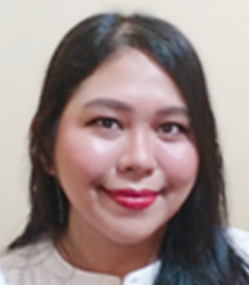 Ms. Dear NB Sinandang Dear is Communication and Partnership Manager of Humanitarian Forum Indonesia, a forum of faith-based organizations in Indonesia that was established in 2008. She has over 10 years’ experience in project management, capacity building programs, network management, and coordination and partnership with humanitarian key actors in the areas of humanitarian assistance and disaster management in Indonesia. In her current role, Dear closely works with HFI members, and humanitarian partners such as UN agencies, Red Cross, NGOs/INGOs, private sector, academia, donors, and regional to global networks.
 Mr. Takeshi Komino – Secretary General, Asian Disaster Reduction and Response Network (ADRRN) Takeshi currently serves as General Secretary of CWS Japan and a member of Executive Committee of Asian Disaster Reduction and Response Network (ADRRN) as Secretary General. He also serves as Co-chairperson of Japan Platform, and joint secretariat of Japan CSO Coalition for DRR (JCC-DRR), as well as the chairperson of Japan Quality and Accountability Network (JQAN).


 Prev
Prev