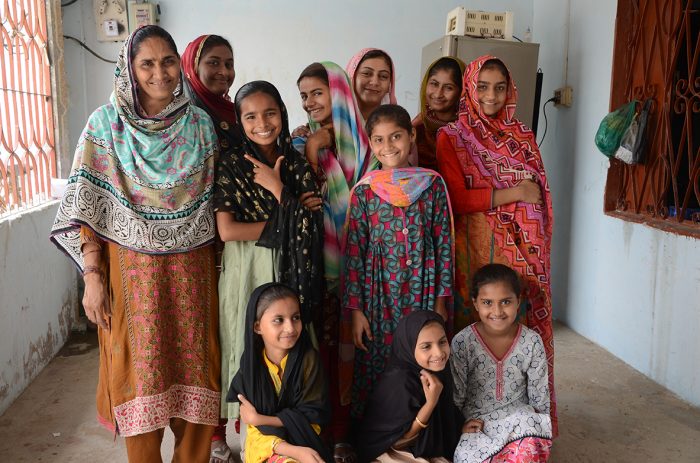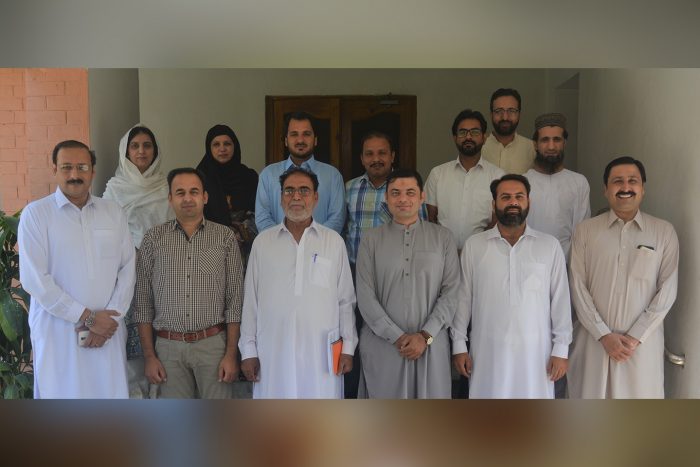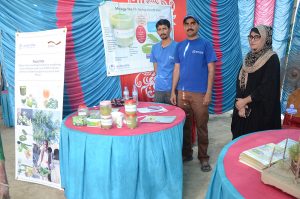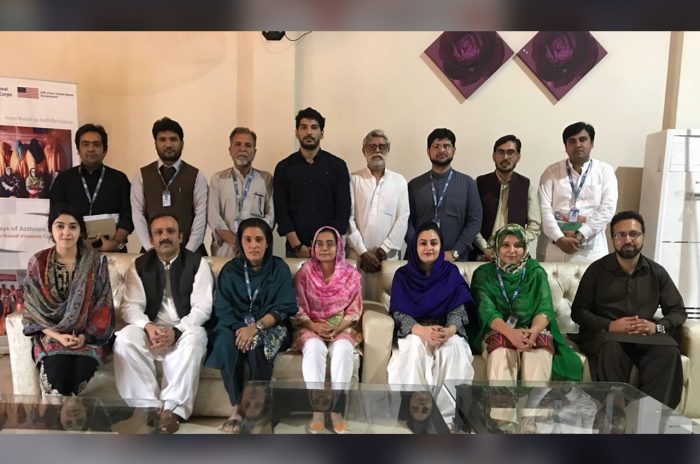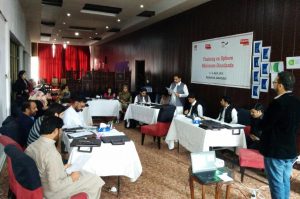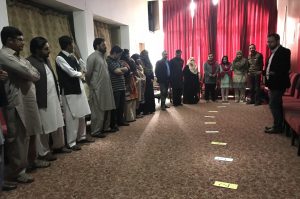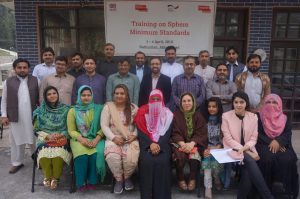

Group Photo of alumni students of University of Sindh of the Social Media management Training in Mirpurkhas.
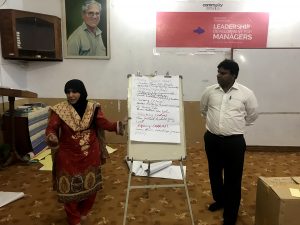
Palwashay Arbab delivering a session on “Social Media in Pakistan” in the training held in Faisalabad.
Groups with the best presentation and idea were awarded with appreciation and gifts.
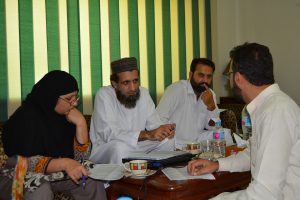
Participants were engaged in group activities enabling them to share ideas and being creative while developing content for social media.
Group Photo of alumni students of University of Sindh of the Social Media management Training in Hyderabad.
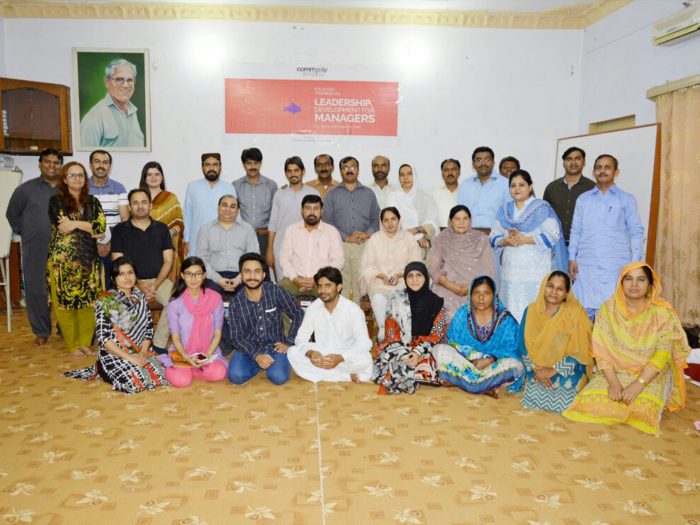
Group photo with the participants of the Social Media training in Lahore.
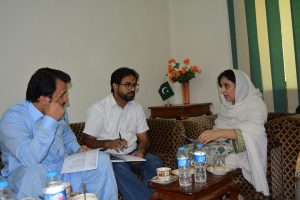
Participants of the training in Faisalabad with Palwashay Arbab, facilitator of training.
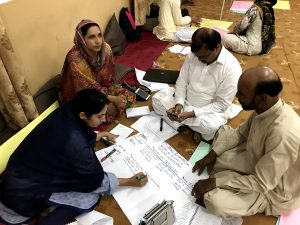
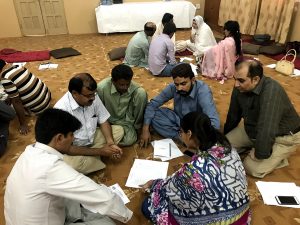
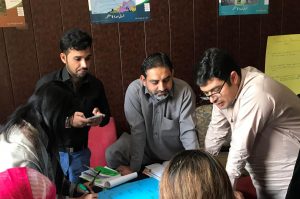
Group work of participants in the session of Infographics.
Alumni from University of Sindh engaged in developing an infographic during the social media training.
The Pros & Cons of Social Media were discussed and shared by the participants at the training.
Alumni students got a chance to be creative and shared ideas on how to develop appealing visibility material to deliver a clear message to the masses.
Alumni student from University of Sindh engaged in a group activity of developing Infographics.
Palwashay Arbab, facilitator of Social Media Management Training, delivering a session on “Major Social Media sites and their usability”.
A series of trainings on Social Media Management for alumni students of the Youth United for Change network from different universities across Pakistan were held in the cities of Hyderabad, Mirpurkhas, Lahore and Faisalabad. The trainings aimed at enhancing the knowledge of students and graduates on social media, its key tools, its impact and usability for bringing positive changes and awareness.
Popular social media campaigns and their impact were shared with participants. Through assignments and interactive exercises alumni students were guided on how to plan and develop their own successful social media campaigns on social causes, awareness issues and development goals. Inspiring and innovative video and photo campaigns successfully run on social media platforms by UN agencies, international aid organizations, CSOs and global academic networks were shown to participants to get inspiration from. Group activities on developing informative viral campaigns, #Hashtag activism, infographic development and creating facebook pages encouraged students to bring out their creativity and put on their thinking hats. At the same time, these youth representatives were cautioned on the cons of mis-using social media and the ethical considerations to take while developing and implementing campaigns on social networks. A significant session of the training emphasized on using social media tools to share knowledge on the Sustainable Development Goals (SDGs) and to develop campaigns that would help us achieve the global goals unitedly as a nation.
Students’ Corner:
“Youth must be united for progress and development of their country and in today’s age social media is the most effective and engaging platform which is easily used and available to everyone. Together we can bring positive change through innovative social media and #hashtag campaigns,” Mohammad Shebaz, alumni of University of Sindh, Mirpurkhas Campus.
“The training was very fruitful. The facilitator of the training delivered all sessions effectively and efficiently for us to build a clear understanding of social media and how to use it. We learnt to use social media ethically as well which most of us overlook and do not take concern of. These kind of trainings fulfill the need of today’s society where social media is frequently used by most individuals, especially youth,” Ajay K. Rathore, alumni of University of Sindh, Mirpurkhas Campus.
“This experience was very informative, creative and productive. We learnt new ways of interacting in different social media sites and how to make our content effective and eye-catching.” Maham Ansar, alumni of University of Sindh, Jamshoro.
“The way of delivering sessions step by step was helpful to understand the different terms and sites of social media. In a short period of one day, we managed to gain interesting facts regarding the techniques of using social media which we were initially unaware of.” Hoorab Ansar, alumni of University of Sindh, Jamshoro.
“Being an Alumni Member, this training was very helpful as social media has become one of the main modes of media to get connected globally. The frequent use of social media is productive and impactful, for youth especially. The training helped in understanding blogs and article writing and how to start campaigns within ethical boundaries. Furthermore, it helped to understand getting over the distance gap and stay connected and united with youth from the South-Asian region through social media platforms. It also enabled me to develop effective and productive messaging for positive social changes in the region.” Mahnoor, alumni of University of Sindh, Mirpurkhas Campus.
Group work by community members describing community
Female Group Work Proceedings
The provision of medical facilities to rural areas has been a major developmental objective of Pakistan. The government has undertaken several programs to train and deploy women doctors, lady health visitors, and dispensers in their health facilities in the rural areas of the country. However, district Umerkot in Sindh, similar to many other rural districts in Pakistan, is faced with a severe shortage of human resources in the medical sector. Community World Service Asia is addressing this limitation through implementing effective and affordable interventions so that progress towards SDG Goal 3, on achieving health and well being, is successfully met.
In its third year of implementing a Health Project in Umerkot, with the financial support of Act for Peace (AFP) and PWS&D, this project was initiated after consultation and coordination with the all district health authorities and local communities in Umerkot. Rural Health Centres (RHCs) in three villages of Umerkot have been set up to respond to a broad range of health issues including general hygiene, communicable disease prevention, awareness on safe motherhood and safe deliveries, vaccination for women and children, breastfeeding, family planning and access to safe drinking water.
Six Health Committees, comprising of men and women of the communities have been formed in the villages of Nabisar Road, Hyderfarm and Dhoronaro in Umerkot. These are the villages where each RHC is established. Each of these health committees consists of ten members from each village. An advocacy forum, made of ten health activists, has also been set up at the district level to address emerging health issues and to facilitate the successful functionality of the health centres. These activists represent government line departments, civil society organizations and the local community from the catchment areas of where the health facilities are established. Acknowledging the significance of community engagement, the advocacy forum and its work is seen as a back bone for the success of the project and key to providing sustainability to the health centres.
The training titled, Community Management Skill Trainings (CMST), was designed for members of the village health committees to strengthen their capacities on health issues and clearly define their roles and responsibilities. Health committee members were expected to clearly identify health related problems of their village and establish linkages with line department and prioritize health concerns on their own after taking the training.
Altogether, a series of six, two day trainings on CMST with all the village health committee members. In each of the three locations, separate two day training sessions for men and women were conducted. In addition, a one-day orientation session on Leadership Management Skills Training (LMST) was also conducted for the representatives of each line department, civil society organizations and the local community. A total of ten participants attended this training.
With enhancing the awareness, skills and capabilities of the participants, the training aimed for the Health committees to better plan and manage their relevant activities and effectively utilize the local resources available to them. It also provided the participants an opportunity to strengthen their abilities to work towards breaking the vicious cycle of poverty and overcome communal health concerns, specifically that of women and children.
The purpose of empowering the health advocacy forums is to facilitate positive change and to see development of new policies that will tackle unmet and emerging health needs at district level.
In total six, two days CMST training sessions were conducted with the village committee members. In each of the three locations, two days training session for men and two days training session for women were conducted. 30 males, 10 each from the three locations and 30 women, 10 each from the three locations participated in the training. Apart from that, a one-day orientation session on Leadership Management Skills Training (LMST) was conducted for the representative of line department, civil society and communities. In total 10 participants attended this training which included one woman and nine male members.
The aim of all professionally trained project managers is to deliver high quality deliverables at every stage of the project, with effectively utilizing their team and without compromising costs and deadlines. Professionals must be trained to be effective leaders and managers by developing key qualities and applying smart strategies that uphold the integrity of the organization. Recognizing this requisite, Shewaram Suthar felt that his organization and department needed to enhance their capacities on specific skills to ensure that their organizational goals and objectives are met timely, effectively and efficiently.
Shewaram is working as Manager Programs with the Association for Water, Applied Education & Renewable Energy (AWARE) and firmly believes that training and skills development provides both, the organization and the individual employee, with expertise and benefits making it a worthwhile investment.
I have been with Aware since 2014. We have four offices operating in Sindh. Our head office is in Umerkot with district offices in Badin, Tando Mohammad Khan and Tharparker.
Though I completed my masters in Zoology, I was always attracted towards the social sector. The work done for the development of the country and building better lives for the people of the country inspired me to join the development sector. I wanted to play my part in making the world or Pakistan a better place to live. We are not a very big country but playing our part to make living easier for even a few is an essential motive to achieve.
Shewaram is heading a group of teams implementing eight projects in four districts of Sindh.
Many challenges are faced internally and externally. One of the main problems in the organization was the lack of technical knowledge in reporting, project planning, financing and monitoring. With time changing so rapidly, new methodologies and tools are being introduced to improve the functions of various departments. However due to lack of resources, it is difficult to stay updated. This affects the quality of work we do on a daily basis. In addition, we particularly lacked in proposal writing skills. My team and myself, failed to develop winning and all inclusive project proposals.
Through November 2016 to March 2017, Shewaram attended trainings on Project Design and Project Planning conducted by Community World Service Asia. The trainings aimed to provide a systematic approach to managing and maintaining different types of projects, organizational changes and development. Shewaram also nominated his team members to participate in other topic and subject specific trainings conducted by Community World Service to enhance the organization’s overall staff capacity.
Given a platform by Community World Service Asia, I thought of utilizing its benefits to the fullest. I sent relevant staff members to the trainings which were conducted under the Capacity Institutionalization Program. This capacity building opportunity offered to us provided all the necessary guidelines for seasoned and skilled professionals to effectively master project management,
quoted Shewaram. Prior to the participating in the trainings, the departments of Human Resource Management, Finance, Monitoring and Evaluation (M&E) and Programs lacked in quality management and technical knowledge shared Shewaram.
Coming back from the project planning training, I initiated work on revising all policies and manuals. All the documents for our Human Resource, Finance and M&E departments were updated. The Gender Policy, Child Protection Policy, Communications Strategy, Accountability Framework and other existing documentations were renewed. Each department assigned a focal person who was looking into implementation and enforcement procedures of the revised documents. That focal point would be contacted in relation to any query addressed by internal staff or external stakeholders, donors or partners. The Logical Framework Analysis (LFA) of M&E was formed after two of our staff participated in the M&E Training conducted in March 2016 in Islamabad.
Shewaram further added that the M&E methodologies incorporated in the M&E LFA has helped to derive quality outcomes from the projects. The Complain Mechanism (CM) Policy was revised, providing a contact number to all staff members and assigning the number to the focal person appointed to handle complains according to the CM Policy.
Every focal person has a Terms of References (TOR) document according to which they deliver their duties. They are trained to research for new tools or methodologies for timely revision of all policies and manuals existing in all departments.
Shewaram also recognized that it is essential to have consistent collaboration among projects with multidisciplinary teams.
We established the Resource Mobilization Unit (RMU) lead by the CEO of Aware. The unit consists of seven members including the CEO, Manager Programs, three Project Managers, one M&E staff and a Finance Manager. The main function of the unit is to secure new and additional resources for the organization. It also involves making better use of, and maximizing, existing resources. This unit has filled the gap which existed between the employers and the management team. The RMU has become a useful tool through which we communicate effectively and share necessary updates about the status of the project and departments. The progress and challenges faced internally and externally on field by all departments are discussed and inputs are shared in the meetings we conduct on a monthly basis.
The training I attended on project proposal writing was very beneficial. I use to write basic proposals due to lack of knowledge in technicalities. The training helped built a better understanding in format writing, word limit, line spacing and various components attached to make a good proposal. We often overlooked these minor details which resulted in improving the quality of our proposals immensely.
Shewaram and his RMU have developed five project proposals since the proposal writing training out of which two have been accepted.
We developed the proposals as a team. I would draft the project proposal which was reviewed by the RMU individually or in a joint meeting.
The HR officer of Aware took part in the Human Resource Training held in July 2016 in Islamabad.
The training highlighted various HR tools which can be effective for the organization. Web Human Resource (WebHR) was one of the tools shared in the training, which is a cloud based HR application. After revising the HR manual, we brought WebHR through which we have been working efficiently. We are currently in contact with the purchasing company for more information on its working. WebHR has made it easy for the HR Department to start managing HR processes and maintain databases effectively. It acts as a bridge between human resource management and information technology. WebHR has converted human resources information into a digital format, allowing that information to be added to the knowledge management systems of the organization.
In addition, three of Aware’s Finance staff participated in the Financial Management Training conducted in May 9-13, 2017 in MirpurKhas to which Shewaram opined,
The quality of financial and budget monitoring reports have improved significantly due to the technical knowledge learnt in the training.
According to Shewaram, Aware is working in a more organized manner.
The teams’ capacity has enhanced allowing the deliverance of quality work. With polices and manuals revised, the working of all departments is running smooth and orderly. Some documents are in process of being revised. Moreover, the staff sent to the trainings, shared their learning with their concerned departments This exercise allowed enhancing the knowledge of all departments in their field of work. I am pleased to say that we have progressed immensely in a year and half,
reported Shewaram proudly.
The series of skill-building opportunities not only reinforced the need to encourage unity and a sense of purpose where teams are working towards a common goal, it also allowed to assess areas where we can improve to be effective leaders with a result-oriented, yet humane, focus,
The communities in the Indus river delta encounter disastrous floods and other climatic hazards very frequently. The most devastating effects of these disasters reflect on the agrarian livelihoods of these communities. To combat these adverse impacts and to lead normal lives, communities must resort to alternative sources of income. In this fight for survival, women must equally participate in livelihood generation and disaster risk reduction activities.
Women of Rahim Dino Thaheem village in District Sujawal in Sindh, Pakistan are aware of these challenges and are responding in an exemplary way. Community World Service Asia (CWSA) is working closely with these women and their supportive communities, among many other in rural Sindh, to facilitate them in achieving economic empowerment.
This film tells the story of Bakhtawar, a young theater activist, who is spreading awareness about reproductive health and rights as well as against the generations long custom of child marriage. She has also managed to convince her parents about the importance of education and wants to continue her studies. She is an active participant in disaster risk reduction activities.
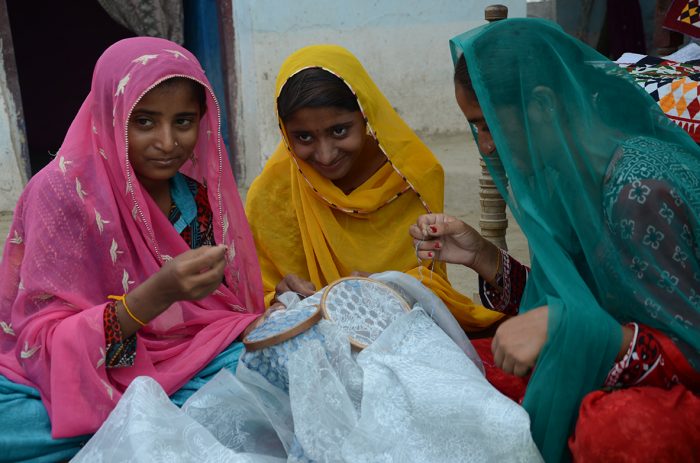
Shahnaz, a mother of nine, belongs to the same village and, despite hurdles from her family, has been able to earn a decent earning by joining the vocational center established by Community World Service Asia. Other than enhancing her skills, the center has also made her part of the Women Enterprise Groups, developed by CWSA, and connected her with sales agents that help her, and many other similar artisans, receive orders from renown fashion designers and urban fashion labels in metropolitan hubs of Pakistan. This practice has helped reduce the exploitation rural craftswomen face at the hands of middle-men as well as empowering them with a sustainable livelihood.
Through a comprehensive community empowerment project, Community World Service Asia is instilling messages of self-reliance as key to the resolution of both economic and social problems. Whether it is economic empowerment or disaster risk reduction, women are equal to men in resolving the issues confronting families and communities, leading them to pave paths to a resilient future.
Various material developed by the participants in the training displayed in the training venue.
Teachers in the training were divided in four groups and each teacher in each group was assigned with a responsibility. They placed their names on the Job Chart as per their responsibility mentioned on it.
Twenty female teachers from 14 primary schools of Thatta attended the informative training.
Nazakat from Community World Service Asia, facilitator of the training, delivering a session on Teaching of Mathematics.
In a group activity, one group of teachers made different art work during the Low cost no cost material development session.
A group of teachers displaying their paper mache art work.
A group of teachers made different puppets and plants through the use of wooden spoons in the Low cost no cost material development session.
A display corner of low cost material developed by teachers.
Participants were actively engaged in group activities which enhanced teamwork and debating skills.
Fehmida Khuskh, Primary School Teacher, GGPS Mohammad Hussain Khushk Makli, Thatta, writing group role during the Morning Meeting session.
The participants were engaged in various kinds of art work which elevated their creativity skills.
A four-day teachers training on pedagogical skills was conducted under the Girls Education Project supported by Community World Service Asia and Act for Peace in Sindh province, Pakistan. The training was held for primary government schools’ teachers in the Thatta district in the late weeks of December and was attended by twenty teachers (women) from fourteen schools. The workshop aimed at teaching classroom management skills to teachers to enable them to create child-friendly and conducive learning environments.
Focusing on child psychology, child rights and child protection, the training included various sessions on classroom management, language, mathematics, introducing the morning meeting, developing low cost and no cost teaching materials, and awareness on gender, health and hygiene. These interactive and working sessions helped the teachers to convert their traditional classroom into child-centered ones, where students are at the centre of the learning process.
The sessions on child psychology, rights and protection emphasized on treating all students with equal respect and love irrespective of their gender, age, religion and other ethnic stereotypes. The teachers learnt how to deal with student issues via understanding their needs through basic psychological analysis. Teachers also learnt to develop low cost teaching aids from recycled materials to make classes fun, easy and memorable for their students. Health and hygiene sessions, especially on adolescent health care, aimed to build capacities of teachers on guiding their students towards instilling good hygiene habits and environmental preservation practices from an early age.
Teachers’ Corner
“Teachers are role models for their students. This training has enhanced our skills and behavior towards students, making us better role models for our students. A child-centered classroom develops a friendly relationship between teachers and students. The job chart was one of the most interesting initiatives learnt in the teachers’ training. This activity will enable students to become more responsible in classroom and encourage them to make a better and interactive school environment.” Fehmida Khushkh, Primary School Teacher,GGPS Mohammad Hussain Khushk Makli, Thatta
“There are more slow learners in my classroom than fast learners. Lack of confidence is the main reason for this. Learning through the practical activities we learnt in the training will increase students’ learning capability and boost their confidence. Moreover, the sessions of the training were not only for the benefit of the students, but as teachers, parents and human being, this was a very informative experience. The health & hygiene session will not improve the healthy practices of the students, in addition, it will built awareness of cleanliness in ours and students’ homes. This will bring in a healthy change on community level.”Hafiza Solangi, Primary School Teacher (Teaching Classes 4 & 5), GGPS Uza Mohammad Jokiyo, Thatta
“I was hesitant to speak up in front of people. The training boosted my confidence and enhanced my capability to express openly and without any fear. Likewise, through group work and practical activities I learnt in the training, I will encourage the quiet and shy students to come forward so that they can overcome their fears of facing the audience and increase their confidence level. ”Halima Shahid, Primary School Teacher (Teaching Class 2) ,GGPS Yusuf Elayo Keenjar Jheel, Thatta
“The training taught us to take the students forward with us and not just teaching them and promoting them to higher classes. It is our duty as teachers to motivate and encourage each student to become confident and sharp for the betterment of their future. During a session, Mrs. Nazakat, facilitator of the training, started to scold us suddenly and we, even as teachers and adults, became scared and confused in the work we were doing. It was act to make us realize that anger not only puts a negative impact of the teacher but it discourages and lessens the confidence of students. Hence, it is important for all teachers to maintain a calm and friendly attitude with students throughout the learning period. This increases the learning capacity and encourages students to be more active and creative in classrooms.” Tayyaba BanoPrimary School Teacher (Teaching Class 3), GGPS Model Community School Makli
“The training was executed in a very timely manner which is mostly overlooked in some events. All activities are thoroughly explained to us and the facilitators are very cooperative as well. Moreover, Morning Meeting was a new learning for me. Engaging students in activities like Morning Meetings, will help them become more confident and friendly towards each other. In addition, this activity will also develop a good understanding amongst the students. I will definitely incorporate this activity in my school.” Sahiba Khushk, Primary School Teacher, GGPS Chara Memon School, Thatta
“Every child has their own personality and talent. From this training, we have learnt not to judge students on the basis of their learning ability or personality. In the child psychology and child rights session, we have learnt that we should be calm and friendly with children who have a slow or weak learning capability. IF we become harsh, our strict attitude will further weaken the child and he or she will lose their confidence completely. In order to improve their capabilities, we must engage them more in practical activities. The low cost no cost material development session was very effective and informative. The material used to develop creative art will help increase the creative skills of students and give a boost to their enthusiasm level. Students enjoy working through playing, therefore, we as teachers have to engage them with us and develop a child-friendly classroom so that we can all gain positive results.”Azra Abbasi, Primary School Teacher (Class teacher of Grade 3), GGPS Qazi Maula School, Thatta
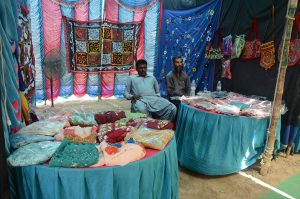
The buyer displays embroidery designs and color combination used on wall hangings.
Chaman Das explained the product finishing cycle along with cost and material used for different products at the finishing unit.
The buyers briefed the artisan women on the local market trends and the best selling products.
Buyer in Mithi Market, Umerkot, displays products to highlight the demand of consumers.
As a small district in interior Sindh, Umerkot has a limited a market space for rural artisans to expand their handicraft business to be able to reach large consumer groups. To expand this outreach, twelve Sales and Marketing Agents (SMAs) from among the rural artisans in Umerkot, were facilitated with a market exposure visit to Mithi and a two-day Capacity building Training. This exposure opportunity aimed at building artisans’ awareness on new market trends and consumer demands outside of Umerkot district and familiarizing them with product pricing, bargaining with middlemen and customers and creating market linkages that will enable a sustaining business environment for these women artisans from remote villages of Umerkot.
Buyers at the Mithi marketplace warmly welcomed the SMAs from Umerkot and made them comfortable enough to display their finished products, the materials with which they were produced and prices at the foreign market. The artisans were overwhelmed with joy to see their traditional embroidered and appliquéd products being well-received and valued among buyers in Mithi.
Potential buyers and renown retailers of Mithi, such as, Nathoo Raam Block Printing and Handi Crafts, Mama Handi Crafts, Waswani Handi Crafts and another local entrepreneur, met with the Umerkot artisans and showed them their own products as well to give them an idea of the product cycle, latest market trends and best selling products. These experienced retailers further shared tried and tested, successful, marketing techniques with the artisans to enhance their business circle, networks and advertising skills. This was a new learning for the artisans and they openly welcome it as it would surely help in building their handicraft enterprises.
Most of the handicrafts salesmen in Mithi encouraged the SMAs to invest in producing new products by using locally available raw materials and fabric. One of the local entrepreneurs displayed his new range of products, including purses, handbags and pouches, made from shawls that are easily available in local markets, of different designs at his finishing unit and told them how popular these products were.
During the visit, the SMAs from Umerkot received an order of hundred cushions from a popular Mithi retailer, Loveraj Handicrafts. The artisans dealt with confidence and professionalism with their customer and assured him that the order given would be timely completed, with utmost attention to quality.
I gathered innovative ideas to strengthen and increase the work of rural artisans. We had limited access to buyers before. I am confident that our handicrafts will be sold in the urban markets in good price now.,
expressed Naz Pari, SMA from Village Talo Malo, Umerkot.
Rizwan Iqbal from Community World Service Asia welcomed the guest speakers and students during the opening session.
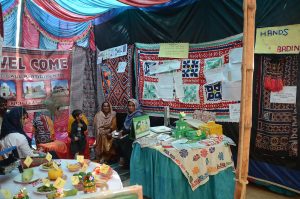
Display of IEC material on the 3rd day of Exhibition.
“Behavior change is essential to bring any kind of change. These issues are discussed on institutional level for the reason to built a better and resilient future,” shares Syed Khurram Khursheed, Interim Country Director, Muslim Aid Pakistan.
Zainab from Community World Service Asia presenting shield to Farah Munawar, Program Officer DRR, Oxfam.
Zainab from Community World Service Asia presenting shield to Abdul Haque Banglani, Focal Person Emergency Response Municipal Committee, Bulhari, Jamshoro.
Zainab from Community World Service Asia concluding the event with a Note of Thanks to all guest speakers and participants for coming together to further a vital cause.
Ali Asghar Bhutto, student at Sindh University, shares his views regarding DRR during the question & answer session.
Farah Munawar, Program Officer DRR, Oxfam addressing the audience during the Question & Answer session.
Zainab and Rizwan Iqbal from Community World Service Asia share our role on Disaster Risk Reduction and the importance of the National DRR Conference with the team of HOT FM 105.
A question answers session was conducted after all three sessions delivered today by the guest speakers.
Participants including Government Officials, CSOs representatives, Faculty members and students attended the national event today.
Ghazala Naeem, DRR Expert, delivering the introduction and objective of the National Conference on DRR today at University of Sindh.
Prof. Dr. Fateh Muhammad Burfat, Vice Chancellor, University of Sindh, addressing the audience at the national event.
Students registering at the registration desk to attend the DRR National Conference at Sindh University, Jamshoro.
In recent years, the world has become increasingly aware of the disastrous impacts of natural hazards and climate change. In an effort to minimize the damages and adverse consequences caused by natural forces, humanity has united together time and again with global frameworks and commitments. The Sendai Framework for Disaster Risk Reduction and Goal 11 of the UN Sustainable Development Goals for 2015-30 are some of the key commitments global communities are working towards.
As signatories to these global commitments, Pakistan is compelled to make advances in its investments and efforts in Disaster Risk Reduction (DRR) and to draw a roadmap for its successful implementation and streamlining into national policies and development goals.
Guided by its strategic priorities and in pursuance of Pakistan’s national DRR agenda, Community World Service Asia conducted a two-day DRR conference and a one-day exhibition in collaboration with the University of Sindh in Jamshoro and Provincial Disaster Management Authority (PDMA) in Sindh, Pakistan in October (2017). This was the first of its kind conference ever to be conducted on DRR in the country.
This conference is the initial step in building awareness [of DRR] amongst people. The two-day conference and one-day exhibition will help develop participants’ understanding with regards to DRR and the important steps that must be taken for it. The awareness they are receiving can be incorporated in their future plans of working on DRR,
expressed Mohammad Ali Sheikh, Director Operation of PDMA, Sindh, who was guest speaker at the DRR conference in Sindh.
Professor Dr. Fateh Muhammad Burfat, Vice Chancellor, University of Sindh, officially opened the event and welcomed an audience of 383 participants, including 300 men and 83 women, at the national conference which was held at their University campus in Jamshoro. The conference gave a platform to climate specialists, relevant scholars, educationalists, government representatives, civil society members, humanitarian and development practitioners and students to speak on the topic and share ideas and experiences on DRR, its implementation and benefits.
A large number of students, academia members and local NGO representatives attended the conference. Participants at the conference and exhibition varied between experienced DRR and DRM practitioners and those planning to work on DRR in the future. Local and international organizations such as Kacchi Community Development Association, Oxfam, Muslim Aid, Participatory Village Development Program, University of Peshawar, Malteser International, Municipal Committee Bolhari, Tearfund are among the many that participated in this national event.
The broader objective of the conference was for participants to generate awareness and information on DRR and share the good practices and lessons learnt in the application of DRR while working with communities around the world. Through this, Community World Service Asia aimed to encourage networking between those involved in DRR and to avoid the duplication of DRR efforts, particularly in Sindh. This broader objective was further divided into more specific aims that were outlines in the conference agenda:
Ghazala Nadeem[1], DRR Expert, gave an introduction to the conference and exhibition and explained its objective to the audience,
CWSA is co-hosting this Conference and one day exhibition in collaboration with University of Sindh and PDMA, sharing knowledge, experience and efforts on the subject to a wider range of stakeholders envisaging opportunities for future collaborations, building on the past investments and avoiding duplication of DRR efforts & resources.
In addition, the Director of PDMA Sindh shared the overall functions and role of PDMA Sindh in the field of DRR and Disaster Risk Management (DRM). The Director also oriented participants on PDMA Sindh’s future plans, such as district disaster mapping and the establishment of Rescue 1122 at a district level.
We are also in the stage of planning to establish a Provincial Disaster Management Institute which will aim at disseminating knowledge in relation to DRR.
Over twenty guest speakers from various organizations and fields shared their knowledge on specialized aspects of DRR and DRM. Presentations ranged from Urban Search and Rescue Project to Research on Local Capacity Building on DRR.
The first 24 hours following any disaster are the golden hours for saving lives. For this reason, National Disaster Management Authority, Pakistan initiated the establishment of Urban Search and Rescue (USAR) teams in different parts of the country,
shared Col. Aijaz, General Manager ConPro Service, at the DRR Conference. He further added that the USAR teams are capable of national and international assistance in sudden onset of disasters. The members of the USAR teams are trained by a pool of internationally trained instructors.
However, there is a need to further advance the teams; refresher courses and joint exercises of the existing teams need to be conducted to update knowledge and skills of the team members.
Abdul Qayoom Bhutto, Director, Pakistan Meteorological Department (PMD), ilustrated PMD’s Early Warning System (EWS) of DRR.
PMD’s EWS of DRR mitigates the potential damages for sustained socio-economic development from various natural hazards including floods, cyclones, landslides, drought, heavy rains and more. We have a combination of technology and associated policies and procedures designed to predict and mitigate the harm of natural and human-induced disasters. To further advance the functions of PMD, continuous coordination among stakeholders at all levels are required.
The Sendai Framework recognizes that while the State has the primary role to reduce disaster risk, responsibilities should be shared with other stakeholders including local governments, the private sector and non-governmental organizations (NGOs). Moreover, social work students have to be knowledgeable of the Sendai framework of action to be able to intervene in disaster related problems,
shared Dr. Ibrar, University of Peshawar, during his session on Social Work and the Sendai Framework for Disaster Risk Reduction. On both days of the presentation-based conference, the discussions and question-and-answer sessions facilitated participants’ engagement on Disaster Risk Reduction and Disaster Risk Management (DRM) issues. These discussions were an effective platform to engage the youth, encouraging them to use their enthusiasm and skills in DRR and DRM projects. The participants shared their vision for inspiring and equipping students for DRR and DRM and developing a task force to respond to any future district-level emergency.
What did the conference achieve?
The conference helped bridge the gap between DRR professionals working on field and DRR experts researching on DRR-compliant infrastructures. Attendants left the conference with a greater knowledge of disaster resilience and management, which would help strengthen and develop organizational structures on the theme. Some were also able to discuss prospective partnerships and collaborative work. Ideas such as possible collaborative trainings for District Disaster Management Authority staff and university volunteers on Urban Search and Rescue were also highlighted. Moreover, the participants discussed promoting research-oriented DRR initiatives among each other.
Both structural and non-structural DRR initiatives would benefit communities by bringing technical and social research into practice. Participants agreed that it is important to establish effective policy and legal arrangements for mainstreaming DRR into safety regulations, like building codes, and other development laws. Not only would this help protect people from the adverse impact of natural disasters but it would also support the availability of appropriate financial and technical resources for DRR at local and national levels.
To highlight the good work of local, national and international organization in the area of DRR in Sindh, Community World Service Asia organized a one day Exhibition showcasing best practices and visibility material on the initiatives taken so far. A number of organizations had set up stalls at this exhibition held at the Sindh University and provided live demonstrations of emergency and relief services. This initiative helped in promoting the various DRR models practically and also acted as a bridge connecting researchers, students and NGOs to work in a collaborative way.
Omar Qayyum, a student of the Social Work Department of the University of shared,
The National DRR Conference and Exhibition was an unprecedented event conducted in University of Sindh. This was a new learning experiencing for all of us, as [DRR] is a very important topic. It is vital for the [social work] department since we will be able to play an active role in promoting DRR through our social work. It further enhanced our knowledge in how to keep ourselves safe from the natural disasters which are continual and often unpredictable.
Rashid Hussain, another student, corroborated,
We now know which organizations to approach for information or aid at times of disasters. The guest speakers shared their valuable contribution in the field of DRR. As a social worker, I will be able to share my learning about preparing oneself in times of emergencies with local communities. I plan to research on future trainings on disaster management so that I can volunteer my services if any emergency situation arises.
The National Conference on DRR was highly appreciated and the various stakeholders of DRR interventions have been encouraged to enhance and increase their work on helping build disaster resilient communities and decrease disaster impacts through informative workshops and engaging discussions conducted during the three day event.
[1] As one of founding member of ‘Resilience Group’; a young dynamic consulting house, Ghazala is providing disaster risk reduction expertise and consultation to various national and international organizations, especially I/NGOs, in the areas of Disaster Emergency Response, Risk Management, Capacity Building, Architecture & Programme Development. Ghazala has been involved in (regional) tsunami research along Makran & Sindh coast with national & international organizations/ experts, results and activities are available http://iotic.ioc-unesco.org/1945makrantsunami
Farmer families in Badin trained in Kitchen
Gardening through Clay Pitcher Technology with
the purpose to grow vegetables
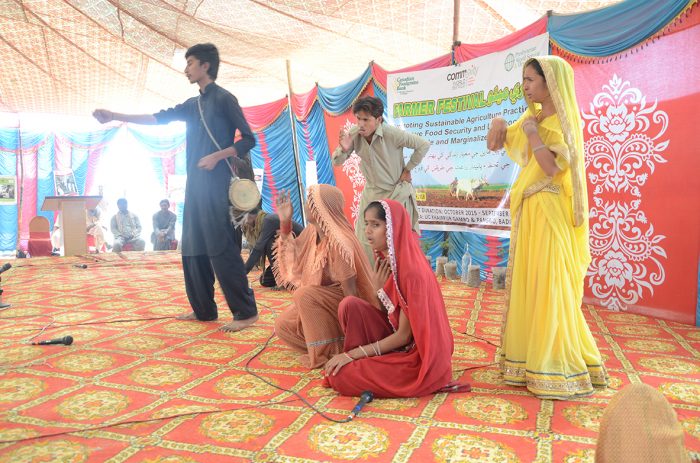
A theater group presented a didactic skit at the female farmers’ festival. The main theme of the theater performance was sustainable agriculture, food security and nutrition by linking it with World Food day.
Community children present an educational skit about World Food Day at the Female Farmers’ Festival.
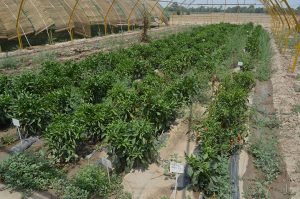
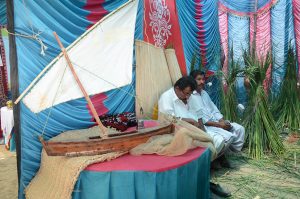
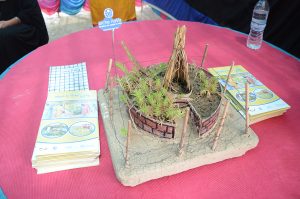
A model displaying a type of kitchen garden.
A beneficiary of the food & security project, Zainab, residing in Fazal Wadho village of UC Khairpur Gambo, District Badin shares her kitchen garden.
Many rural communities in Badin have benefited from Community World Service Asia’s and CFGB’s Food security project, which started in 2015. This initiative seeks to ensure food security and sustainability in rural areas by providing villagers innovative farming skills. By doing this, they are positively impacting the community sustainably by guiding them on how to acquire their own necessities rather than merely distributing tangible products such as food kits or shelters. Through the project, villagers are encouraged to become self-sufficient instead of dependent on external assistance.
Using various methods, the project is equipping rural communities of Badin with essential knowledge on health, nutrition, and sustainable agriculture. The project recently held a Farmers Festival for women farmers to celebrate World Food Day and the achievements of these farmers over the last two years. The festival featured many performances, including poem recitals, song competitions, and two didactic dramas enacted by local children and the village’s theater group, which has been formed as part of Community World Service Asia’s projects in the area. More than three hundred and fifty women from Union Council Khairpur Gambo and Pangario of Badin and fifteen elementary school students from the same area participated in the festival. The children (students) enlightened the attendees at the festival on the importance of kitchen gardening, tree plantations, good nutrition, environment conservation and the history of World Food Day through tableau performances. Representatives from the National Rural Support Programme (NRSP), Participatory Village Development Programme (PVDP), Arche Nova, Society for Safe Environment and Welfare of Agrarians in Pakistan (SSEWA-Pak) and Local Support Organizations (LSOs) also participated at the festival.
I came to this festival because the project staff has become like family. They teach us so much that I respect them. When I received the invitation to this festival, I was very excited to attend the event. The atmosphere in this festival is delightful. It is a wonderful opportunity for us women to come out of our houses, enjoy ourselves, and learn. What we learn will help us change our lives,
remarked, Fozia Iftikar one of the farmers at the festival.
The mother of four children, aged between 4-11 years, Fozia deeply cares for her family. She hopes that her children will be able to learn vocational skills that will help them in the future but has not yet been able to find an opportunity for them. Fozia lives in Shukaraldin, a rural village of Badin, where her husband works as a farmer on a small plot of his own land. Due to the nature of his work, Fozia’s husband does not earn a steady monthly income. Fozia explained,
After every six months, my husband sells whatever crop he has been growing on the land, and we live off the profits. However, we have to wait for that income since some crops, like cotton and peppers, take six months until they are ready to sell.
Fozia is not able to do full-time work because of her young children, but she does sewing at home. She rarely receives sewing commissions, and when she does, they are usually from relatives. Thus, the family’s main source of income is through her husband’s farming. The family is dependent on the water and weather for their crop’s wellbeing, creating an unstable financial foundation for the family.
Two years ago, Fozia started growing a kitchen garden after the team came to her village and began to teach the community about health and nutrition. They encouraged the villagers to create kitchen gardens so that families would have food security and eat more healthily. Fozia shared,
We learn a lot from the project team who taught us about health and hygiene. Because of this teaching, my family has been able to prosper. We didn’t know anything about growing vegetables until they taught us about it. My family did not pay any attention to health, but now we are all very interested in this matter.
Community World Service Asia holds teaching sessions in Fozia’s village once or twice a month. The staff teaches the community members about agricultural techniques so that kitchen gardeners will be able to maintain their produce. Sessions for men on fishing and other food-gaining practices are also held.
Fozia confidently asserted that it is easy to maintain her kitchen garden, and she appreciates the change—in terms of finances and health—that it has brought in her family.
I am very happy,
she expressed,
I like eating my freshly grown vegetables. The healthiest diet for my family is to eat our homegrown vegetables.
Ever since Fozia’s family has been eating homegrown vegetables, the family has had some extra money, initially used to purchase vegetables. They use it on other household necessities, such as oil, sugar, clothes, and the children’s school books. Moreover, when Fozia’s kitchen garden has excess vegetables, she either sells them to generate more income, or she gives them to people who do not have any food.
Fozia has also noticed that her family’s health has improved. She estimates that in a year, there may be one or two illnesses among her children, but no more than that. Furthermore, she noted that her family is much more energetic than they were when they ate vegetables from town.
This kitchen garden has had positive effects on my family. We eat clean and healthy food which has improved our health,
Fozia declared.
Fozia’s children did not like eating vegetables before, so the family often ate lentils, the children’s favorite meal. Fozia did not know the nutritional value of vegetable before. However, after Community World Service Asia began holding sessions in her village, she discovered that their diet was unhealthy. Now, the family consumes vegetables at least once a day rather than only once or twice a week as they did previously. After Fozia began attending the sustainable farming sessions, her family has much more variety in their diet.
The vegetables that we used to buy in town are grown with polluted water, and they were always several days old when we bought them. On the other hand, the water I use to grow my vegetables at home is clean, safe water. Our homegrown vegetables are much fresher than the ones in town. We grow all sorts of vegetables at home, such as tomatoes, cauliflowers, pumpkins, squash, and many more. Homegrown food is optimal for my family’s wellbeing.
Rural women have been trained in kitchen gardening under the food security project. Fozia Iftikhar is just one of many women who have benefited from the project. Another woman farmer, Heeri, from village Prem Nagar, Jhudo, expressed herself at the farmers’ festival,
The kitchen gardening training build our skills and knowledge in growing vegetables at home. Before this, we always had to buy vegetables from the nearby market which was not only tasteless but also difficult to purchase due to high prices. With the kitchen gardening training and vegetable seeds provided by the livelihoods team, we are no more dependent on our men to fetch vegetables from the nearby market.
She further added that the nutrition training also helped enhance inclination towards taking healthy and balanced diets through the food that is available to them.
Nasreen, another farmer, from Shukarddin Araen village, Jhudo, further added,
Kitchen gardening is a ray of hope for me and my family. My family enjoys fresh and chemical free vegetables from our garden. In addition, I have earned PKR 35000 by selling fresh vegetables in nearby markets. This has improved our standard of living.
The community will continue these kitchen gardens. We did not force this project on people. All we did was sensitized and mobilized them. People are beginning to realize the benefits of kitchen gardens themselves,
a staff member of the project assured.
Hundred percent of the target families have been trained in nutrition and kitchen gardening, providing fresh vegetables at the doorstep of villagers. Families were provided with vegetables seeds to grow in their kitchen gardens. This availability of vegetable at their doorstep not only increased diversity in their meals but also enhanced the quality and quantity of food consumption of the targeted families. A periodic survey report revealed that acceptable food consumption score of the targeted families have increased up to 70% at the end of second year of the project implementation. This was at 43 % initially. Through the teaching sessions in villages, the food security project staff hopes to see continued development in the communities of Badin. The change evidenced in the lives of village women, such as Fozia Iftikhar, reveals that the project is bringing the world one step closer to achieving the second sustainable development goal: Zero Hunger.
The use of visual communication in documents and presentations not only facilitates anchoring the attention of readers and retaining higher recall value but also makes content easy to comprehend; saving time and reducing reading fatigue. And most importantly, visual content incites a relationship of empathy and emotions between the reader and the subject or scenario described. Recognizing the value addition of this form of communication, there is an increased demand of more visual representation in reports, documents, and presentations in the aid and development sector as well. Reports with more visual data and information have higher readability and a greater acceptance by the audience. With the dynamics changing, the use of visual communication is becoming more and more essential.
Mehar Aftab Salma, Communications Officer in Aga Khan Planning and Building Service (AKPBS), Pakistan, rightly identifies these changing dynamics,
The way people consume their information is changing dramatically each and every day. With the rise in mediums such as blogging, live-tweeting, and video streaming, the way you reach your audience is never going to be the same again.
Mehar started working with the Aga Khan Rural Support Programme (AKRSP) when she was undertaking her Bachelors degree in Computer Sciences. She has been affiliated with AKDN for more than ten years now. “
I have worked under different agencies of Aga Khan Development Network. For more than six years, I was working with Aga Khan Rural Support Programme (AKRSP) in Gilgit, which focused on working for poverty reduction and socio- economic development. I am currently a Communications Officer at the Aga Khan Planning and Building Service, Pakistan (AKPBSP)
Today, it’s easy for information to get lost or overlooked if it is not in an easily consumable format. Integrating visual content into your regular and annual reporting can boost the level of information your audience can absorb and remember.
A picture is worth a thousand words, and when it comes to capturing your audience’s attention, you want to take full advantage of every chance you get to communicate your message,
says Mehar Aftab. She further elaborated that her field of work encouraged her to continue studying in a related field of her choice which allowed her to complete her Masters in Business Administration with specialization in Marketing.
The best part of my job is the different mode of communications I use to connect with the audience. We communicate through images, photo stories, case studies, news articles, videos and documentaries.
My role focuses on developing and sharing weather updates, monitoring media, developing quarterly e-newsletters, collaborating with other organizations on similar themes, drafting press releases and media briefs, development of IEC material for awareness raising, event and activity reporting and developing documentaries to share project challenges as well as successes. In times of disasters, my role becomes that of an emergency communicator in which I am in continuous coordination with the program departments established close to or at the disaster area, for updates. In order to be accurate and updated with the right kind of information, I gather updates through phone or by travelling to the concerned area. By the end of the day, a situation report produced with details of the disaster and assistance being provided by AKDN agencies
.
Prior to the training, Mehar worked on Coral Draw, Photoshop and Publisher for photo designing and editing.
Having a basic understanding of the software, I managed to work on the software. There were times when I needed to go through some tutorials or ask a friend for technical help. Through a colleague, I got to know about the Visual Communications Course offered by Community World Service Asia. It immediately caught my attention and I wanted to attend this training as it was a good learning opportunity. The agenda of the training was delivering the theoretical and practical aspects of visual communications which I thought was very interesting. The techniques and visual modes are constantly changing with time in the communications field. For this I believed that the training would help update us on concepts, knowledge and skills to deliver advanced and appealing visual content. In addition, I was expecting a platform of a diverse group of people from the communication and development world and an opportunity to share learning experiences with them.
My learning started from the day I heard about the training. I was eager to attend the training but it was difficult to leave my thirteen-year old daughter behind for seven days with my husband. The team was very cooperative and offered to accommodate me with my child. Hence with the support of Community World Service Asia’s team, I managed to maintain my work and motherhood balance,
shared Mehar with a smile.
During the seven-day training on Tools of Visual Communication in the Development Sector, conducted in Murree this July, participants were enlightened with basic knowledge and the technicalities of visual communications. This included theoretical sessions on the various terms, formats and new modes of communication as well as practical sessions on how to use basic and latest communication equipment and softwares to develop content and achieve effective visual communication.
I knew the basic handling techniques of DSLR. However, the minor details of how to capture an impactful picture with all details like framing, posture of sitting, focus of subject, bringing out the inspirational and motivational aspect of pictures was new to me in the training. In addition, the diverse group of people differed in theme of work, age and organizations. Their experiences were different and to know their experience and challenges and how they overcame it in their work was a wonderful learning opportunity.
There were many young participants in the training who were more experienced with camera and tripod handling. They helped me during the practical sessions on how to use the DSLR and with placing it correctly on the tripod and how to use the tripod most effectively. The most interesting learning for me was when a participant from Doaba shared his knowledge and practice at work. Doaba also works in disaster management. He shared that he publishes information on areas or people which have experienced living through disasters to raise awareness and share information. It was an innovative approach which I thought of initiating once I got back too. This will allow a comprehensive awareness to the reading audience.
The training covered all aspects of visual communications.
The session on video making was all-inclusive. The facilitator, Imran Lashari, briefed all participants on how to edit and add relevant coverage through the use of Premiere Pro, software for professional video production. Graphical inputs were explained to make videos appealing and effective. Participants were also trained to provide technical feedback when reviewing and finalizing documentaries.
Normally the development of documentaries and videos are out-sourced. The communications department is in constant correspondence with them delivering all details required to showcase in the videos. Mehar was unable to provide technical feedback prior to the Visual Communications Training. The final piece of video had to be reviewed in detail but Mehar lacked in technical knowledge, therefore was unable to share feedback in relation to the post-production of the video.
The team hired for documentary making consists of technical experts. The training assisted in enhancing knowledge in the technicalities of video making,
added Mehar,
After the training, I have worked on two documentaries with the consultant teams. One focused on disaster management is in its finalization process and the video footage for the other is being gathered. While sharing inputs, I analyzed all aspects and gave detailed reviews. The consultant team was quite impressed and recommended me to join a video production house. Moreover, we are making an animated clip for the community and school students focusing on avalanche preparedness. During its initial briefing with the consultant, I confidently shared descriptive ideas on how to capture videos to make the clip short and crisp.
There is a need to deliver the right kind of message through videos and pictures to make a real impact.
We develop a lot of IEC material for disaster preparedness, health, hygiene and safer habitat awareness and it includes manuals, brochures, posters and briefs which are printed and distributed in various communities. The newly learnt skills will really support me in developing impactful content which will help in delivering effective messages to the audiences.
I am more confident on providing feedback on visual content I receive from teams or consultants now. Even while developing a presentation, I am more selective of which picture to use to relate perfectly with the written text. The understanding of connectivity has been built which has improved the quality of my work. The quality of our visibility material has improved exceptionally with this new found essence of innovation.
Community World Service Asia works with rural, disaster prone communities in Sindh to improve their disaster resilience through trainings, awareness and other capacity building initiatives. We focus on raising awareness on Disaster Risk Reduction among women, men, boys and girls to enable them to respond effectively to future emergencies. We do this not only to reduce the level of vulnerable groups in any disaster but also promote a level of sustainability.
Trainings on DRR are imparted through the use of a Mobile Knowledge Resource Centre (MKRC), a training vehicle for disaster preparedness, which uses simulation models and hands-on group activities to engage students, youth and community members.
Dissemination of other informational material such as posters, videos on DRR and implementing practical evacuations and exercises in schools in rural Sindh are among the resilience building activities we engage children and youth groups in. These videos on DRR are part of our Resilience Building campaign shown to children and youth groups in vulnerable and disaster prone rural areas of Pakistan.