
Restoring Hope through Animal Vaccination
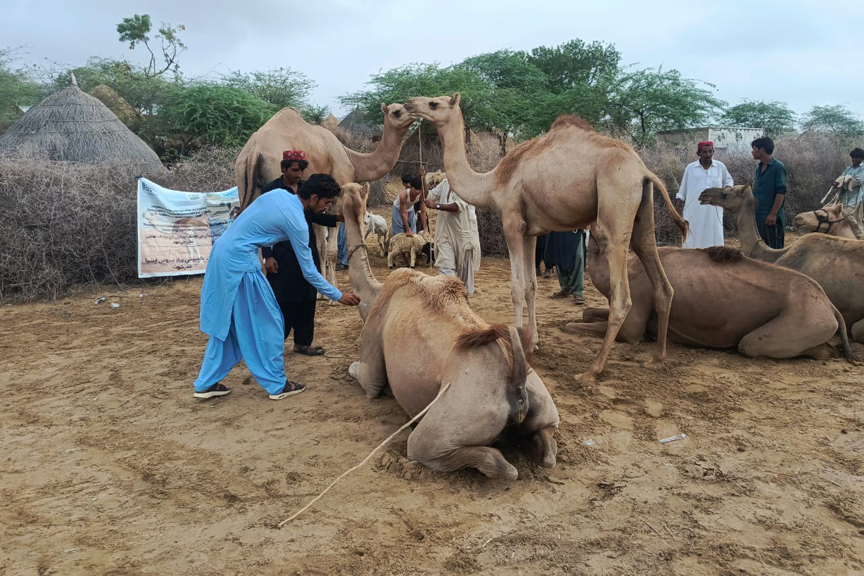
In Village Dhamraro, families once watched helplessly as their livestock, their only lifeline, succumbed to disease, one by one. For many, the loss of a single animal meant the loss of milk, income, and survival itself.
Village Dhamraro, Union Council Kaplore is a remote rural community in Sindh where livestock is not just an asset, it is the only source of survival for most families. Goats and small animals provide milk, income, and security during hard times. Five years ago, the village had an estimated livestock population of more than 5,000 animals, yet it remained completely neglected in terms of animal healthcare services.
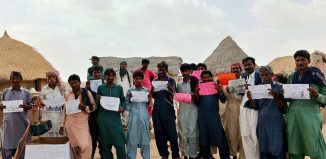
Before Community World Service Asia (CWSA) stepped in, no government department had ever provided vaccination services in Dhamraro. There was no veterinary hospital, no medical facility, and no trained staff available in or near the village. “We have never received any government vaccination campaign for our animals. Every year, we worry about diseases such as PPR (Peste des Petits Ruminants or commonly known as ‘goat plague’) and foot-and-mouth disease, and sometimes we lose our goats and cattle. We strongly request regular vaccination services in our village so that our livestock can remain healthy and our families can feel secure,” said Mohamad Urs, a member of the Village Management Committee in Dhamraro.
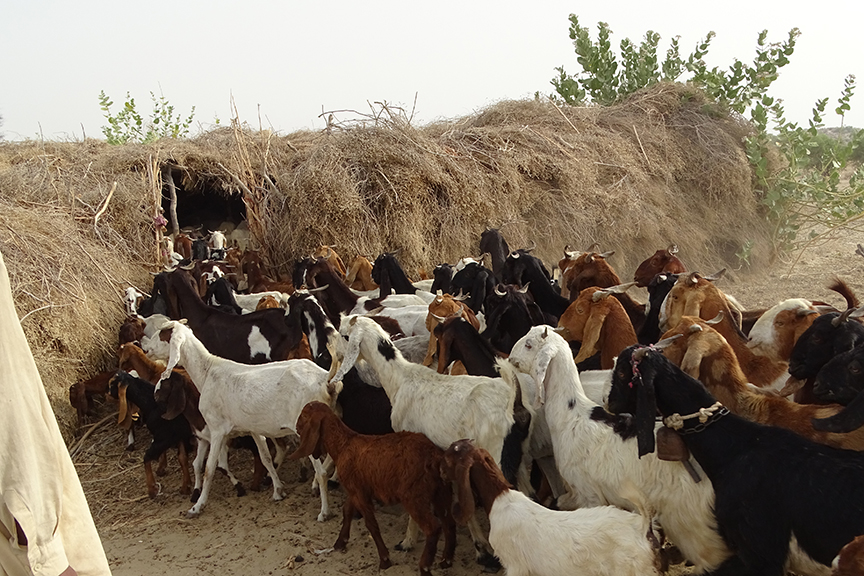
The community depended only on traditional knowledge and prayers to protect their animals. For example, in cases of diarrhoea, animals are often kept without feed for 24 hours. This practice is harmful, as it can lead to severe dehydration, which further endangers the animal’s health. In cases of Foot-and-Mouth Disease (FMD), when blisters appear on the animal’s tongue and feet, some community members wash the blisters with pen ink and expose the animals to smoke produced by burning sugar up to five times a day. This smoke can cause dyspnoea (difficulty in breathing) and further weakens the animal’s condition. These practices reflect traditional local customs; however, they can negatively affect animal health and recovery.
During the extreme cold season, a severe outbreak of contagious pneumonia spread rapidly among the goats. Without access to vaccines or treatment, the disease claimed the lives of more than 1,000 goats. Families watched helplessly as their animals died one after another. Many households lost entire herds, pushing them deeper into poverty and economic distress. “During the disease outbreak, around 80 households lost most of their herds. When the rains started, our small animals became weak and suffered from bloody diarrhea. Within days, I lost almost all my sheep. We had no veterinary support, no vaccination, and no guidance. Watching them die one by one was very painful,” shared Urs.
The situation worsened during the rainy season. Weak and malnourished small animals, especially kids and lambs, became vulnerable to bloody diarrhea. Due to the absence of timely veterinary care, many young animals fell ill and died. For the villagers, it felt like every season brought new suffering and loss.
Recognising that protecting livestock is fundamental to preserving human dignity and economic independence, Community World Service Asia (CWSA), with the support of the Canadian Foodgrains Bank (CFGB) and Presbyterian World Service & Development (PWS&D), deployed an expert veterinary relief team to Dhamraro. Combining the strengths of a government staff veterinarian, a CWSA technical expert, and a community mobiliser, the team launched a rigorous “carpet vaccination” campaign. Across three targeted phases between May 2025 and January 2026, the team successfully immunised 3,781 animals in Dhamraro alone, scaling up to a staggering 41,797 vaccinations across 10 regional villages.
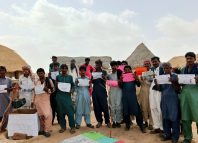
This timely intervention provided critical defense against lethal threats like Caprine Contagious Disease, Enterotoxemia, and Foot-and-Mouth Disease (FMD), alongside vital deworming treatments to control internal parasites. Crucially, the initiative paired medical relief with knowledge, equipping 80 vulnerable households with practical training in disease prevention and sustainable animal husbandry.
Today, the impact of this integrated approach is beautifully illustrated by Meer’s recovery. Armed with newfound knowledge on the power of timely vaccinations, Meer began rebuilding his life through a livestock-sharing arrangement. With regular deworming and strict adherence to vaccination schedules, his new herd thrived and reproduced. Now the proud owner of 15 healthy goats, Meer’s journey stands as a powerful testament to how localised, dignified aid can help a family transition from acute vulnerability to sustainable self-reliance.
The impact of the intervention was immediate and visible. Disease outbreaks1 were controlled, animal health improved, and deaths were significantly reduced. For the first time, the community felt protected and supported by structured veterinary services, and hope gradually returned to farmers who had previously faced repeated losses. The intervention also significantly reduced deadly disease outbreaks in small ruminants, improved milk production capacity, supported safer trade and movement of livestock, strengthened food security in drought-prone regions, and reduced reliance on costly treatments and losses from epidemics. The success of the vaccination campaign is evident from the fact that all 1,440 animals in Dhamraro village remained healthy, with no deaths reported.
CWSA also facilitated linkages between the community and the relevant government livestock department to ensure sustainability beyond the project period. Farmers were guided on how to access government vaccination campaigns, seek timely advice, and obtain vaccines before seasonal disease outbreaks.
Today, the people of Dhamraro understand that timely vaccination protects not only livestock but also the livelihoods of entire families. This intervention did more than safeguard animals; it strengthened resilience, restored confidence, and renewed hope in a long-neglected community.
- The diseases targeted during the vaccination campaign included Peste des Petits Ruminants (PPR), which affects goats and sheep; Foot-and-Mouth Disease (FMD), which affects goats, sheep, and cattle; and Sheep Pox and Goat Pox, which affect both goats and sheep. ↩︎