Restoring What Was Lost: How a Community-Led Asset Restored Moomal’s Family Livelihood
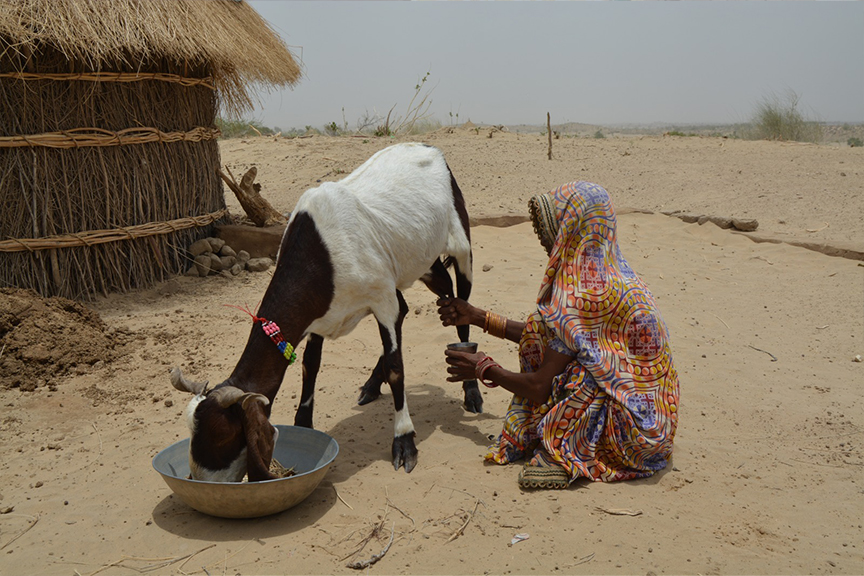
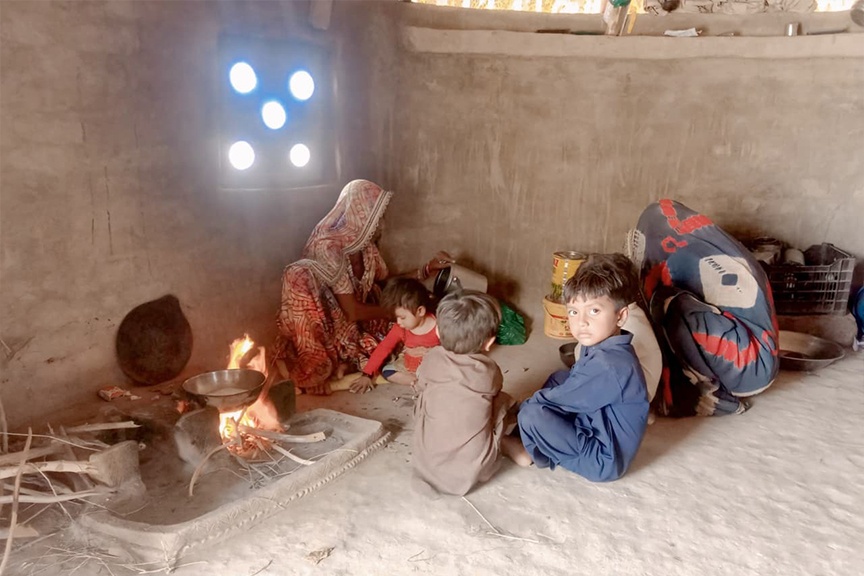
In Rohiraro village, black tea (kahwa) was never a choice, it was the daily standard. For Moomal’s grandchildren, fresh milk was a luxury the family simply could not afford, making plain tea a daily reminder of their stretched resources.
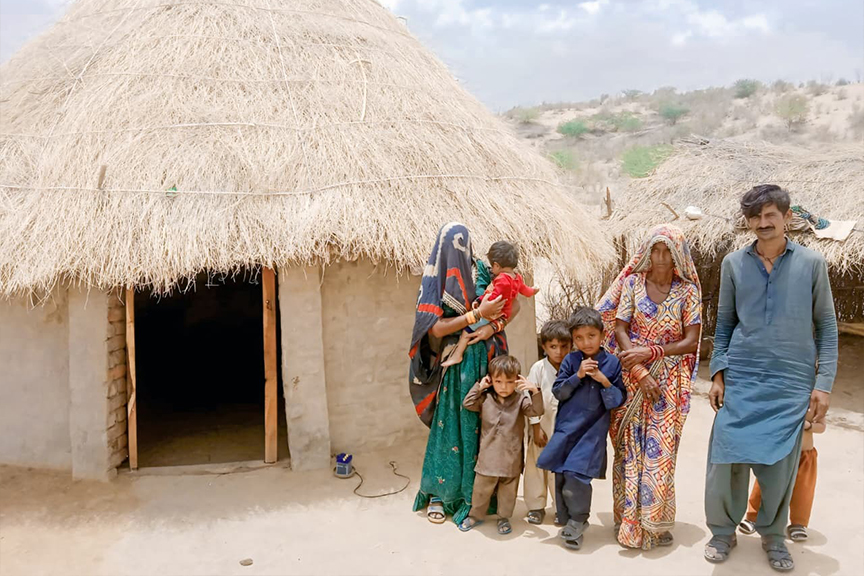
At 48, Moomal shares a small home in Union Council Kaplor, District Umerkot, with seven family members: her son, his wife, and their four young children. Together, they rely on a single, unpredictable wage that rarely covers their basic needs.Their challenging economic conditions started long before the children were born.
What a Widow Inherits
Moomal married Vasand when she was 20. He worked as a labourer, and between the two of them there was just enough to get by. Two years later, Vasand fell seriously ill. Faced with mounting medical expenses and an infant son to feed, Moomal made an agonising choice; she sold their only livestock , their sole productive asset. Despite her efforts, Vasand passed away, leaving Moomal a young widow, a single mother, and her family’s sole provider overnight.
For twenty-five years, Moomal took on whatever informal work she could find in the village’s domestic chores, cleaning other people’s houses, agriculture labour and grazing other people’s animals. Earning an irregular income of just PKR 3,000 or 4,000 (approximately USD $ 12), her perseverance kept her household afloat.
As Moomal’s son, Nathu, grew up and started a family of his own, he followed his father’s footsteps into daily wage labour. Early roughly PKR 15,000 a month (USD $ 54), and sometimes as little as PKR 800 on days when work was scarce. Nathu struggled to support his growing family and aging mother. The family had not owned livestock since Moomal was forced to sell their goat decades earlier. The cycle of asset poverty carried through a full generation, until a community led committee stepped in to help change their story.
A Conversation That Became an Opportunity
In February 2026, Community World Service Asia (CWSA), with support from Act Church of Sweden, partnered with the residents of Rohiraro village under the “Community Actions for Resilience Building project.”
The Survivor and Community-Led Crisis Response (SCLR) approach is built on a fundamental principle: communities are not passive recipients of aid, but the primary decision-makers and first responders in their own crises. Rather than prescribing predetermined solutions, SCLR enables communities to mobilise around their own priorities and use their existing capacities to decide what action makes the most sense for them.
For families like Moomal’s, who have navigated generations of poverty, sustainable recovery requires solutions that extend far beyond short-term relief. Rather than leading with predefined aid packages, the process began with open dialogue and active listening.
Through these consultations, community members identified goat-rearing as a viable, sustainable livelihood option. For a resource-constrained family like Moomal’s, livestock represents far more than immediate nutrition, it is a manageable, regenerative asset that builds long-term economic security.
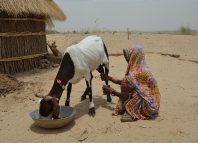
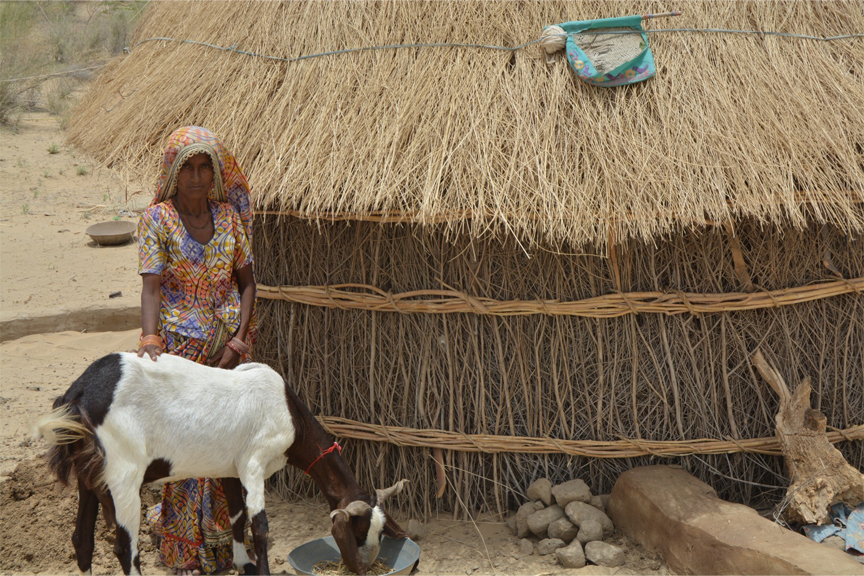
Working through their local Self-Help Group, community members managed the selection and procurement process themselves, distributing 31 goats to the village’s most vulnerable households. Recognising her decades of hardship and sole caregiving responsibilities, the committee prioritised Moomal’s family as one of the recipients.
What Changed, Concretely
For the first time in decades, there is fresh milk in Moomal’s kitchen. Before receiving the goat, dairy was an unaffordable luxury that rarely featured in the family’s diet. While fresh milk might seem like a modest outcome for an intervention, for Moomal, it represents a profound break from decades of deprivation.
Reflecting on the change, Moomal shares, “I am deeply grateful to the community and the project team for providing us with this livelihood opportunity. Before, we struggled daily, and my grandchildren went without milk. Now, as we care for this goat, we are improving our children’s nutrition and building a better financial future.”
For a woman who spent decades in survival mode, the goat represents a long-term investment rather than short-term relief. As the livestock matures and breeds, the family plans to sell surplus milk and raise offspring, generating a reliable, supplementary stream of household income.
Looking Beyond Survival
One community-led conversation resulted in a targeted, practical solution. While Nathu’s monthly wage of 15,000 PKR (USD $54) remains modest for a large family, their outlook has fundamentally shifted. Rather than living purely day-to-day, the family is now planning ahead, investing in their livestock and anticipating future returns.
For Moomal, rebuilding does not mean an instant end to poverty. It begins with a single productive asset, restored dignity, and the confidence that her family’s future no longer has to mirror its past.
About the Initiative: The Goat Distribution initiative was implemented under the Community Actions for Resilience Building project using the Survivor and Community-Led Crisis Response (SCLR) approach. Supported by Act Church of Sweden and implemented by Community World Service Asia (CWSA), the initiative reached vulnerable households across Mangal Bheel, Rohiraro, and Vicklokar villages in Union Council Kaplor, District Umerkot.