A Mother’s Enterprise- Rebuilding Life in Drought-Prone Umerkot
In the vast, unforgiving desert of district Umerkot, countless families live at the mercy of shifting weather patterns, limited livelihood options and many mouths to feed. The dry, arid terrain leaves families almost entirely dependent on agriculture or livestock. When these last two lifelines fail, families are left surviving day to day, hoping each sunrise brings a chance, no matter how small, to earn a living.
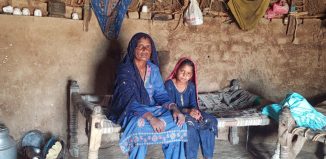
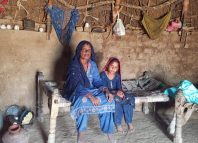
When Arab Bheel was killed in a road accident last year, his wife Tulchi lost not only her partner, but the family’s only source of support. Overnight, she became the sole pillar for their five children; Teerath, Chandna, Bhalu, Parti, and Santosh, stepping up to anchor her family through unimaginable grief and hardship.
Arab Bheel had worked as a daily-wage labourer, earning up to PKR 20,000 in a good month, though seasonal labour meant his income was never guaranteed. In the painful months following his death, Arab’s modest savings gave the family a vital cushion, keeping debt at bay while Tulchi gathered the strength to step into her new role as sole provider.
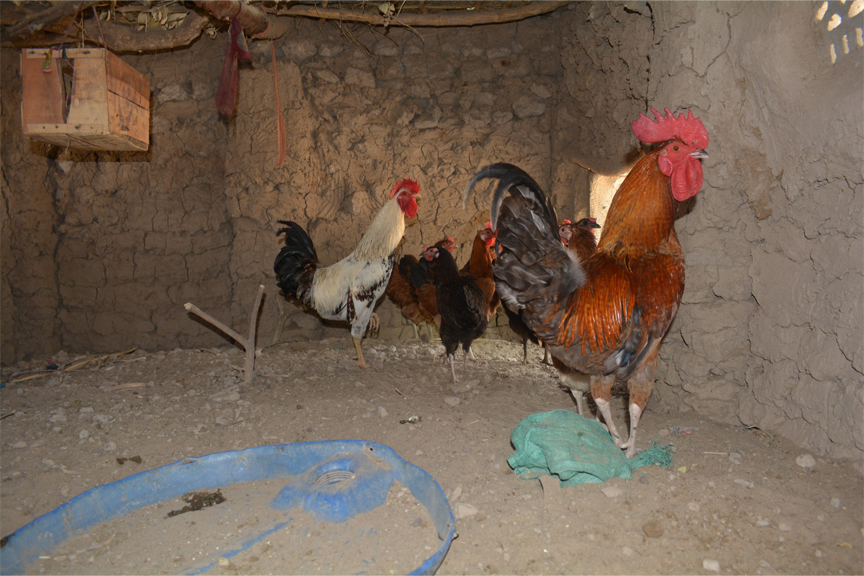
Her children did what they could to ease the burden; fetching water, collecting firewood, and care-taking of the house, while Teerath, the eldest, started work in the city. But his earnings alone were not enough. The family also kept some livestock and poultry, though selling them was never really an option; doing so would have stripped away the very foundation the family depended on to survive.
As severe drought dried up work in her village, Tulchi had to look further afield. She began traveling 23 kilometers to the irrigated farmlands near Umerkot in search of daily labor. Once a week, she would stay with relatives for a few days, taking on any field work she could find, from weeding and planting to harvesting. Every rupee she earned went directly toward food and basic necessities for her children. But this lifeline carried a heavy emotional weight: it meant leaving her young family behind to manage on their own while she was away.
“I used to leave my children alone at home and go far away for labour work,” Tulchi recalls. “My children would cry and say, ‘Amma, please don’t go, we are alone.’ My daughters especially feared staying by themselves and could not manage the household or look after their younger brothers. But I was helpless.”
A Turning Point
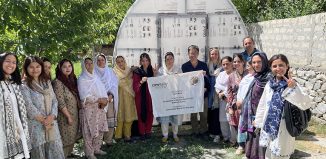
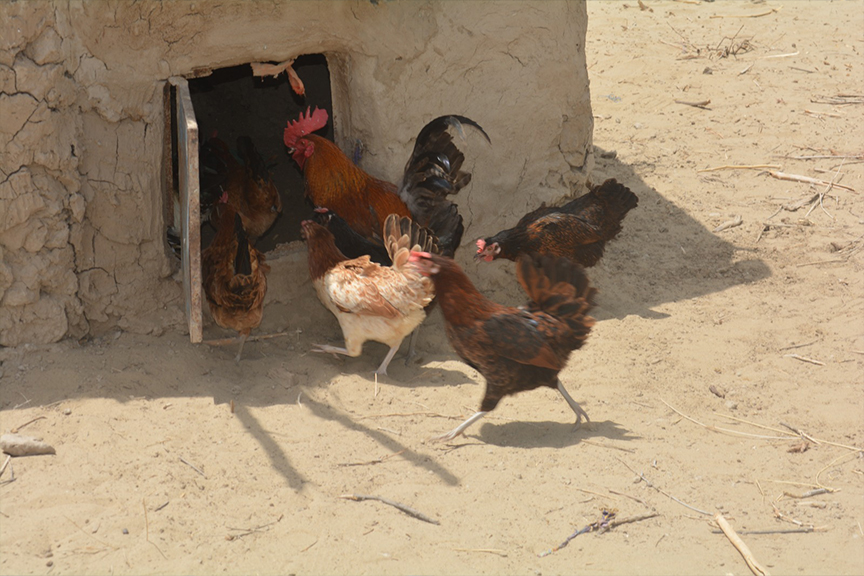
Things began to shift when Community World Service Asia (CWSA) launched the Presbyterian World Service & Development (PWSD)-supported Agriculture, Gender, and Livelihood (AGL) project in her village. Focused on empowering climate-vulnerable women and fostering resilient communities, the initiative offered Tulchi a path toward economic independence. After completing practical training in poultry management, she was provided with eight hens and two roosters, giving her the tools to start rebuilding her livelihood close to her children.
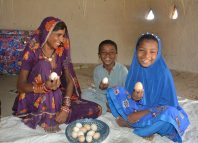
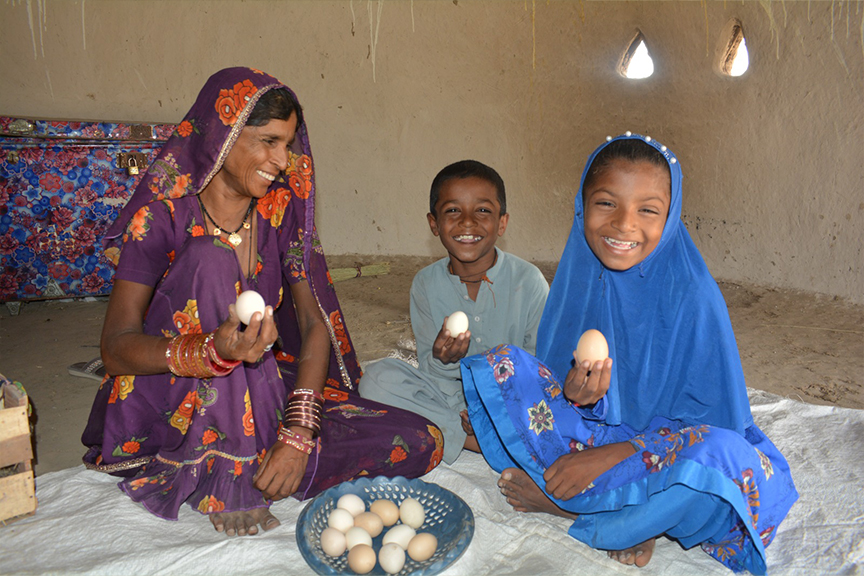
The poultry were of the Fayoumi breed, known locally as Misri egg-layers, chosen specifically for their ability to withstand the region’s extreme heat. Within a month, the hens had begun laying, bringing with them a new sense of hope. “It was not just eggs,” Tulchi says. “For me and my children, they were like diamonds.”
The training covered the fundamentals of poultry management: feeding and nutrition, disease prevention and vaccination, hygiene, housing, and egg production and care. Crucially, it was also tailored to the challenges of the desert environment, where predators such as snakes, hawks, jackals, foxes, cats and rats pose a constant threat to unprotected flocks. Drawing on this training, Tulchi now keeps her birds in a shaded, well-ventilated shelter with a steady supply of clean drinking water.
“Before this training, we never imagined that poultry farming was possible in our area,” she says. “We thought it was too difficult, because of the heat, the predators, and simply not knowing how.”
Today, Tulchi travels by bus to Umerkot city each week to sell her eggs, a 200 PKR round trip, earning around 2,800 PKR by selling them at 50 PKR apiece. It is a modest income, but a steady and life-changing one. “Before, my children used to go to school without pocket money. Now I can give them twenty rupees a day to buy something to eat for themselves. It may seem small, but for us, it means dignity and happiness.”
Most importantly, Tulchi no longer has to choose between earning a living and protecting and being there for her children. She now manages her flock from home, keeping her family together even through the drought seasons that once forced her away. “Now I don’t have to leave my children alone anymore. I can earn while staying at home. This has brought peace to my heart.”
Her transformation has not gone unnoticed. Other women in Bandi Bheel now look to her as proof of what is possible. “Women in my village see my work and say they also want to start poultry farming. They are motivated to do something for their families.”
A Safety Net Built on Resilience
The true impact of Tulchi’s business reached far beyond daily income, it gave her family a lifeline when they needed it most. When she fell seriously ill and required hospital care, her children were able to sell eggs and gather PKR 1,500 to cover her treatment independently.
“At that moment,” she recalls, “I realised this small step had given us real strength.”
Tulchi’s journey reflects the transformative power of localised, dignified support. Once struggling to navigate unimaginable loss, she now stands as a confident entrepreneur securing her family’s future. “This is not just a poultry business,” she reflects. “It has given me hope, dignity, and a real future for my children.”