

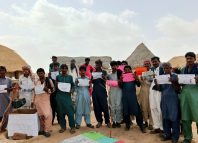


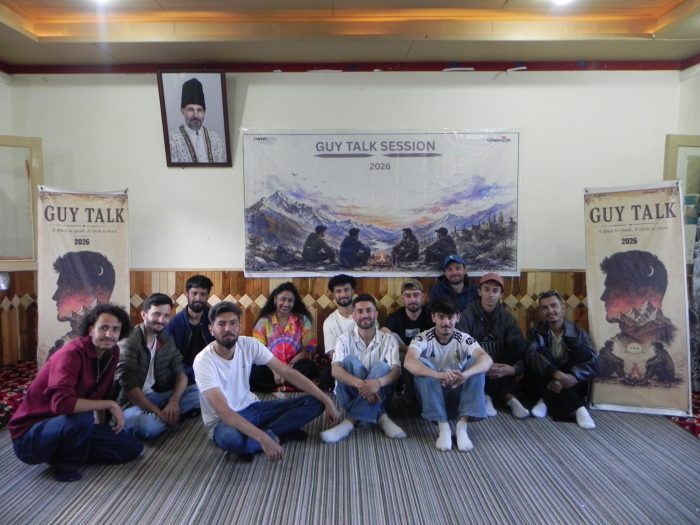
The towering peaks of Passu stood quietly in the background as fifteen young men from Passu and Gulmit gathered in a room, expecting what many thought would be just another community session. Some arrived in groups, joking and laughing on the way in. Others slipped into their seats quietly, unsure of what to expect. For most of them, it was the first time attending a discussion on mental health and emotional wellbeing. For years, they had learned to carry their worries in silence.
Facilitated by the Community World Service Asia (CWSA), the Guy Talk session was designed to create a safe and supportive space where young men could openly discuss mental wellbeing, relationships, aspirations and the pressures they face in their daily lives.
As the session began, the atmosphere was marked by a familiar sense of reserve. Conversations among young men often centre on studies, work, sport and day-to-day life; discussions about emotions are far less common. Questions about emotions were met with smiles, nervous laughter and long pauses.
Then, a university student from Gulmit spoke up.
“I think many of us are stressed, but we don’t really talk about it.”
The room fell quiet.
Another participant nodded in agreement and then added: “We are expected to deal with everything ourselves.”
The exchange was brief but it changed the atmosphere of the discussion. As the discussion unfolded, stories began to emerge.
A young man, preparing for university entrance exams, spoke about the constant worry of disappointing his family if he failed to meet expectations. Another participant described the uncertainty he faced after completing his education and struggling to find employment. As others shared their experiences, it became clear that many of the challenges they carried were not theirs alone.
One young man from Passu spoke about the pressure of being the eldest son.
“Sometimes I feel responsible for everyone at home. When I feel overwhelmed, I don’t tell anyone because I think they already have enough problems.”
His words resonated deeply across the room. Several participants admitted that they carried similar burdens and often felt the need to handle difficulties on their own. For many, this was the first time they realized they were not alone.
As the discussion continued, the focus gradually shifted from the challenges participants faced to the ways they coped with them. Some spoke about isolating themselves when they felt stressed. Others described spending hours on social media or immersing themselves in work to avoid reflecting on their worries. Few had rarely ever considered speaking openly with friends or family about what they were going through emotionally.
Through guided discussions, participants explored the common expectation that men should always appear strong and in control. Together, they reflected on whether staying silent about their struggles truly protects them or simply those struggles hard to carry.
One participant shared: “Today I learned that asking for help does not make a person weak. It actually takes courage.”
Another added: “We often meet our friends every day, but we never ask how they are really doing.”
As trust grew, the room transformed from a gathering of individuals into a circle of shared experiences. Participants began offering support to one another, sharing advice, discussing healthy ways to manage stress and reflecting on the importance of seeking help when needed.
Towards the end of the session, the facilitator asked participants what they would take away from the discussion.
After a moment of reflection, one young man smiled and said: “We came here as friends, but today we also became a support system.”
The statement captured the essence of the session.
What began as a conversation about mental wellbeing had grown into something deeper: a shared recognition that vulnerability can foster connection, and that support often begins with a simple conversation.
By the end of the day, the fifteen young men from Passu and Gulmit left with a greater understanding of mental health and psychosocial wellbeing. More importantly, they left with the reassurance that they were not alone in their experiences, that their voices mattered and that seeking is a sign of strength rather than weakness.
The Guy Talk session highlighted the impact of creating spaces where young men can speak openly without fear of judgment. In communities where conversations about emotions and mental wellbeing are often left unspoken, such dialogues can help challenge stigma, strengthen connections and encourage people to reach out when they need support.