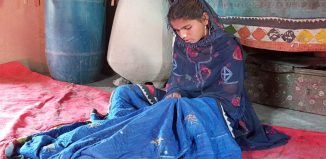
Upwardly mobile Ameenat Rind
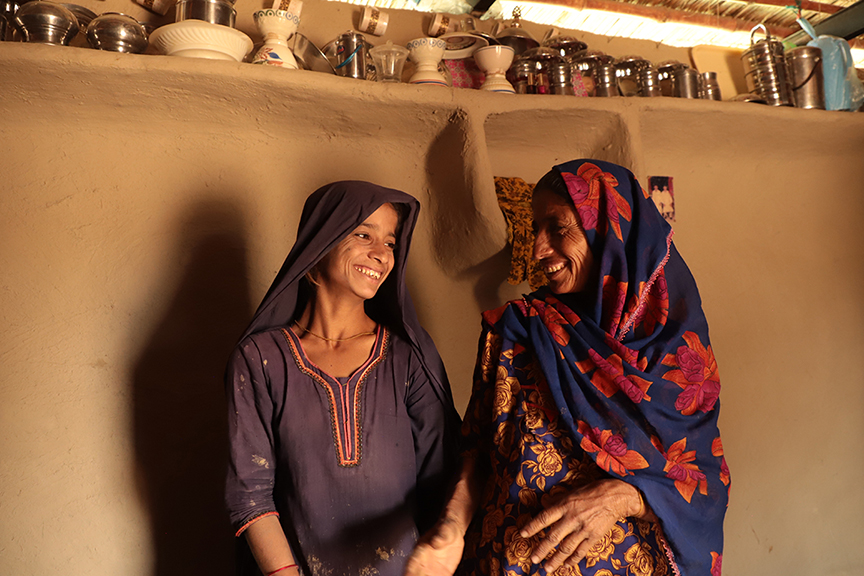
In 2016, Nangar of Mallay ji Bhit died of tuberculosis of the lungs. In his final weeks, he was also haemorrhaging violently from the nose and mouth and had to be hospitalised in Karachi. In that trying time, Ameenat tended to her home and five daughters while her only son looked after the ailing father in the hospital. Ameenat says her husband’s hospitalisation cost the family about PKR 400,000 (approx. USD 1428).
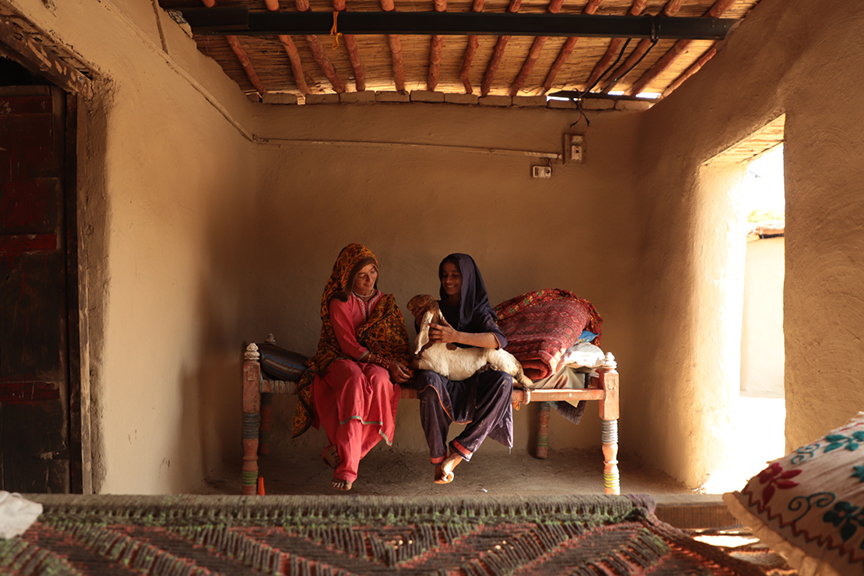
She sold her two buffalos, one cow, three goats, a donkey and the cart to pay for the treatment. But when she was left with nothing more to sell, she borrowed from family and friends. Sadly, Nangar’s illness was so far gone that there was no coming back and when he passed away, Ameenat was under a debt of PKR 250,000 (approx. USD 893) and with no assets. She was lucky that her relatives wrote off their loans to her. There still remained a substantial sum owed to others. She and her eldest son eventually repaid after much hard work over three years during which she worked as a sharecropper, while her son tended other people’s livestock.
Ameenat’s most handy skill is mud plastering of houses for which she is called by householders in the village. As well as that, during season she goes chilli pepper or cotton picking which fetches PKR 500 (approx. USD 1.79) for every 40 kilograms picked.
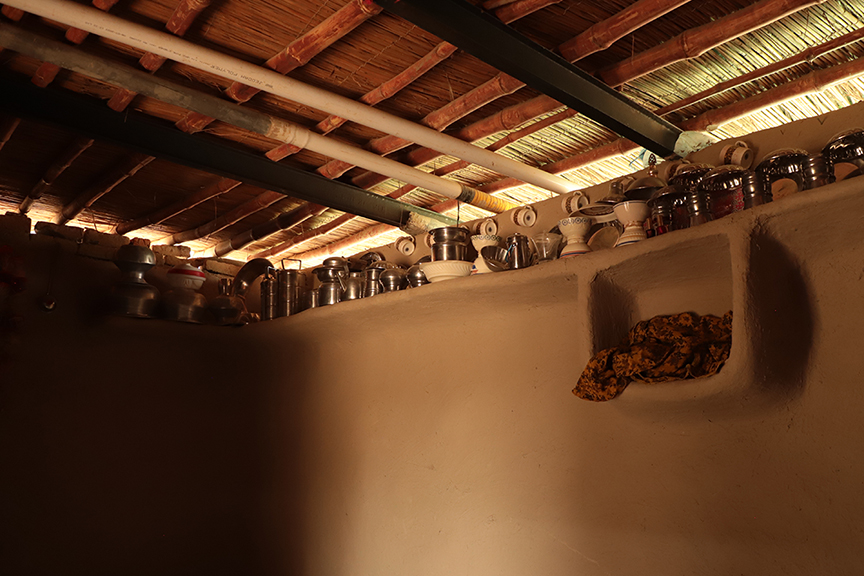
Between 2021 and 2024, things were comparatively better for her and she wedded off her son and two of the older daughters. To complete the count, she says, she still has to wed three more girls. Now with her son working as a helper on a waste management truck for PKR 15,000 (approx. USD 54) a month, she was always worried it would take a long time to arrange the necessary dowry for the girls.
“My son gives me Rs 5000 to 7000 [approx. USD 18 to 25] a month from his salary. But that is only enough for household expenses, not to put away for dowry,” says Ameenat.
Her fortune changed when she became one of the participants under a food security and livelihoods initiative implemented by Community World Service Asia (CWSA) and financially supported by Diakonie Katastrophenhilfe (DKH). In October and November 2024, she received the first two installments of multi-purpose cash assistance under the project. That year, her portion as sharecropper was reasonable and the cash was used partially for food while the bulk was spent on dowry items. It was the goat that came with the package that was the biggest boon because it soon delivered a very healthy kid.
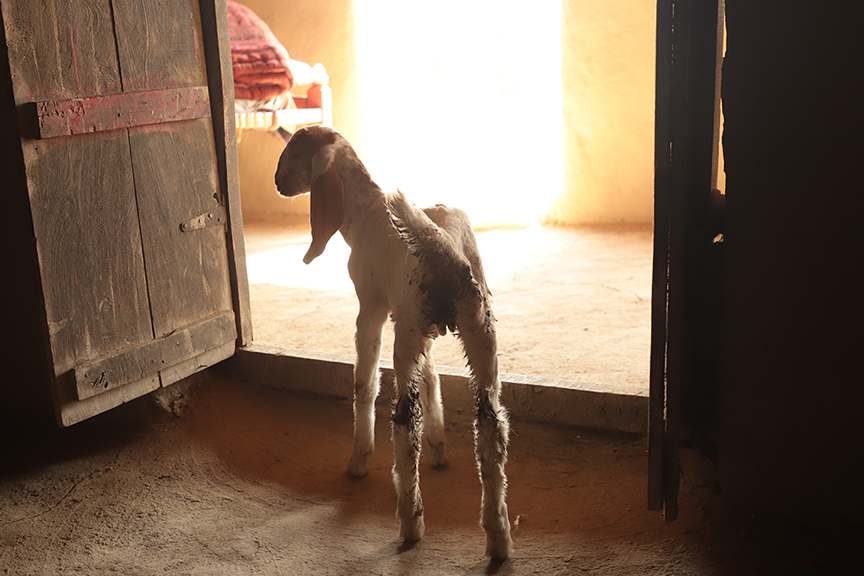
Ameenat says she would normally have worried about the health of her goat in the dry season starting in March, but in 2025, she had hydroponic fodder to augment the dry fodder she had saved from the past harvest. The kid gambolling around her yard looks very healthy and she says though it is now weaned, it had plenty of milk when it needed because of the green fodder she was trained to grow. The bonus was the supplemental feed for the goat which also increased its milk production and she was able to have her own supply for morning and evening tea.
The kitchen garden was another great bonus. Since the death of Nangar, the family rarely had vegetables to dine on but that was not the case now. This was only when her son came home for a day or two and brought a supply from town. In November 2025, she was preparing her little patch for the third round of gardening.
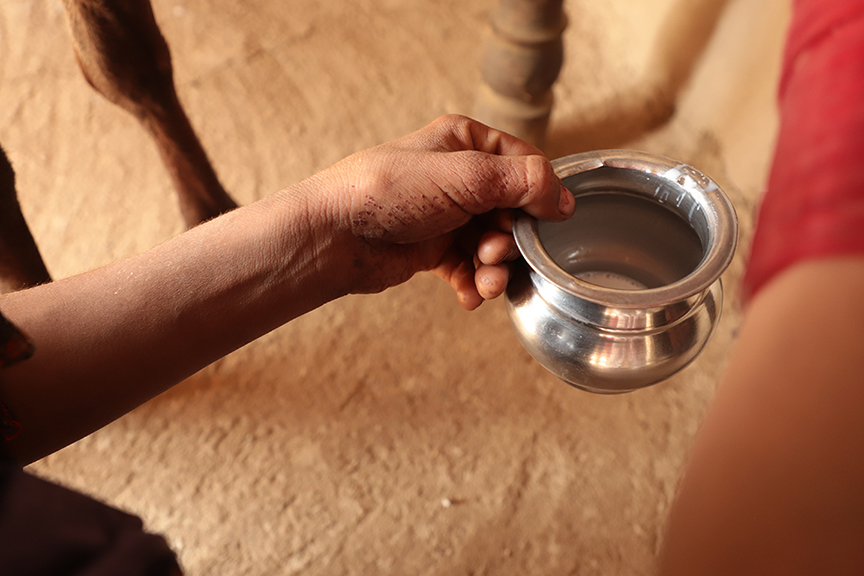
“We used to have homemade chilli and garlic chutney with chapatti [flatbread] because we could rarely afford vegetables. But now there is so much and in such variety that when vegetables are in season we always dine well and also give away to others,” says Ameenat. She is proud that she now entertains visitors with good milk tea and excellent vegetable stews.
“Since this intervention, our life has changed for the better. I can now look forward to buying my own livestock again. If luck holds out I will have at least one buffalo in good time,” says Ameenat.