| Duration | Feb 01, 2015 — Aug 31, 2015 | |
| Location | Taluka Dehli and Chachro of Tharparkar District | |
| Key Activities |
| |
| Participants | 1,800: Drought-affected families |

Archives
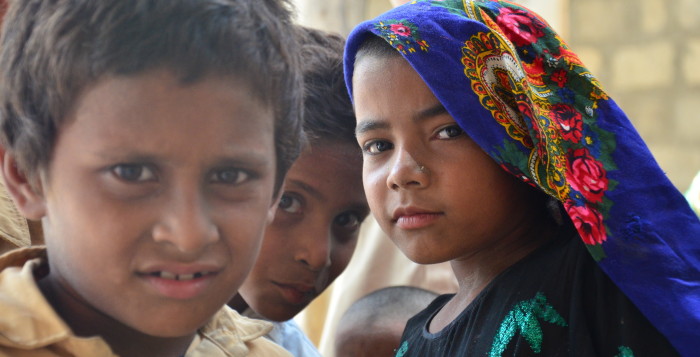
Mother and Child Health Center
| Duration | Aug 01, 2012 — | |
| Location | Thatta District, Sindh Province, Pakistan | |
| Key Activities |
| |
| Participants | 20,504 community members (population of Union Council Bijora, District Thatta) |
I am very happy with the support of CWS-P/A; they have saved my baby…They have properly guided me for nutrition and care of my pregnancy.
Noor Jahan, MNCH patient
If this center would not have existed, I couldn’t have accessed treatment from any hospital due to my poor economical situation. No doubt CWS-P/A has saved my life.
Muhammad Mallah, MNCH patient
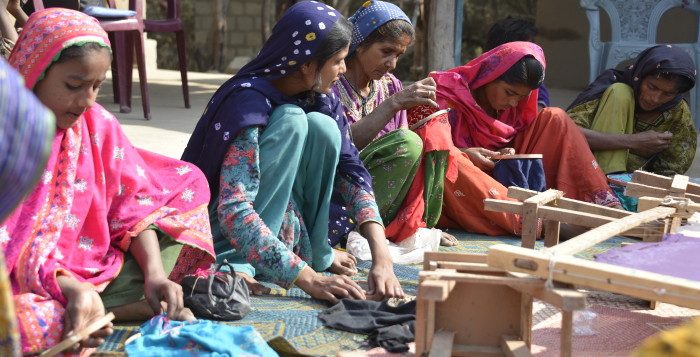
Alleviating Poverty through Women’s Empowerment and Livelihoods Development with a Disaster Resilient Approach
| Phase | Phase One — Phase Three | |
| Duration | Jan 01, 2015 — Dec 31, 2015 | |
| Location | Thatta, Sindh Province, Pakistan | |
| Key Activities |
| |
| Participants | 4,700 women from rural communities |
After getting admission in the adult literacy center, I used to teach my daughters. My daughters were inspired when they saw me go to school with my bag. Now, they are motivated for education, and I have admitted them into the local school.
Saima, a project participant
After the 2010 floods, I have worked with different NGOs/INGOs. The way CWS-P/A works for sustainability is genius. We like working with them. Other organizations have given shelter, etc, but then they leave. These vocational skills will never die and will trickle down to our children.
Samoon, President of the Village Organization in Ghulam Mohammad Soorjo
We were very glad to see that our embroidery work can be sold in the market. I saw a hand bag for Rs. 300 (USD 3). I didn’t know these small handbags could be expensive. After the first visit, I came back and shared about the differences in cost here and in Karachi.
Bejum Jan, participant in the exposure visit to Karachi
Alleviating Poverty through Women’s Empowerment and Livelihoods Development with a Disaster Resilient Approach
| Phase | Phase One — Phase Three | |
| Duration | Jan 01, 2015 — Dec 31, 2017 | |
| Location | Thatta, Sindh Province, Pakistan | |
| Key Activities |
| |
| Participants | 2,300community members |
After getting admission in the adult literacy center, I used to teach my daughters. My daughters were inspired when they saw me go to school with my bag. Now, they are motivated for education, and I have admitted them into the local school.
Saima, a project participant
After the 2010 floods, I have worked with different NGOs/INGOs. The way CWS-P/A works for sustainability is genius. We like working with them. Other organizations have given shelter, etc, but then they leave. These vocational skills will never die and will trickle down to our children.
Samoon, President of the Village Organization in Ghulam Mohammad Soorjo
We were very glad to see that our embroidery work can be sold in the market. I saw a hand bag for Rs. 300 (USD 3). I didn’t know these small handbags could be expensive. After the first visit, I came back and shared about the differences in cost here and in Karachi.
Bejum Jan, participant in the exposure visit to Karachi
Alleviating Poverty through Women’s Empowerment and Livelihoods Development with a Disaster Resilient Approach
| Phase | Phase One — Phase Three | |
| Duration | Sep 01, 2012 — Aug 01, 2013 | |
| Location | Thatta, Sindh Province, Pakistan | |
| Key Activities |
| |
| Participants | 4,700 women from rural communities |
After getting admission in the adult literacy center, I used to teach my daughters. My daughters were inspired when they saw me go to school with my bag. Now, they are motivated for education, and I have admitted them into the local school.
Saima, a project participant
After the 2010 floods, I have worked with different NGOs/INGOs. The way CWS-P/A works for sustainability is genius. We like working with them. Other organizations have given shelter, etc, but then they leave. These vocational skills will never die and will trickle down to our children.
Samoon, President of the Village Organization in Ghulam Mohammad Soorjo
We were very glad to see that our embroidery work can be sold in the market. I saw a hand bag for Rs. 300 (USD 3). I didn’t know these small handbags could be expensive. After the first visit, I came back and shared about the differences in cost here and in Karachi.
Bejum Jan, participant in the exposure visit to Karachi
Income Generation Brings Positive Change
Before Raheema participated in adult literacy and vocational training, she faced difficulty in meeting her family’s needs. She lives with her four children and husband who earns a meager daily wage in Karo Mallah Village, Thatta. Raheema always wanted her children to be educated; she enrolled two of her children (one girl and one boy) in school, but due to financial constraints she was unable to continue her daughter’s education. While describing her concerns, she said, “If my children are not well, I am unable to take them to a hospital since I don’t have money.”
Due to poverty and social barriers, Raheema did not receive an education; however, her passion to learn motivated her to join the adult literacy center and vocational training center established by Community World Service Asia. Learning to read and write, she began passing on these basic skills to her children.
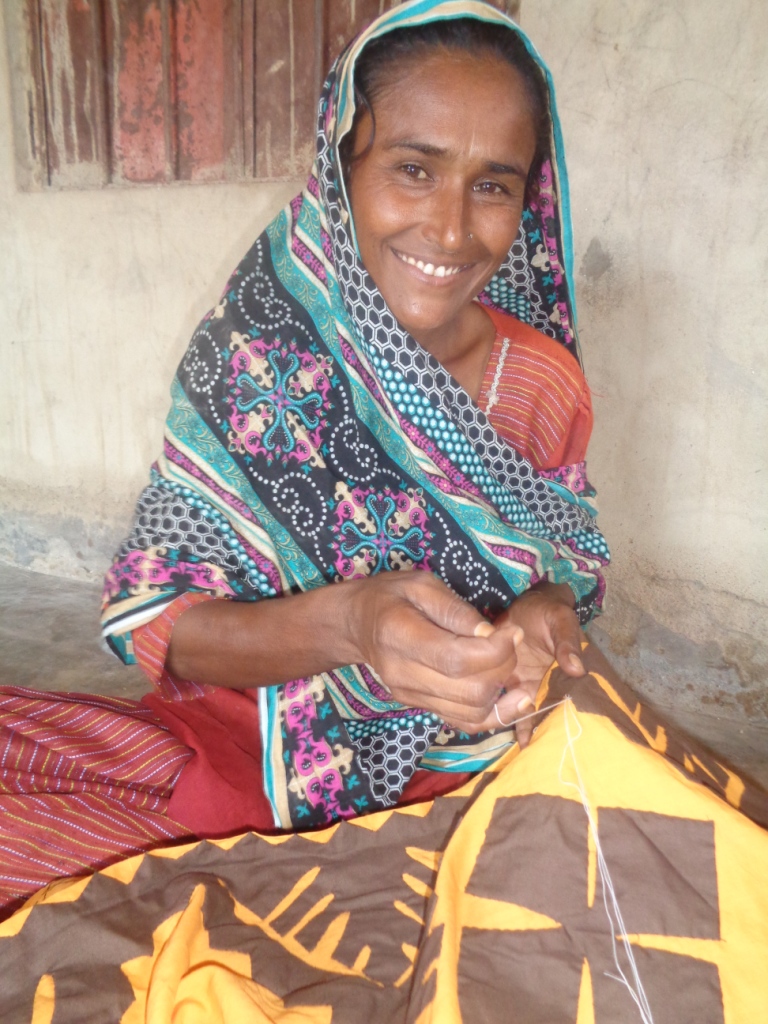
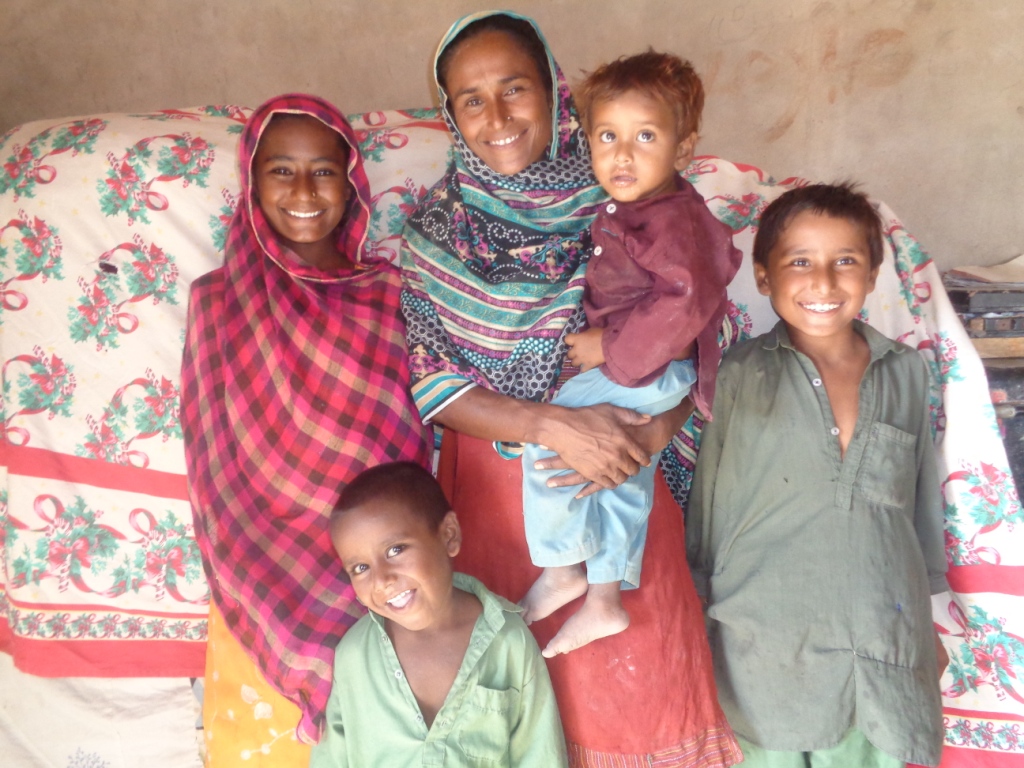
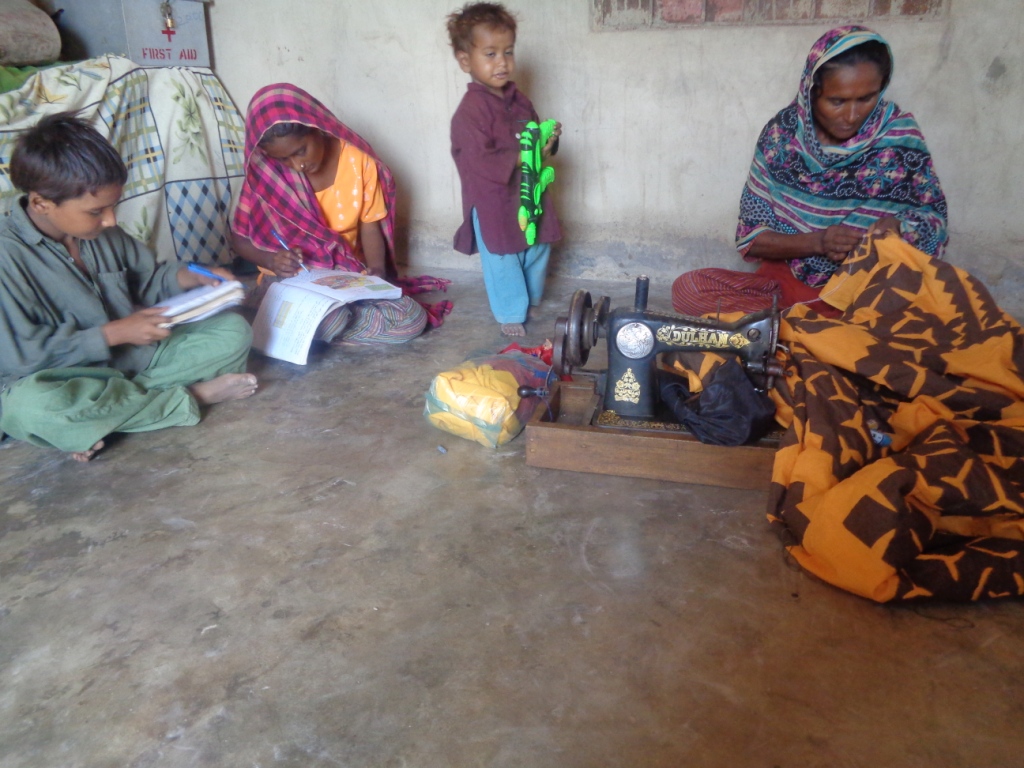
Because of her fine skills in appliqué work; she was selected as a master trainer which gave her an opportunity to teach the same skill to other women. An exposure visit to markets in Karachi enabled Raheema to understand the market trends, designs, color scheming, and how she can utilize her skills for a variety of products. “With assistance from Community World Service Asia, I received two orders from the buyers in Karachi, for myself and also for other trainees in my village,” she shared.
“I managed to purchase stationery, uniforms, and paid other expenses with my income in order to reenroll my children in school.”
Raheema generates income by making embroidered suits, pillow covers, bed sheets, and other products. She is now hopeful to manage the educational expenses of her children. “I am thankful to Community World Service Asia for giving me the skills, exposure, and a way to earn a living. I have good appliqué work skill; initially the products I used to make were only catering to the market in my village and surrounding areas. The exposure visits enabled me to enhance my marketing knowledge and now by utilizing the same skill I can make a variety of colorful products with beautiful designs.”
Community World Service Asia with financial support from Christian Aid (CA) is successfully implementing the project, Alleviating Poverty through Women’s Empowerment and Livelihoods Development with a Disaster Resilient Approach in Union Council (UC) Bijora, Thatta, Pakistan – Phase II. The project aims to reduce poverty and gender inequality among highly marginalized women and men through socio-economic empowerment and improved disaster resilience in disaster prone area of Thatta.
Skills Help Keep Dreams Alive
As a child, Kazbano, dreamed of obtaining an education, but cultural constraints and poor economic conditions prevented her from achieving her goal. At the age of 40, she is a mother of five children residing in Doso Himaiti Village, Thatta. “My parents were not educated; therefore, I was unable to convince them to send me to the nearest school in my village. I also got married at an early age,” she shared with grief.
A literate woman can support her father and husband with income generation. She can also contribute well in the upbringing of her children and make them a noble citizen.
Kazbano highlighted that illiteracy in her community prevents understanding on the importance of education. The mobility of women and girls is also limited, reducing their opportunity to acquire skills or education outside of their homes.
Her hope was restored when Community World Service Asia engaged the community through mobilization meetings and the formation of a community organization. Impressed by the confidence of female social mobilizers, she found the interest to learn revive in her. She requested her husband to agree to her participation in the adult literacy center. “Initially he resisted because he was concerned about our children, but later he allowed me to join the center with hope that if I am educated, I can also support my children for their education.”
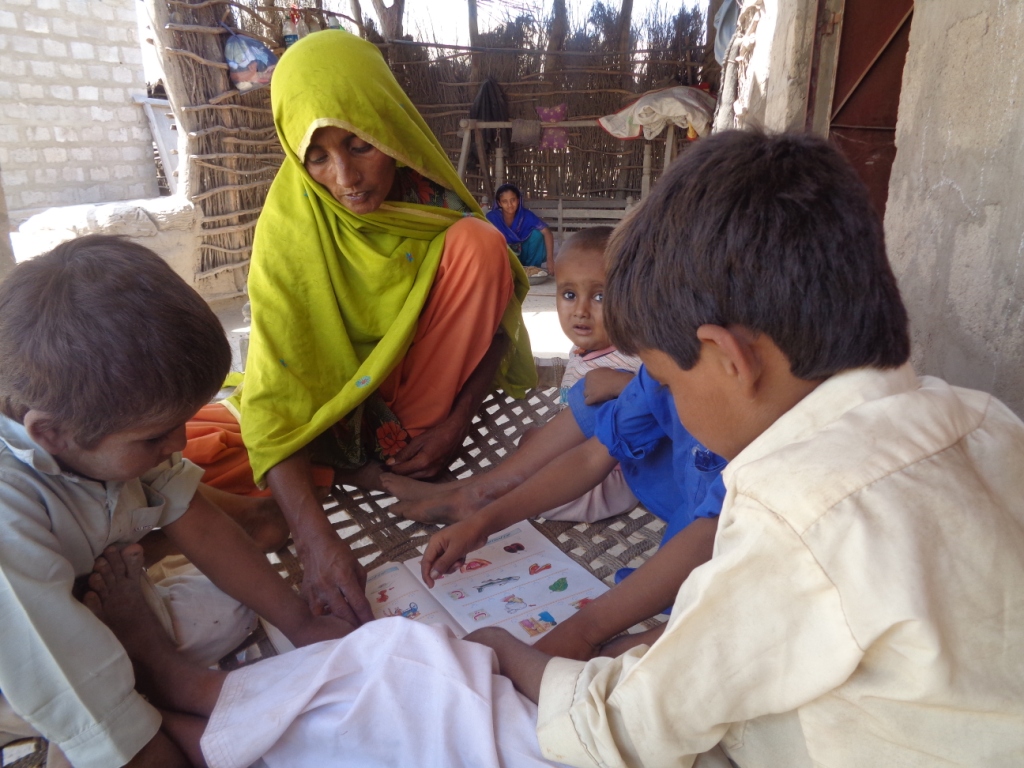
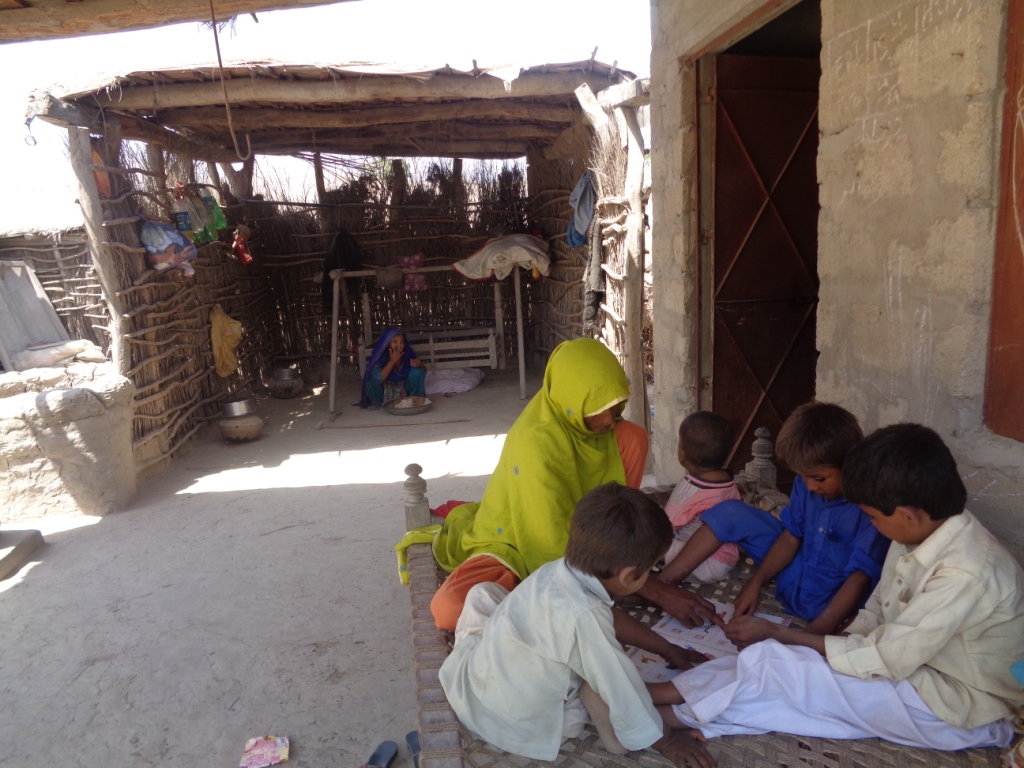
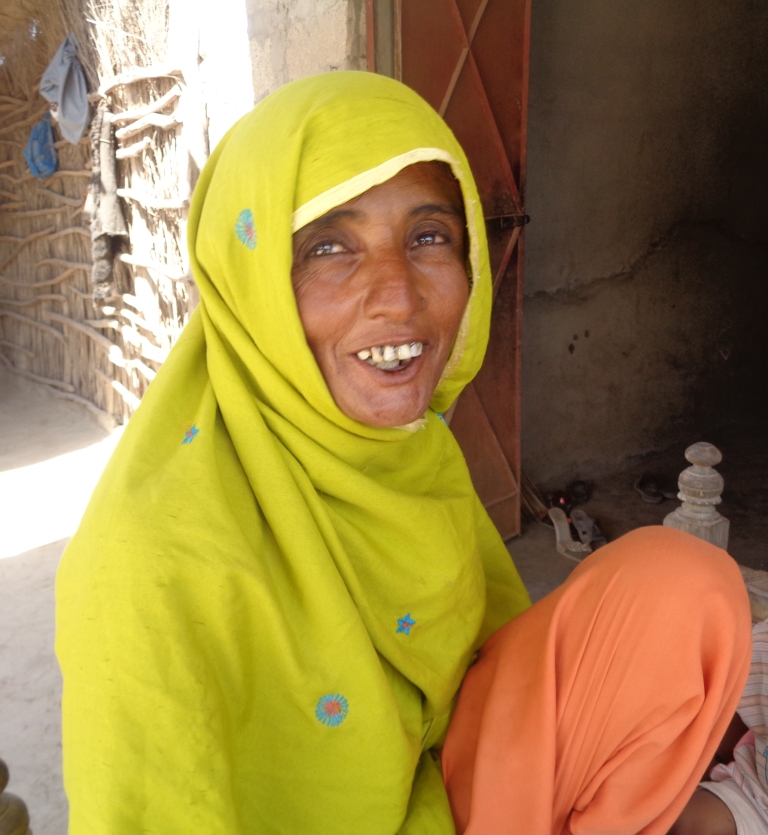

The phonetic method adopted by the trainers at the center made learning much easier. “I am now able to read and write small paragraphs, read Sindhi newspapers, small sentences from books, sign boards, doctors’ names in hospitals, etc. I can also read medicine names as well as the expiry date. Now, I can support my children to acquire quality education. I am very thankful to Community World Service Asia for their development efforts for rural women like me.”
Community World Service Asia with financial support from Christian Aid (CA) is successfully implementing the project, Alleviating Poverty through Women’s Empowerment and Livelihoods Development with a Disaster Resilient Approach in Union Council (UC) Bijora, Thatta, Pakistan – Phase II. The project aims to reduce poverty and gender inequality among highly marginalized women and men through socio-economic empowerment and improved disaster resilience in disaster prone area of Thatta.
Strengthening Democracy through Youth Leadership
| Duration | Oct 01, 2013 — Sep 01, 2016 | |
| Location | Punjab and Sindh provinces, Pakistan | |
| Key Activities |
| |
| Participants | 200 university students 56 young people from religious minority communities |
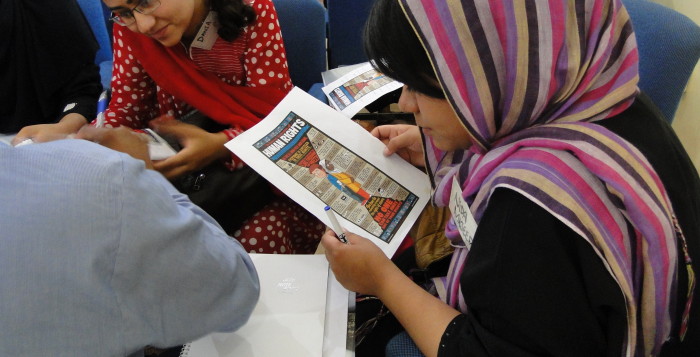
According to the statistics there is a lot of youth in Pakistan so they have the power to change the nation.
Adnan Nasir, student at University of Central Punjab
I have learned about the actual meaning of democracy and also learned what should be my behavior as a good citizen.
Nazish Jabeen, student at University of Agriculture
 Prev
Prev