

Where water was priceless
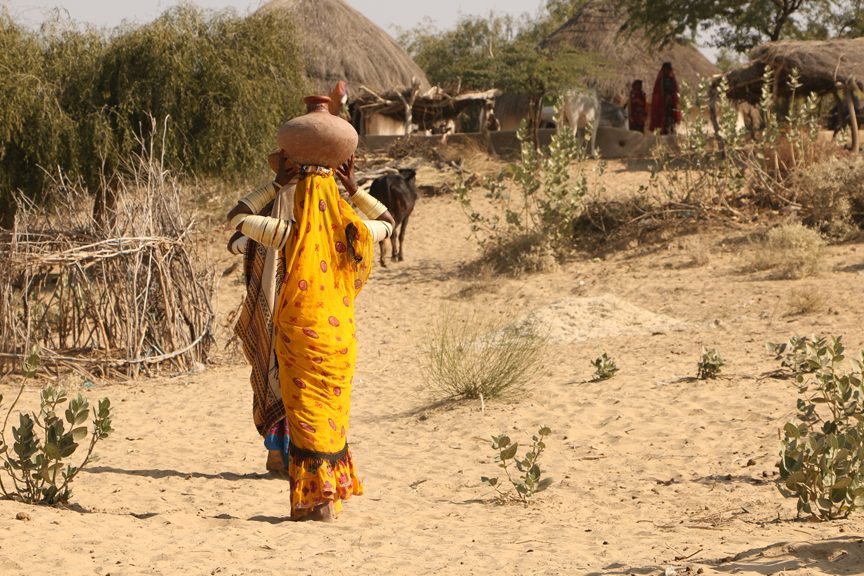
“Spill some ghee (clarified butter), that’s all right. But never a drop of water. That is what they said in our village,” 20-year-old Pratap recounts. He has only heard tales. Tales from the time when men would set out for Umerkot early in the morning with empty water bags/vessels on their camels. A trek of 20 kilometres took up to five hours. There they would fill up the bags and return the way they had come from. At home they would empty their water bags into earthen pitchers that stood in their courtyards. Some households had as many as twenty of them so as to cut down on the number of camel trips to the town.
The sweet water from Umerkot was for human consumption only, recalls Pratap. For bathing and washing up, they used the bitter water they got from their wells which everyone affirmed contributed to their skin rash and itching. It was too bitter, even for livestock to consume for which usually the tarai (natural pond) outside the village, sufficed. But it filled only when the rains were good and there had been too many waterless summers that had made these ponds cracked clay. Most families migrated to the barrage area on the western edge of the desert, rich with canals and agriculture where they worked as farm labourers and their livestock fed in the pastures and drank from the canals and ponds.
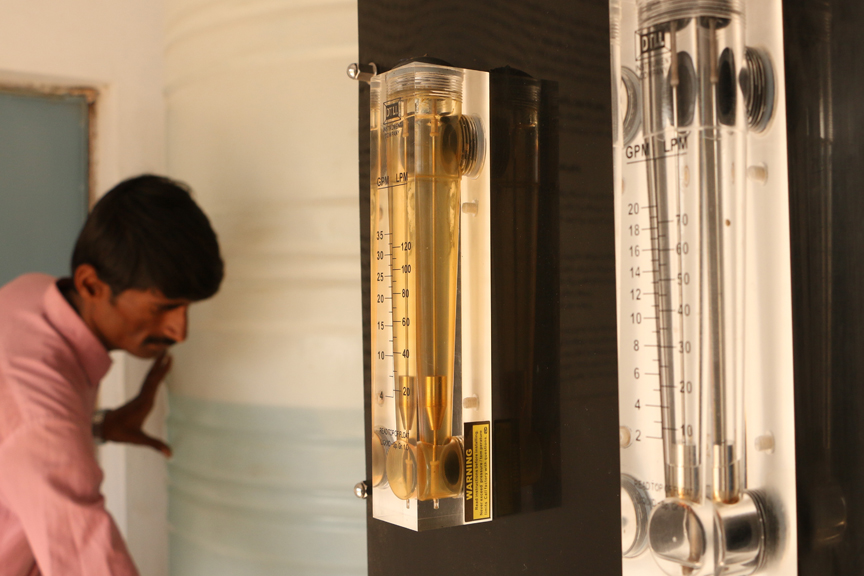
“Livestock was wealth for us and we could not afford to let them die. There were times when all men would be away with the cattle. Sometimes whole families moved and the village was completely deserted,” says Pratap. He goes on to explain that in such cases they would remain there to take part in either the wheat or cotton harvest depending on the time of year. They would return with bags of wheat and cash as wages just in time to harvest their millets and cluster beans that few men had remained behind to tend.
At the turn of the century, as road networks improved, water tankers began reaching remote villages. Families in Bandi responded by constructing underground concrete tanks, and soon the practice of importing water from Umerkot became a lifeline.
Pratap recalls those early days but cannot say what a single 1000‑litre tanker cost when the system first began. He does remember paying PKR 12,000 (USD 43) for one, before the installation of Bandi’s reverse‑osmosis plant in May 2021, built through the support of a collaborative project by Community World Service Asia, CWS Japan, and Japan’s Ministry of Foreign Affairs.
Today, a tanker is needed every five to six days on average, with families spending around PKR 15,000 (USD 53) per month. In the scorching summer months, demand rises, more tankers roll in, and costs climb even higher. For the people of Bandi, it has been a relentless struggle, yet they have paid whatever was necessary, because no price is too great for the water that sustains life.
A combined approach that amalgamates solar powered technology with community-based management systems was harnessed to ensure sustainable access to safe drinking water where many similarly installed plants have become abandoned sites in the middle of sand dunes.
The process includes remote sensing and aerial imagery to identify potential groundwater zones, surveys to assess water quality and quantity, mapping out suitable locations for drilling and installation, and Hydrogeological validation using scientific and indigenous knowledge.
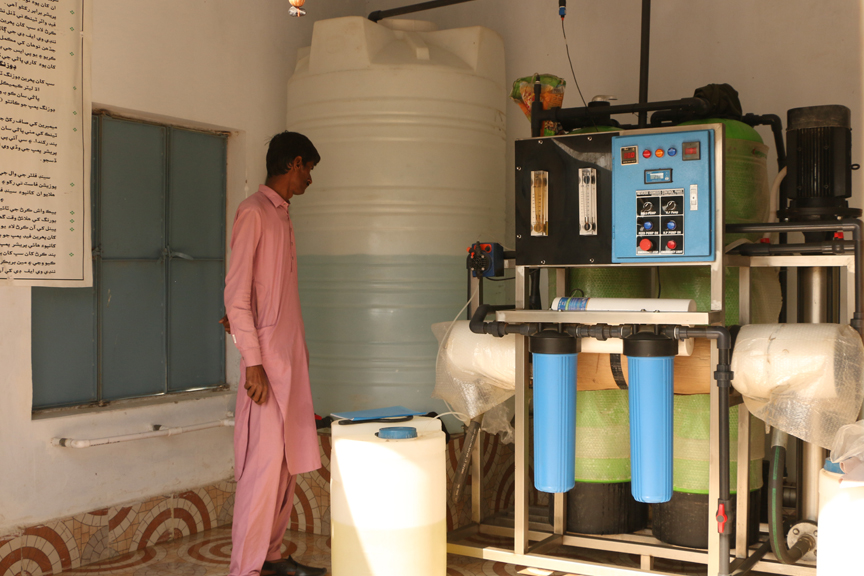
Tests carried out for subsoil water showed a Total Dissolved Solids (TDS) level of near 14,000 which is very high for human consumption and to purify which, a ‘sea membrane’ fitted RO plant was necessary. Work began on the plant and a Water Management Committee (WMC) to tend to RO plant affairs was also set up under the project to ensure community ownership and participation. Just as the year’s warmest months came upon Bandi, the solar-powered RO plant came into action.
“May 2021 put an end to the water tanker’s business from our village. The only time we have ever called for a tanker since then is for weddings when we have guests from other villages,” reports Pratap who heads the WMC.
The best outcome of the RO plant is that children are in school because now families save, on average, PKR 15,000 (USD 53) every month. Also, says Pratap, the quality of food has improved for everyone. Following the installation, each household now has access to approximately 40 litres of safe drinking water per day.
“Now there is no family that only has chilli paste with millet flatbread.” Even better, he says as an afterthought, is the availability of milch cattle in the village year round. “Now we have milk tea and milk for children. I cannot recall a time since May 2021 that I’ve had black tea at home.”
With migration enforced by the need to protect their livestock now obviated, only one or two men per family move to the irrigated areas in March for the wheat harvest. Most family members, especially women, remain in the village to tend to local agriculture, children and cattle. Schools that were deserted every year in March now continue to hum with the activity of children at their lessons.
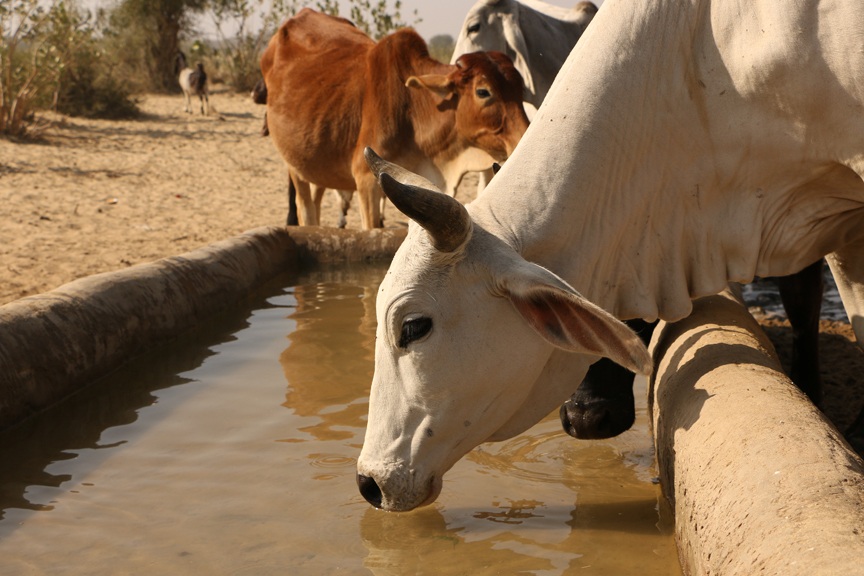
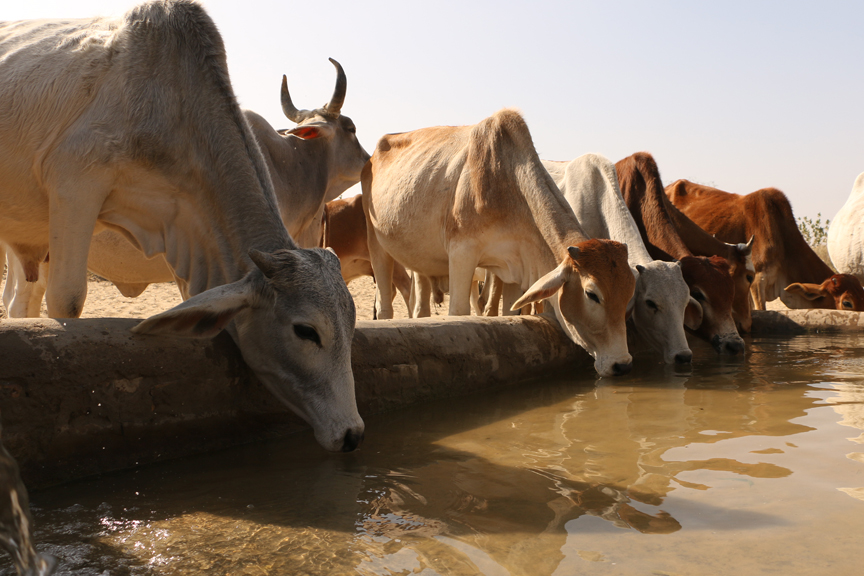
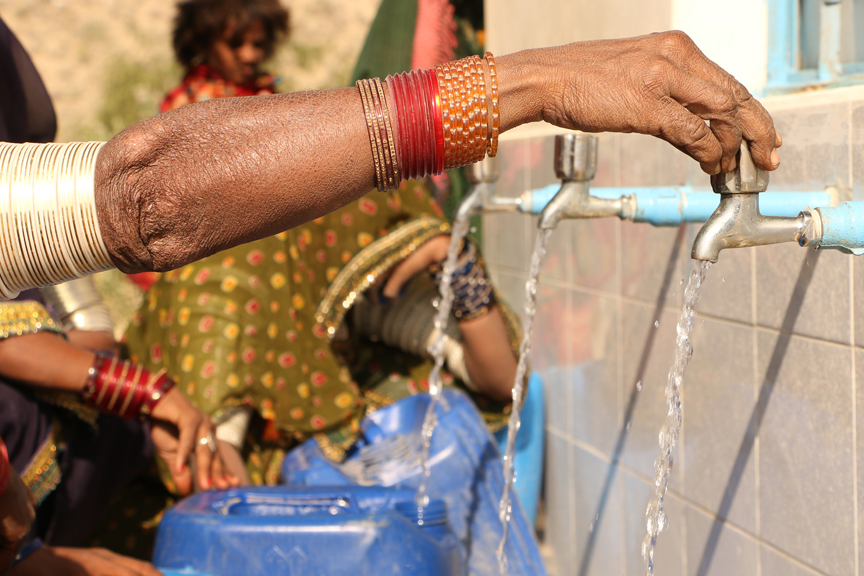
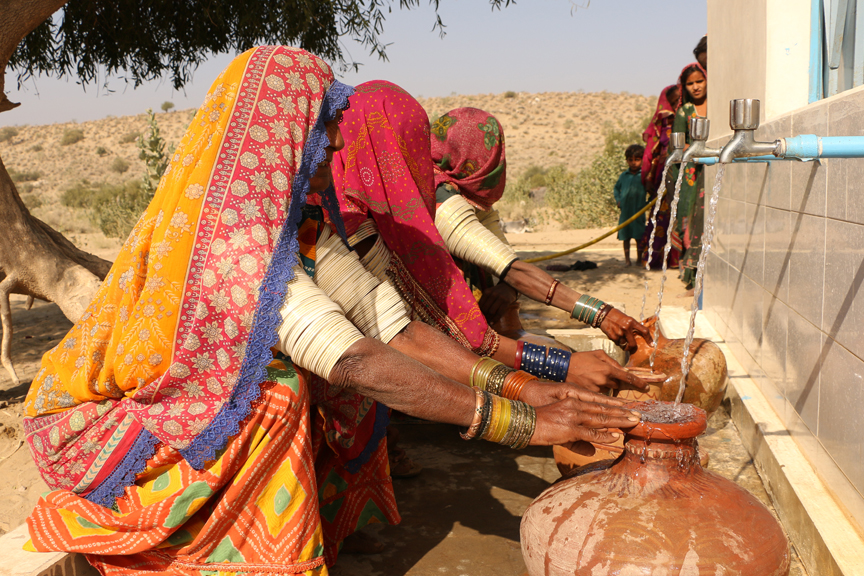
Every morning with sunrise, the plant fills up the 2000-litre storage tank for the 75 households of Bandi. Outside the little building housing the plant, activity begins early as women stream in with their pitchers followed a little later by livestock with the waiting time reduced to less than three minutes. TDS levels have reduced to around 250 ppm, with water now accessible to village homes within a maximum distance of 300 meters.
But it has been seen that virtually hundreds of RO plants lie derelict and unserviceable after only a couple of years of service. How then does the Bandi plant continue to work five years after installation? “Every member family of the WMC contributes a monthly subscription of PKR 200 (USD 0.72) which is saved for maintenance of the plant. Not even the smallest fault goes unattended,” explains Pratap.
That’s the reason for the smiles in Bandi.