CWSA Concludes Regional PACDR Workshop, Strengthening Local Climate Action in Pakistan
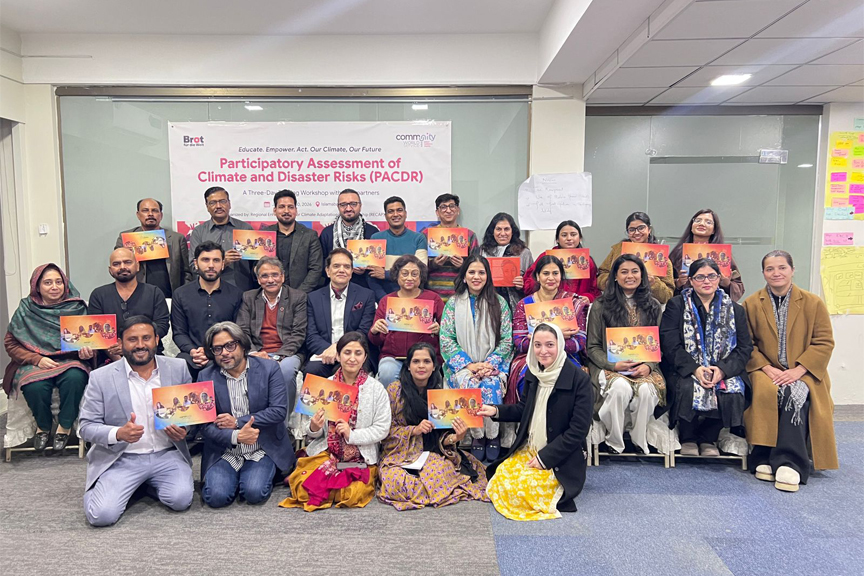
Islamabad, 30 January, 2026 – Community World Service Asia (CWSA) successfully concluded a three-day Participatory Assessment of Climate and Disaster Risks (PACDR) workshop, held from January 28 to 30, 2026. The workshop, part of the Regional Enhancement of Climate Adaptation and Partnership (RECAP) Project, equipped development professionals with practical tools for community-led climate resilience planning.
Led by lead facilitator Dr Manzoor Ahmed, the training fostered a dynamic exchange among professionals from seven partner organisations working across climate adaptation, disaster risk reduction, and sustainable development. Participants included representatives from Christian Study Centre, Labour Education Foundation (LEF), Pakistan Partnership Initiative (PPI), Roots for Equity, South Asia Partnership Pakistan (SAP PK), Taangh Wasaib Organisation (TWO), and Sojhla for Social Change.
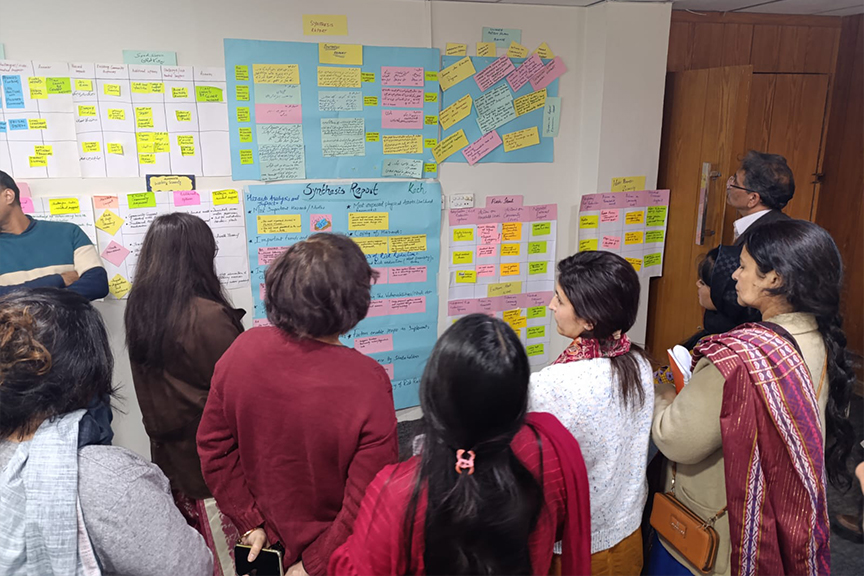
The workshop gained a valuable regional perspective from Ashik Sardar, RECAP Coordinator from CCDB Bangladesh, who shared insights on the application and impact of the PACDR process in various countries.
Participants highlighted the training’s practical value for grassroots work. Jalwat Ali, a participant, noted, “This kind of training will help grassroots organisations reach communities effectively. I will apply this learning to support informal workers in Punjab.” Asher Shehzad from PPI emphasised the collaborative spirit, stating, “Working as a consortium is a need of the time in shrinking civic spaces.”
Rubina Shaheen, a community social worker from Hunza, shared that nature-based solutions are vital for tackling climate change, adding, “I have learned practical tools for disaster risk reduction planning that will be immensely helpful.”
The closing ceremony was honoured by Dr Roomi Saeed Hayat, CEO of the Institute of Rural Management (IRM) and Chairperson of the Climate Action Forum, as the Chief Guest. DrHayat commended the joint efforts and underscored the critical importance of localised, participatory approaches in building lasting climate resilience.
Over the three days, attendees engaged in hands-on modules covering climate risk and hazard analysis, participatory mapping, adaptation option evaluation, and the development of actionable Climate Adaptation Plans (CAPs). The workshop emphasised field-ready methodologies to integrate climate action into sustainable development programming.
CWSA remains dedicated to advancing community-led adaptation and disaster risk reduction through strategic capacity building, partnerships, and inclusive planning processes.