Imtiaz Bibi: Rebuilding a Livelihood After Loss
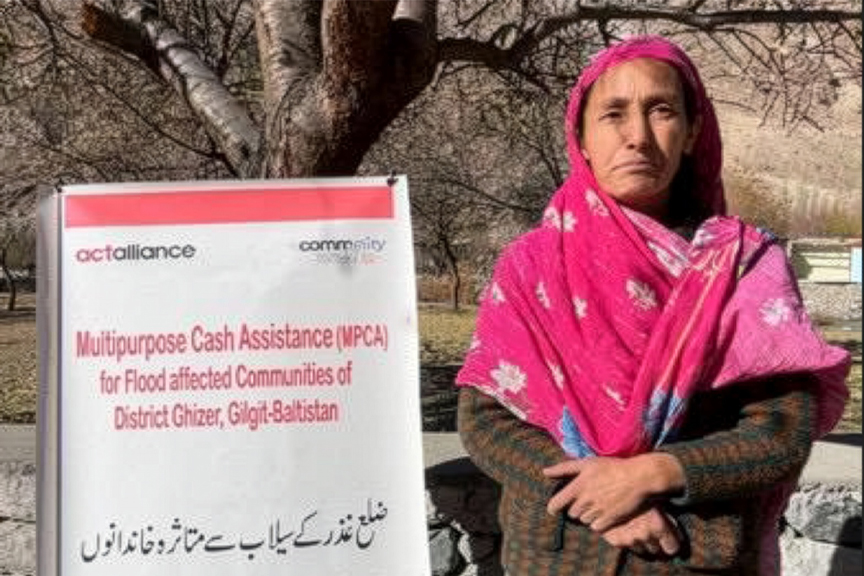
Imtiaz Bibi, a mother of four from Talidas village, represents the experience of many women whose livelihoods and homes were completely destroyed by the 2025 floods1 in various villages of district Ghizer, Gilgit-Baltistan. Before the disaster, she worked in agricultural fields and orchards, cultivating crops and selling fruit and wood to cover her household expenses and her children’s education.
Despite the challenges her family faces, Imtiaz Bibi ensures all four of her children remain in school. Her youngest attends Early Childhood Development classes, while the older three are progressing through Grades 10, 9, and 6. Together, their education costs amount to around PKR 15,000 (approximately USD 54) each month, a significant expense for the family. With her husband, Ijlal Hussain, currently unemployed, the couple works side by side in the fields, relying on farming as their primary source of income to sustain their family and keep their children’s education on track.
“Before the floods, we worked on our fields and orchards and sold fruit and wood. The income covered my children’s education and our yearly household needs,” she shared.
The couple sold fruits such as apples, cherries, pears, apricots, almonds, and grapes. Their total earnings before the flood amounted to PKR 450,000 (approx. $ 1,600). This income was sufficient to cover her basic household needs, including kitchen expenses and construction costs, as well the children’s monthly school fee of about PKR 28,000 (approx. $100-101).
The floods washed away her home, farmland, orchards, and all sources of income. They had two houses constructed with cement. One house consisted of four rooms, while the other had six rooms. Like many families in Ghizer, Imtiaz Bibi and her family took shelter in tents on higher ground for several days before moving in with relatives for sometime, who live in a nearby village, due to fear of further flooding. However, due to limited space, they later moved to a tent.
“We lost everything; our house, crops, and orchards. We lived in a tent for 10 days and then moved to our relatives because we were afraid the flood would return,” she said.
Humanitarian assistance played a critical role in helping her family stabilise. Community World Service Asia (CWSA) provided food and cash assistance, with funding from ACT Alliance.
The project was implemented in coordination with Agha Khan Development Network (AKDN) to obtain primary data on flood-affected communities. At the start of the project, the CWSA project team coordinated with district-level stakeholders, including AKDN, Gilgit-Baltistan Disaster Management Authority (GBDMA), the Social Welfare Department, and NGOs/civil society organisations, to collect primary data and avoid duplication of assistance.
The food assistance by CWSA comprised 100 kg of flour, 7 liters of cooking oil, 4 kg of sugar, 1 kg of salt, and 8 kg of pulses. Currently, the family is eating two meals a day, which consist of a balance of staple foods supported through humanitarian assistance. The family also received multipurpose cash assistance in three installments of PKR 30,000 PKR (approx. USD 108) each, totaling PKR 90,000 (approx. USD 324) over a period of three months.
The project supported a total of 264 families across three Tehsil Headquarters (THQs) in District Ghizer including 157 families in THQ Gupis, 83 families in THQ Ishkoman, and the remaining families in THQ Punyal.
“CWSA supported us with food and cash. We used the cash to hire labour and cover construction costs. At that time, my husband had no work, so this support helped us begin rebuilding our lives,” Imtiaz Bibi shared.
The construction of a new house was made possible through the University of Lahore (UOL), which invested PKR 200,000 (approx. USD 720). Although the house has been rebuilt, the family has not yet moved in due to extreme cold weather and the unavailability of water. Currently, they are temporarily living in their shop, which they vacated for this purpose.
Since receiving assistance, their living conditions have significantly improved. The new house, financial support, and food rations have greatly reduced their hardships and enhanced their overall well-being.
Despite ongoing uncertainty, Imtiaz Bibi remains hopeful. Her story reflects the resilience of women who, even after losing everything, continue to prioritise their children’s education and work steadily towards recovery. The children have resumed attending school, which is within walking distance of their relatives’ house. During the floods, the school was submerged, and the children were unable to attend classes for two months. Once the water receded, the school reopened and classes resumed.
Imtiaz Bibi’s path to recovery involves continued financial support, access to basic necessities such as food rations, and having a stable home. These things are essential to improving her living conditions and reducing hardships. Although it is not yet clear whether the damaged land can be fully restored, agriculture remains their main source of income, so they plan to try again. When the next agricultural season arrives, they intend to resume crop cultivation and replant their fruit orchards.