
Amir Hamza: Community Resilience in the Face of Devastation
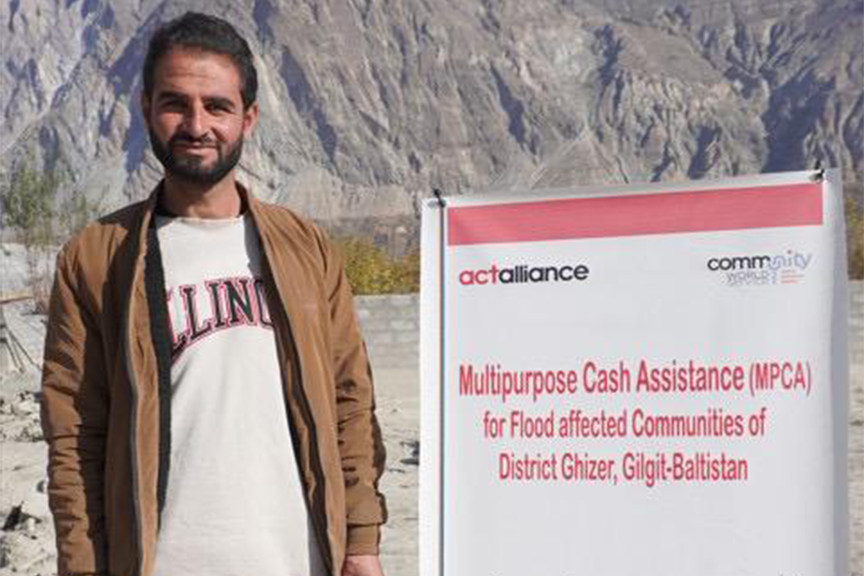
Amir Hamza belongs to village Dain in Tehsil Ishkoman of Ghizer. His household consists of five members and is a male-headed family with four dependents, including one school-age son. Before the floods of 14 August 2025, which devastated Ghizer1 in Gilgit-Baltistan, his story reflected the quiet stability of a self-sufficient rural life. The village of Dain was peaceful, with functioning homes, cultivated farmland, livestock, reliable water systems, and essential infrastructure such as a suspension bridge that connected residents to basic services and markets. This sense of security was shared across the community before the disaster upended their lives.
“Before the flooding, life was peaceful and beautiful. We had our homes, land, cattle, and a strong community,” Amir recalled. He and his family owned a total of five kanals of land, of which two kanals were washed away in the flood. They did not own any cattle.
The sudden flooding destroyed nearly everything including homes, mosques, Jamaat Khanas 2, farmlands, livestock, water channels, and the village’s historic suspension bridge. Families escaped in the middle of the crisis to higher ground, relying on relatives, neighbours, and volunteers for immediate rescue and shelter.
Amir is a father determined to give his young son an education, even though the monthly school fee of PKR 1,000 is a heavy burden for his modest means. After the devastating floods, he returned to driving a rickshaw, his primary source of income, to keep his family afloat. The disaster had swept away much of what he had built: his small shop, along with pear and almond orchards that once supplemented his livelihood. Yet despite these losses, Amir continues to prioritise his son’s schooling, holding on to the hope that education will open doors to a brighter future.
“The situation was unbearable. We nearly lost our senses. Our relatives and volunteers rescued us, gave us food, water, and shelter, and treated us with dignity,” shared Amir.
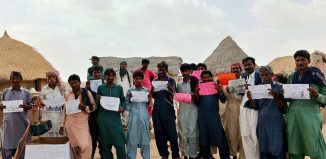
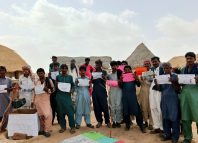
In the aftermath, the community prioritised restoring essential services, particularly access to clean water. External assistance followed, with NGOs and donors providing food and cash support. Community World Service Asia (CWSA) conducted multiple visits and provided multipurpose cash assistance of PKR 30,000 (approx. USD 108) in three monthly installments, totalling PKR 90,000, starting on 13 Nov 2025. The cash was used for rebuilding and meeting food security needs. Most families used the cash for children’s school fees, debt repayment, to meet daily household needs, and rebuilding homes in safer locations.
Food assistance was also provided under the project. It included wheat flour, pulses, cooking oil, sugar, and salt. The quantities distributed were 100 kg of flour, seven litres of cooking oil, four kg of sugar, one kg of salt, and eight kg of pulses. This support was provided for one month, and it helped meet the basic household food needs during that period.
“We are using the cash according to our needs such as education, housing, and daily survival. This support has helped us stand again,” said Amir.
The family has experienced a significant improvement in living conditions after receiving a new house, financial support, and food rations, which have greatly reduced their hardships. However, some challenges remain unresolved, such as the restoration of lost agricultural land and the full recovery of livelihood assets. Although the family is now more stable due to the assistance, they remain partially vulnerable, particularly regarding income from agriculture and other lost assets.
Amir’s account reflects a broader pattern observed across Ghizer; while the floods caused devastating losses, strong social cohesion, timely humanitarian assistance, and community-led recovery efforts have been central to restoring dignity and hope.
- https://www.aljazeera.com/news/2025/7/22/rains-flash-floods-kill-21-in-pakistan-tourists-rescued-in-hilly-north ↩︎
- Places of worship and community work ↩︎