Strengthening Regional Climate Partnerships: CCDB Team Visits Pakistan for Knowledge Exchange and Nature-Based Solutions Training
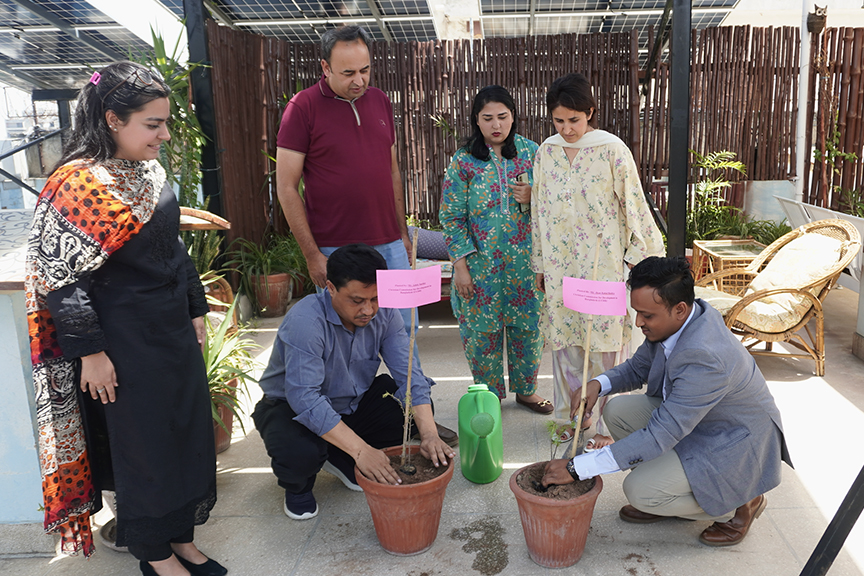
As part of the Regional Enhancement for Climate Adaptation and Partnership (RECAP) project, a team from the Christian Commission for Development in Bangladesh (CCDB), comprising Mr. Md. Ashik Sarder, Project Coordinator, and Mr. John Rahul Baidya, Project Officer, visited Pakistan from 7–11 June 2026. The visit provided a valuable opportunity to strengthen regional collaboration, exchange experiences, and deepen partnerships among RECAP consortium members working across South Asia to enhance climate resilience and adaptation capacities.
A key component of the visit was the engagement with RECAP partner organisations and national institutions, providing the CCDB team with firsthand exposure to diverse approaches, experiences, and initiatives being implemented across Pakistan to address climate and development challenges.
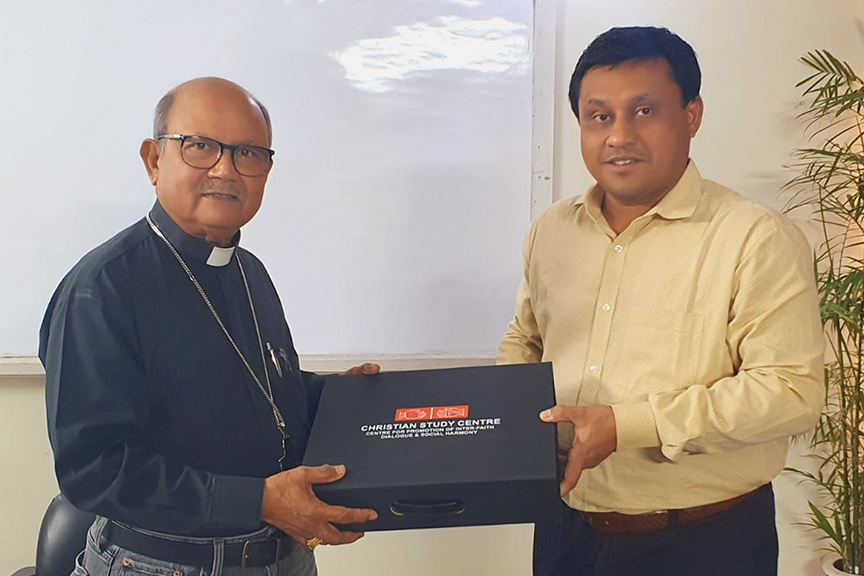
Visit to Christian Study Centre (CSC) – 8 June 2026
On 8 June 2026, the CCDB team visited the Christian Study Centre (CSC) in Rawalpindi, where they were briefed on the organization’s longstanding commitment to promoting social justice, peacebuilding, interfaith harmony, and community empowerment. CSC shared insights into its work with marginalised communities, youth engagement initiatives, climate justice programming, and advocacy efforts aimed at fostering inclusive and resilient societies. The discussion highlighted the importance of integrating social cohesion and community participation into climate adaptation efforts, while providing an opportunity for both organisations to exchange experiences, lessons learned, and explore areas of mutual learning and collaboration.
Visit to Pakistan Partnership Initiative (PPI) – 9 June 2026
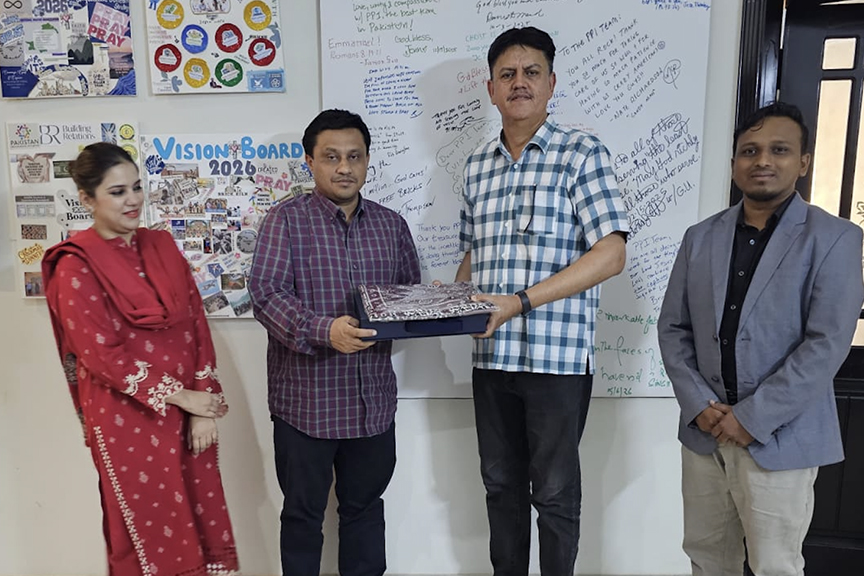
On 9 June 2026, the CCDB team visited the Pakistan Partnership Initiative (PPI), where they received an overview of the organisation’s role in strengthening local civil society organizations through capacity building, institutional development, and partnership facilitation. PPI shared its experiences in supporting community-led development initiatives, enhancing organisational effectiveness, and promoting sustainable development practices across Pakistan. Discussions focused on approaches to strengthening local capacities, fostering collaborative networks, and enabling grassroots organisations to play a greater role in addressing climate and development challenges. The exchange provided valuable insights into effective partnership models and strategies for strengthening community resilience through local ownership and collective action.
Visit to Global Change Impact Studies Centre (GCISC), MOCC – 10 June 2026
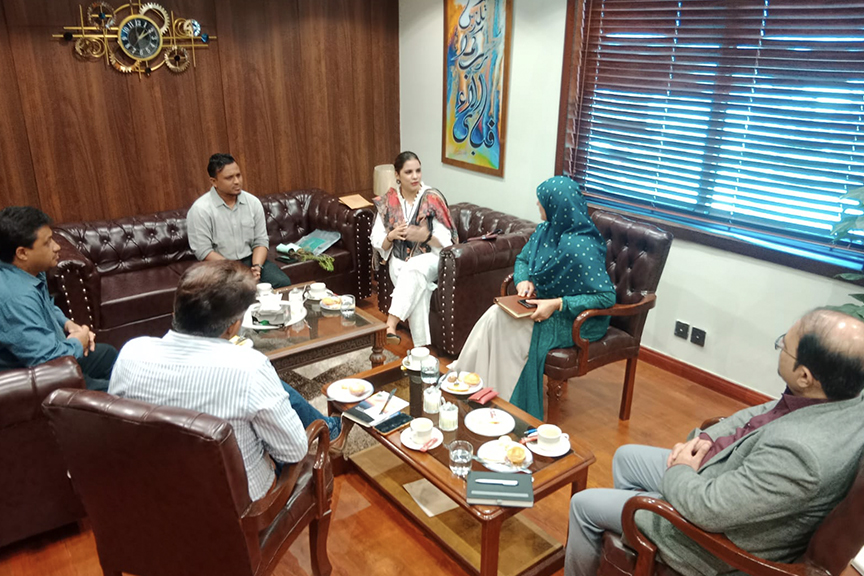
On 10 June 2026, the CCDB team visited the Global Change Impact Studies Centre (GCISC), operating under Pakistan’s Ministry of Climate Change. The team was introduced to GCISC’s mandate and its contributions to climate science, policy research, and evidence-based decision-making in Pakistan. The briefing highlighted the Centre’s work on climate modeling, vulnerability assessments, adaptation planning, disaster risk reduction, and policy support for national climate action. Discussions explored emerging climate trends, adaptation priorities, and the critical role of research institutions in informing policy and practice. The interaction enabled participants to better understand how scientific knowledge, research, and innovation can support climate resilience efforts and contribute to informed climate action across South Asia.
Capacity Building Training on Nature-Based Solutions (NbS) for Integrated Water and Climate Resilience – 8-10 June 2026
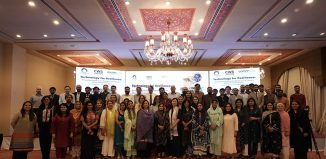
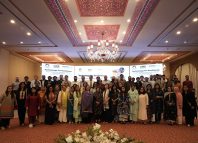
A key highlight of the visit was the participation of the CCDB team in the three-day Capacity Building Training on Nature-Based Solutions (NbS) for Integrated Water and Climate Resilience, organised by Community World Service Asia (CWSA) in Islamabad from 8–10 June 2026. The training brought together representatives from partner organisations, civil society groups, and climate practitioners from across Pakistan. Led by Dr. Manzoor Ahmed, Lead Consultant, CWSA, the training provided participants with a comprehensive understanding of Nature-Based Solutions and their application in addressing climate and water-related challenges. The programme was further enriched by technical sessions delivered by experts, including Dr. Roomi Hayat, Chief Executive Officer, Institute of Rural Management – IRM, Mr. Mahmood Akhtar Cheema, Former Country Representative, IUCN Pakistan, Mr. Haider Raza, Director NbS/North WWF-Pakistan, and Dr. Huma, Senior Research Officer, WWF-Pakistan. Drawing on their extensive experience in climate adaptation, biodiversity conservation, ecosystem restoration, and sustainable natural resource management, the speakers shared practical insights, field experiences, and global best practices for designing and implementing effective Nature-Based Solutions.
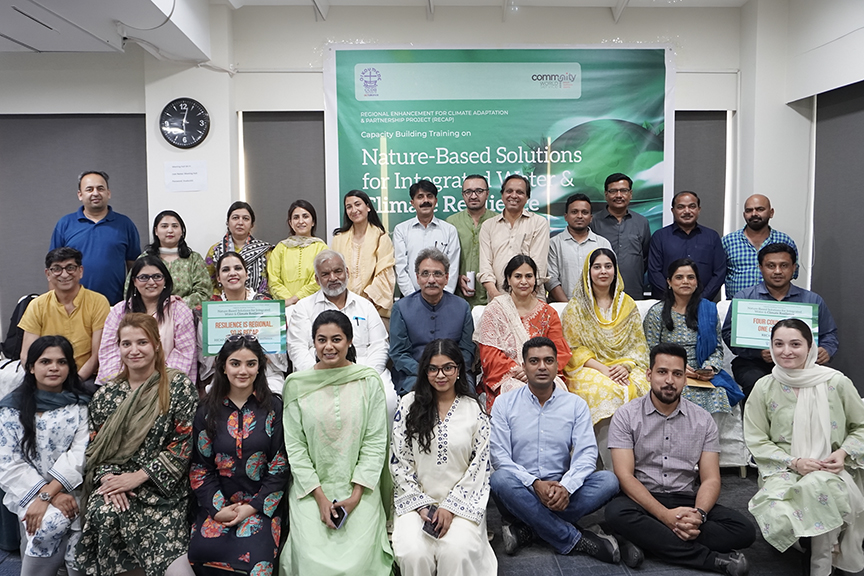
The training covered the IUCN Global Standard for Nature-Based Solutions (NbS), climate adaptation, biodiversity conservation, water resilience, gender inclusion, indigenous knowledge, and ecosystem-based approaches. Through expert-led sessions, case studies, and interactive exercises, participants explored practical ways to integrate NbS into organisational and community initiatives. The CCDB team shared experiences from Bangladesh on flood management, wetland restoration, and community resilience, while participants developed action plans to strengthen climate resilience and sustainable ecosystem management.
The CCDB team’s visit to Pakistan was marked by meaningful exchanges, shared learning, and strengthened partnerships among RECAP consortium members and partner organisations. Through institutional briefings, technical discussions, partner engagements, and collaborative learning opportunities, participants gained deeper insights into diverse approaches to climate adaptation, resilience building, and sustainable development being implemented across the region. The visit reaffirmed the importance of regional cooperation, cross-country learning, and knowledge sharing in addressing the growing challenges of climate change. These strengthened partnerships, shared experiences, and collective commitments will continue to contribute to the objectives of the RECAP project, fostering greater collaboration and enhancing climate adaptation and resilience-building efforts across South Asia.